















Private heart and cholesterol testing at home
Cholesterol & Heart Health Blood Test Home Kits UK
Compare private home cholesterol test kits, broader heart health blood tests and high-sensitivity CRP testing with clear guidance on what each panel can and cannot tell you.
High cholesterol commonly causes no symptoms, so a blood test may be the only way to identify an unexpected result. A home test can provide useful laboratory information, but cardiovascular risk also depends on age, blood pressure, smoking, diabetes, kidney health, family history and existing medical conditions.

Grace Belgravia at home
Understand your cholesterol and related heart health markersPrivate collection with secure laboratory reporting and responsible interpretation guidanceCall 999 for severe or persistent chest pressure, pain spreading to the arm, jaw, back or stomach, sudden breathlessness, collapse, new weakness on one side, or other symptoms that may indicate a heart attack or stroke.
Interactive test finder
What would you like to understand?
Choose the closest goal. This tool helps you navigate the collection and does not diagnose disease or confirm that a test is medically necessary.
Choose a goal above
Your result will explain which product is the closest match and when clinical assessment may be more appropriate.
Reasons people explore testing
Who may consider a private cholesterol or heart health blood test?
A cholesterol test is often chosen because risk factors are present rather than because cholesterol itself has caused symptoms. The most useful test depends on whether you want a focused lipid profile, a broader metabolic view or additional inflammatory context.
Unlike acute heart symptoms, raised cholesterol usually has no obvious warning signs. Testing can identify a result that merits discussion with a healthcare professional.

Focused information
Start with the question you want answeredA lipid profile and a combined heart health panel serve different purposes.

Private home collection
Convenient testing with clinical boundariesResults support informed follow-up but do not replace a full cardiovascular assessment.
Browse the collection
Private home cholesterol and heart health blood tests
Each product below answers a different question. Review the current product specification before ordering because exact markers, collection requirements and laboratory instructions may change.

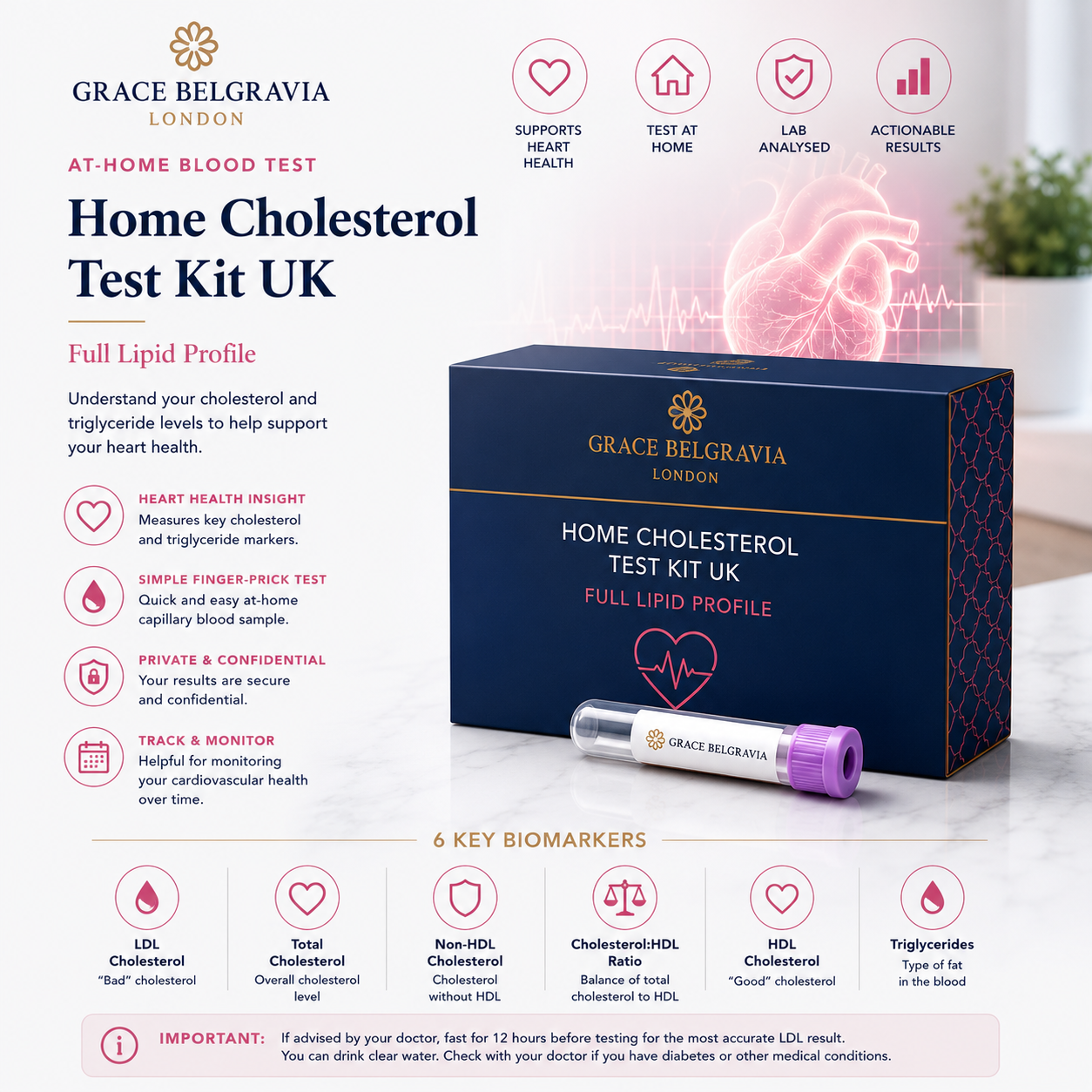
Home Cholesterol Test Kit UK – Full Lipid Profile
A focused home blood test for people who primarily want to understand their current cholesterol and lipid pattern. It is the clearest starting point when the central question is cholesterol rather than broader metabolic or inflammatory context.
- Core focus
- A full lipid profile, with the exact reported markers shown on the individual product page.
- Best suited to
- Establishing a cholesterol baseline or reviewing lipid trends after an appropriate interval.
- Important context
- Results should be considered with blood pressure, smoking, diabetes, kidney health, family history and existing cardiovascular disease.

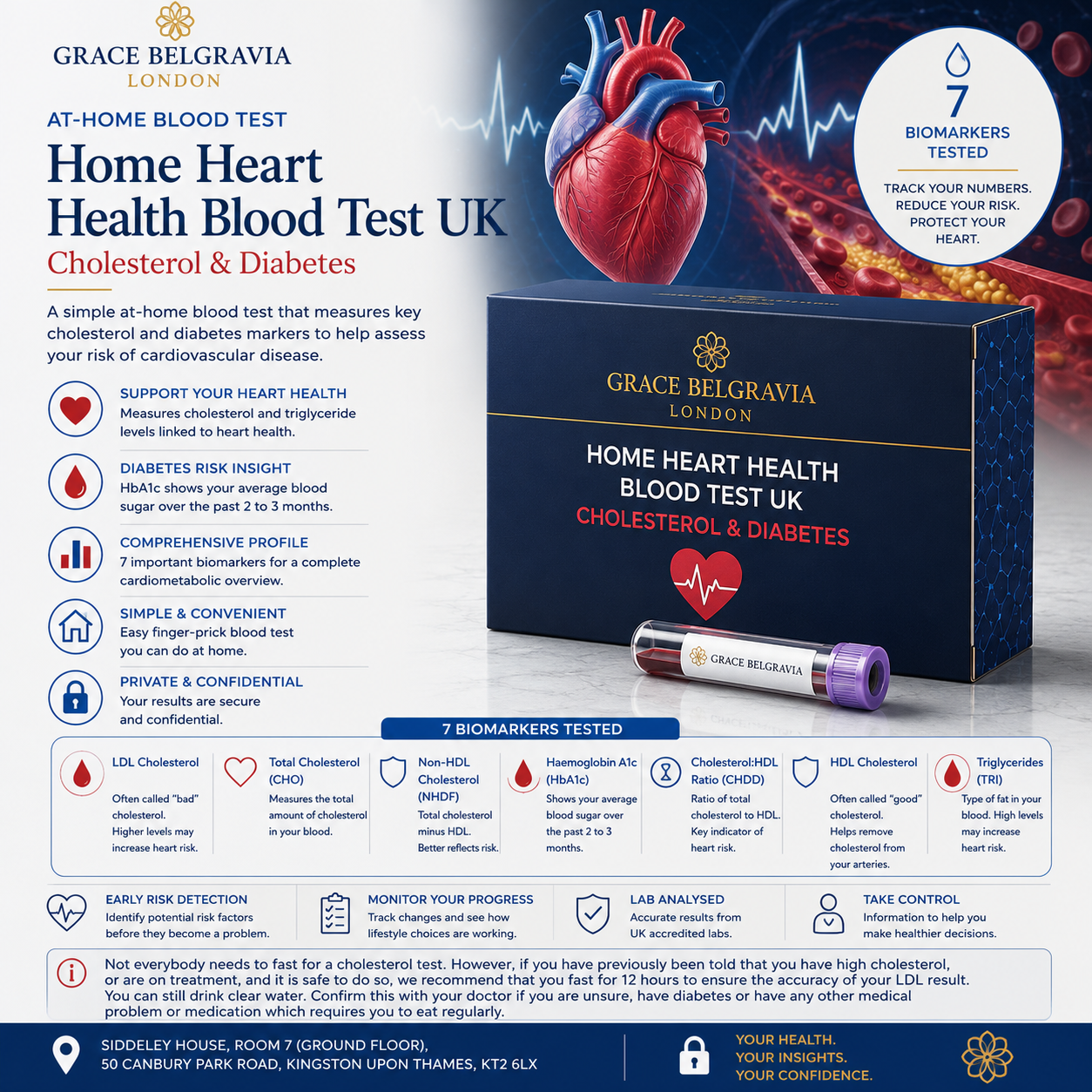
Home Heart Health Blood Test UK – Cholesterol & Diabetes
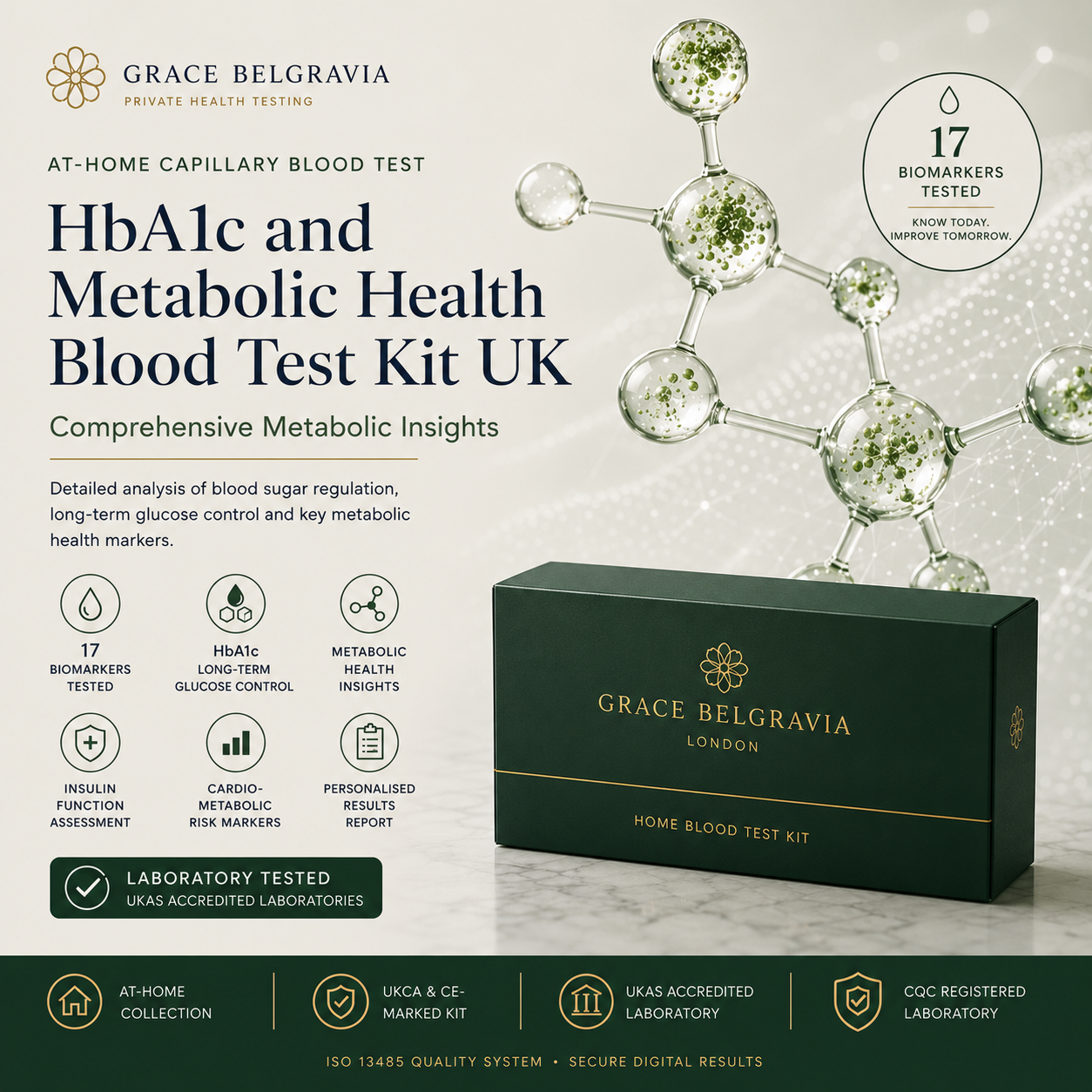
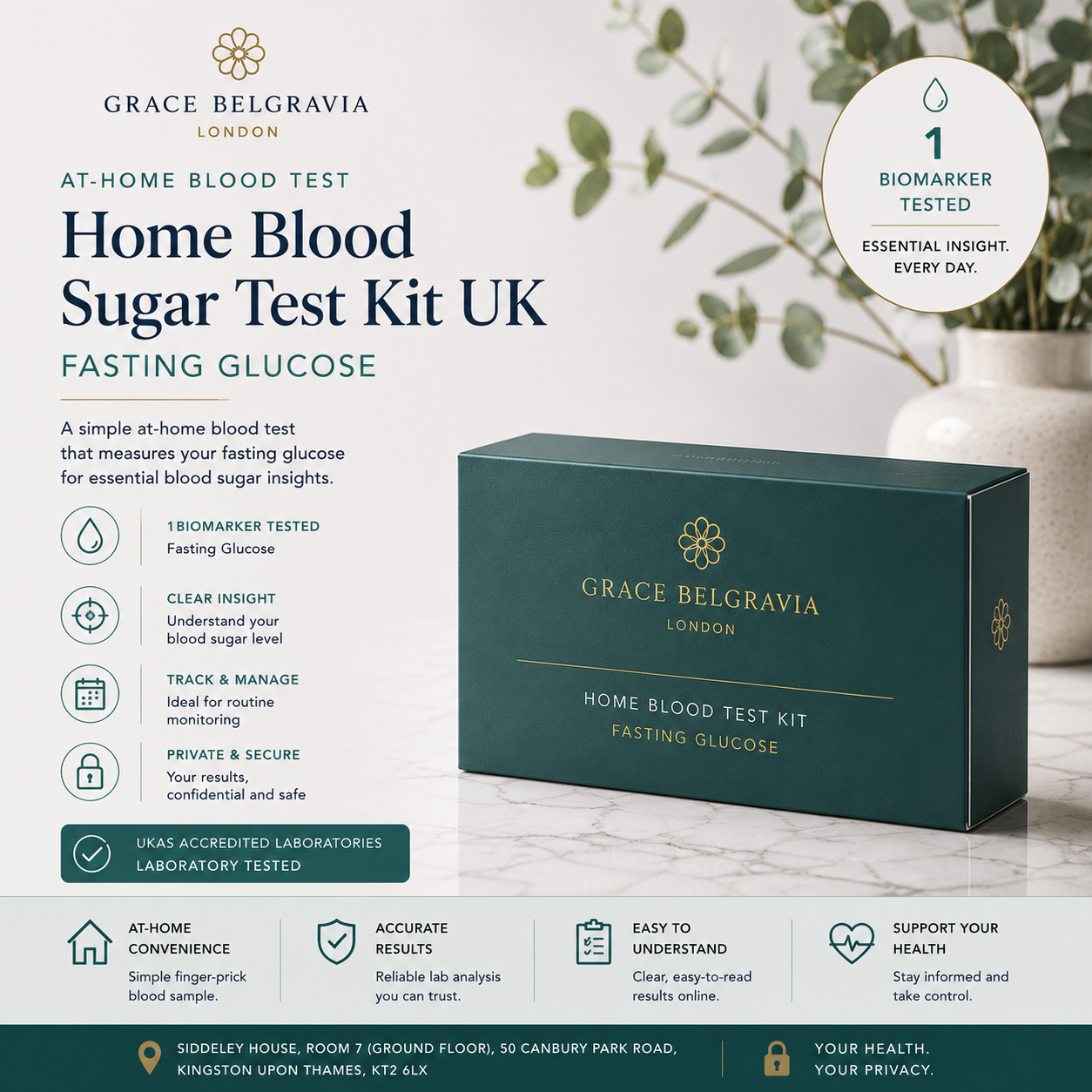
A broader private blood test for people who want cholesterol information alongside the longer-term blood sugar markers listed on the product page. This can be more useful when cardiovascular and metabolic questions overlap.
- Core focus
- Cholesterol and diabetes-related laboratory context in one home collection.
- Best suited to
- People seeking a broader overview than a lipid profile alone.
- Important context
- A broader panel still does not calculate complete cardiovascular risk or diagnose heart disease.

Home CRP Test Kit UK – High Sensitivity hsCRP
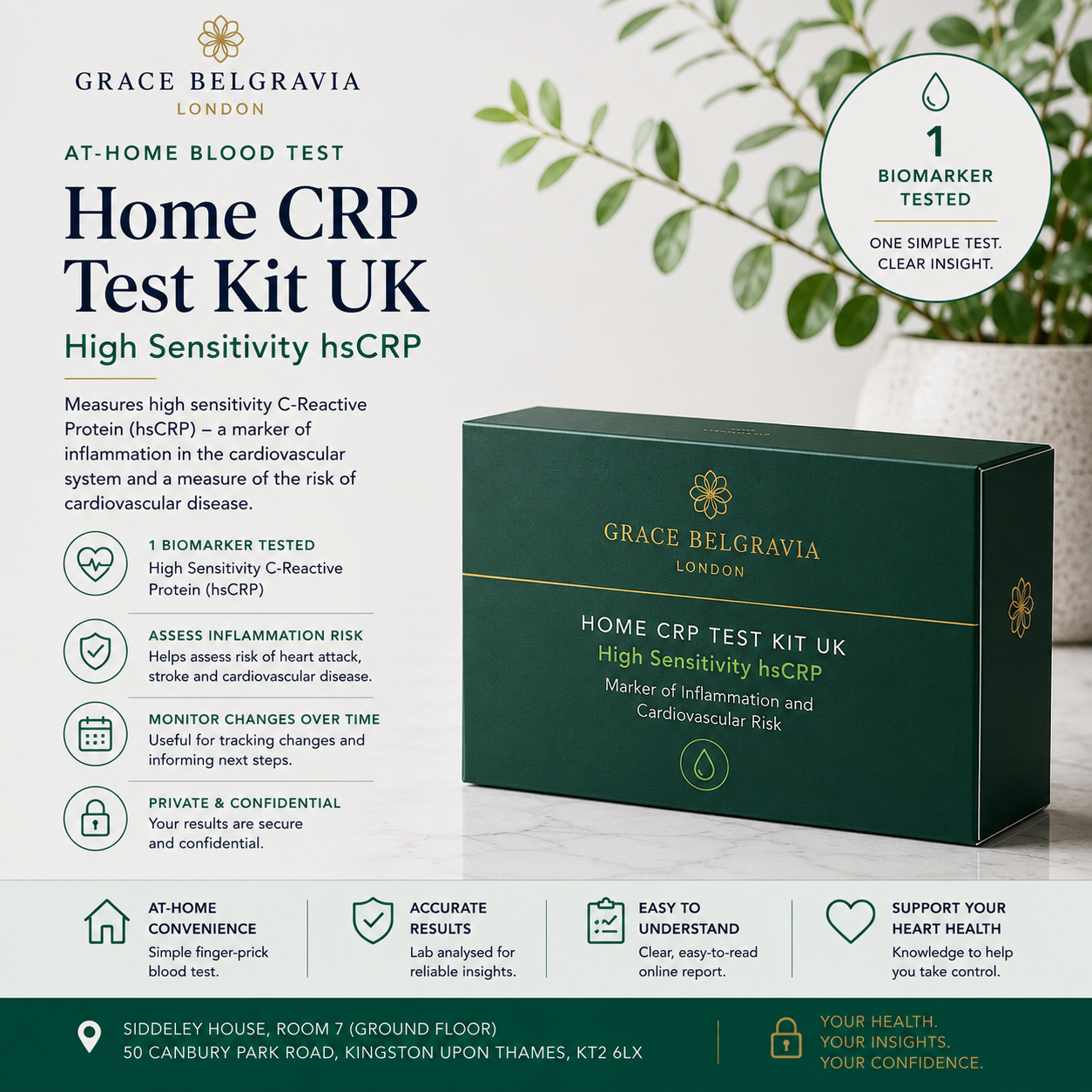
A focused high-sensitivity C-reactive protein test for selected inflammatory-risk context. hsCRP is not specific to the heart and may be temporarily raised by infection, injury, dental inflammation, strenuous exercise or another inflammatory condition.
- Core focus
- High-sensitivity C-reactive protein as an inflammatory biomarker.
- Best suited to
- Selected situations where inflammatory context is being considered alongside conventional risk factors.
- Important context
- Unexpected or raised results may need repeat testing when you are well and clinical interpretation with other risk information.
Side-by-side comparison
Compare home heart health blood tests
Choose the narrowest panel that answers your question. A larger panel is not automatically more useful if the additional markers are not relevant to your circumstances.
| Test | Main question | Reported focus | Choose it when |
|---|---|---|---|
| Full Lipid Profile | What does my current cholesterol pattern look like? | The lipid markers listed on the product page | You want a focused cholesterol home blood test |
| Heart Health Profile | How do my cholesterol and blood sugar markers look together? | Cholesterol and diabetes-related context | You want a broader cardiometabolic overview |
| High-Sensitivity hsCRP | Is there selected low-grade inflammatory context to discuss? | High-sensitivity C-reactive protein | Inflammation is relevant and temporary causes have been considered |
The most useful test is the one that answers a defined question and can be interpreted alongside your medical history and wider risk factors.
Biomarker guide
Understanding cholesterol and heart health blood markers
The following glossary explains markers commonly encountered in lipid and heart health testing. Always check the selected product page for the exact biomarkers included.
Total cholesterol
The total amount of cholesterol carried in the main lipoprotein fractions. It is useful context but does not describe the complete distribution of cholesterol by itself.
LDL cholesterol
Low-density lipoprotein cholesterol is an atherogenic lipid measure. Its meaning depends on overall risk, previous cardiovascular disease, treatment and other lipid results.
HDL cholesterol
High-density lipoprotein cholesterol contributes to risk interpretation, but a high HDL result should not be treated as cancelling out other risk factors or raised atherogenic cholesterol.
Non-HDL cholesterol
Non-HDL cholesterol is calculated by subtracting HDL from total cholesterol and represents cholesterol carried in several potentially atherogenic particles.
Triglycerides
Triglycerides are circulating fats influenced by genetics, food intake, alcohol, metabolic health and some medicines. Markedly raised results require appropriate follow-up.
Total cholesterol to HDL ratio
This ratio may contribute to cardiovascular risk estimation, but it should not be used as the only target or interpreted without the underlying lipid values.
HbA1c
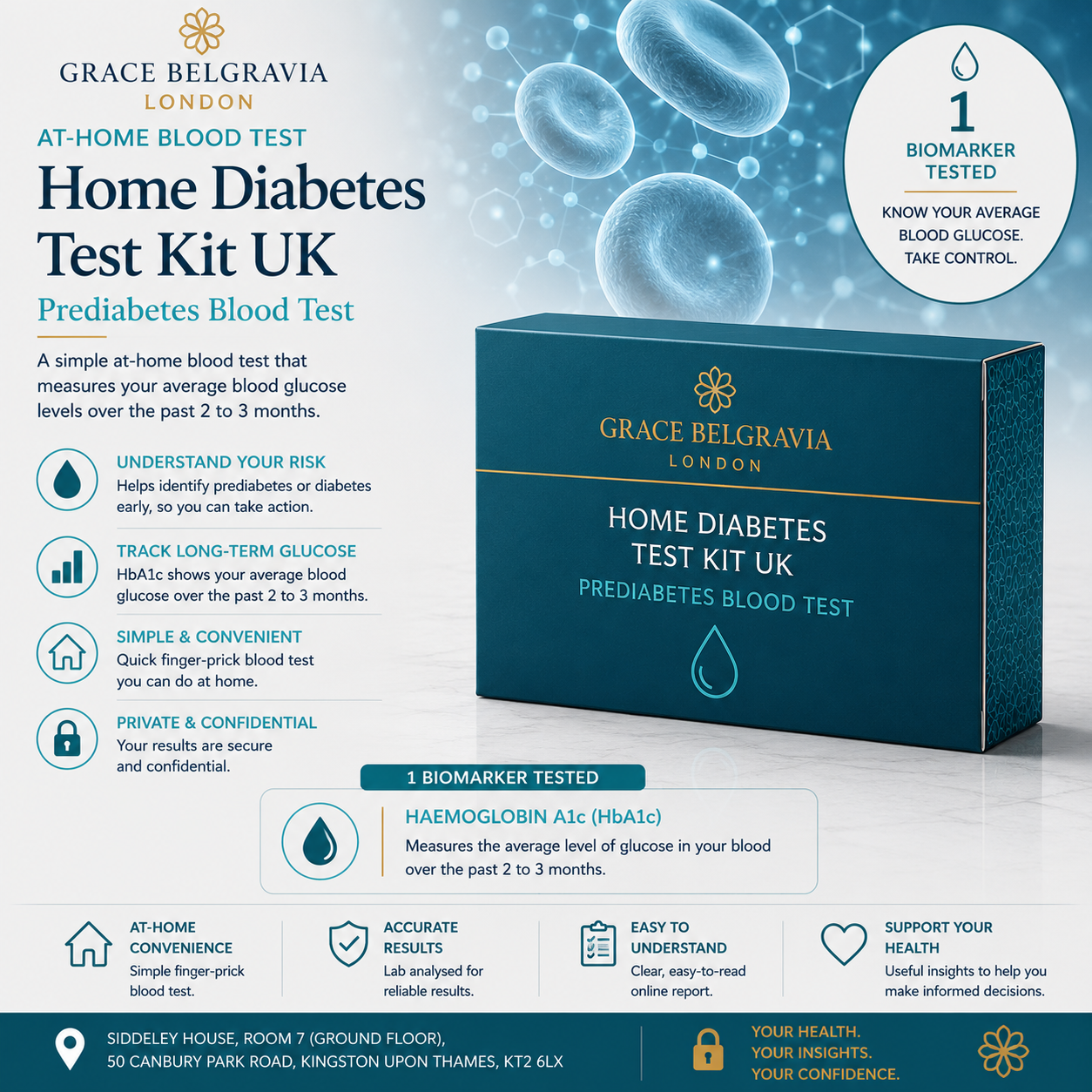
HbA1c reflects average blood glucose exposure over the preceding weeks and months. It provides metabolic context but is not a direct measure of cholesterol.
High-sensitivity CRP
hsCRP measures low concentrations of C-reactive protein. It is non-specific and may rise for many reasons unrelated to atherosclerotic cardiovascular disease.
Focused, broader or specialist context?
How to choose the right level of testing
Choose a focused lipid profile when
- Your main aim is to check cholesterol and lipid markers.
- You want a baseline before discussing wider cardiovascular risk.
- You are following an agreed cholesterol-monitoring plan.
- You do not need additional blood sugar or inflammatory markers in the same collection.
Choose the broader heart health test when
- Cholesterol and longer-term blood sugar are both relevant.
- You want a wider cardiometabolic overview from one home collection.
- You understand that a panel does not replace blood pressure measurement or formal risk scoring.
- You are prepared to arrange follow-up for unexpected results.
Inflammatory biomarkers and lipid markers answer different questions. One should not be used to dismiss an abnormal result in the other.
Preparation and timing
How to prepare for a home cholesterol blood test
Follow the product-specific instructions. A clinician or laboratory may still request a fasting sample in selected circumstances, particularly where triglycerides or other metabolic questions require it.
From order to result
How private home heart health testing works
Choose a test
Match the panel to your question rather than automatically choosing the largest option.
Receive the kit
Read all instructions before collecting the sample.
Prepare carefully
Check fasting, illness, medicine and exercise guidance.
Collect at home
Obtain the required capillary blood sample using the supplied equipment.
Return for analysis
Package and return the sample through the stated laboratory pathway.
Review in context
Consider the report with wider risk factors and arrange follow-up where needed.
Results in context
A cholesterol result is not a complete cardiovascular risk score
Formal cardiovascular risk assessment combines several types of information. A private home result can help start a more informed conversation, but it cannot measure blood pressure, examine you, confirm familial hypercholesterolaemia or identify structural heart disease.
Baseline cardiovascular risk changes across the life course.
Hypertension is a major risk factor that requires a separate measurement.
Smoking materially affects cardiovascular risk even when cholesterol is not markedly raised.
Both can alter risk and treatment thresholds.
Early heart disease or very high cholesterol in close relatives may require specialist assessment.
People with established disease require clinical management rather than consumer interpretation alone.
Contact a GP or suitable clinician if results are markedly outside the stated range, if a close relative developed cardiovascular disease at a young age, or if you are already taking cholesterol-lowering treatment and results are not as expected.
Familial cholesterol conditions
When a home cholesterol test is only the first step
Familial hypercholesterolaemia is an inherited condition associated with persistently high cholesterol and earlier cardiovascular disease. A home lipid result cannot confirm the diagnosis or replace family-history assessment, repeat laboratory testing and, where appropriate, specialist or genetic evaluation.
Discuss results promptly when
- Cholesterol has repeatedly been very high.
- A parent, sibling or child has familial hypercholesterolaemia.
- Close relatives had heart attacks or strokes unusually early.
- You have tendon swellings or other features previously linked to a lipid disorder.
Do not use home testing to
- Start, stop or alter a statin or another prescribed medicine.
- Dismiss chest pain, breathlessness or neurological symptoms.
- Rule out cardiovascular disease from one reassuring result.
- Replace an NHS Health Check, GP assessment or specialist review where indicated.
Laboratory and testing standards
Home collection supported by a quality-controlled laboratory pathway
Grace Belgravia home test kits combine private sample collection with laboratory analysis. Accreditation and device claims should always be checked against the current individual product specification and the laboratory pathway used for that test.
- UKAS-accredited medical laboratory processing where stated for the product pathway
- CQC-registered diagnostic and screening pathway where applicable
- UKCA- or CE-marked collection equipment where specified
- Quality-management processes appropriate to the testing service
- Secure digital reporting with laboratory commentary

Evidence-led guidance
What UK and international research adds to cholesterol testing
Evidence from guidelines, universities and peer-reviewed research supports interpreting lipid results as part of a wider risk picture rather than as isolated numbers.
UK clinical guidance
NICE recommends formal cardiovascular risk assessment and lipid management that takes account of the individual’s overall risk, health conditions and treatment context.
University of Oxford
Oxford cardiovascular research examines established risk factors including blood cholesterol, blood pressure, smoking, adiposity and renal disease across large prospective datasets.
University of Cambridge
Cambridge-led research has highlighted that exposure to raised cholesterol earlier in life may matter for the development of atherosclerosis.
International research
Harvard and other international groups have studied how lipid and inflammatory markers may provide complementary information, while emphasising that results require appropriate clinical context.
Medical and editorial review
Medically checked heart health and cholesterol guidance
The collection has been reviewed for responsible presentation of cholesterol, metabolic and inflammatory biomarkers, clinical limitations, urgent warning signs and laboratory-pathway wording.

Dr Laura Geige
Medical Director, Senior Practitioner and Skin Expert
Reviewed consumer-facing medical boundaries, urgent cardiovascular symptoms, follow-up wording and responsible positioning of private home testing.
View professional profile
Dr Rimas Geiga
Medical Doctor, Nutritional Sciences Adviser and Healthy Ageing Expert
Reviewed lipid, HbA1c, triglyceride, lifestyle and healthy-ageing context, including the limits of interpreting one biomarker in isolation.
View professional profile
Veronika Matutyte
Medical Doctor and Healthcare Management Expert
Reviewed sample-pathway language, quality claims, clinical escalation, medical-disclaimer wording and result-follow-up guidance.
View professional profileAuthoritative references
Heart health, cholesterol and cardiovascular research
UK guidance and public-health sources
UK university research
Peer-reviewed and overseas sources
- Ference et al.: LDL and atherosclerotic cardiovascular disease consensus statement
- Nordestgaard et al.: fasting is not routinely required for lipid profiles
- High-sensitivity CRP in atherosclerotic cardiovascular disease: 2025 review
- Harvard University: long-term research involving LDL cholesterol and hsCRP
Frequently asked questions
Home cholesterol and heart health blood test FAQs
Which home cholesterol test should I choose?
Choose the full lipid profile when your main question is cholesterol. Choose the broader heart health test when you also want the diabetes-related markers listed on its product page. Choose hsCRP only when inflammatory context is relevant and its limitations are understood.
Can I check my cholesterol with a home blood test?
Yes. These kits use home sample collection followed by laboratory analysis. Follow the registration, collection and return instructions supplied with the chosen product.
Does high cholesterol cause symptoms?
High cholesterol usually causes no symptoms. A blood test is therefore needed to identify an unexpected result.
Do I need to fast for a cholesterol test?
Many routine lipid profiles can be collected without fasting. Follow the instructions for the specific product because fasting may still be requested in selected circumstances.
Can a cholesterol test diagnose heart disease?
No. It measures selected risk-related biomarkers but cannot show whether an artery is narrowed, diagnose a heart attack or replace cardiovascular examination and imaging.
What is the difference between LDL and non-HDL cholesterol?
LDL cholesterol estimates cholesterol within low-density lipoproteins. Non-HDL cholesterol is total cholesterol minus HDL and includes cholesterol carried in several potentially atherogenic particles.
Is HDL always protective?
HDL contributes to risk interpretation, but a high result does not cancel out raised LDL, smoking, high blood pressure, diabetes or other cardiovascular risks.
What does hsCRP tell me?
hsCRP measures a non-specific inflammatory protein at low concentrations. It may add selected cardiovascular-risk context but can rise because of infection, injury, dental disease, strenuous exercise and many other conditions.
Can I test while taking statins?
Testing may be used within an agreed monitoring plan. Do not stop, start or alter a statin or another prescribed treatment solely because of a home result.
What if heart disease runs in my family?
Arrange clinical assessment if close relatives developed cardiovascular disease unusually early or have familial hypercholesterolaemia. A home result may be useful information but cannot complete that assessment.
How often should I repeat a cholesterol test?
The appropriate interval depends on your previous results, age, treatment, risk factors and clinician’s plan. Testing too frequently may show normal biological variation rather than a meaningful change.
What happens if my result is abnormal?
Read the laboratory commentary and contact a GP or suitable clinician. Repeat testing, blood pressure measurement, formal risk assessment, medicine review or specialist referral may be appropriate.