




















At home cholesterol and lipid profile blood test
Home Cholesterol Test Kit UK | Full Lipid Profile
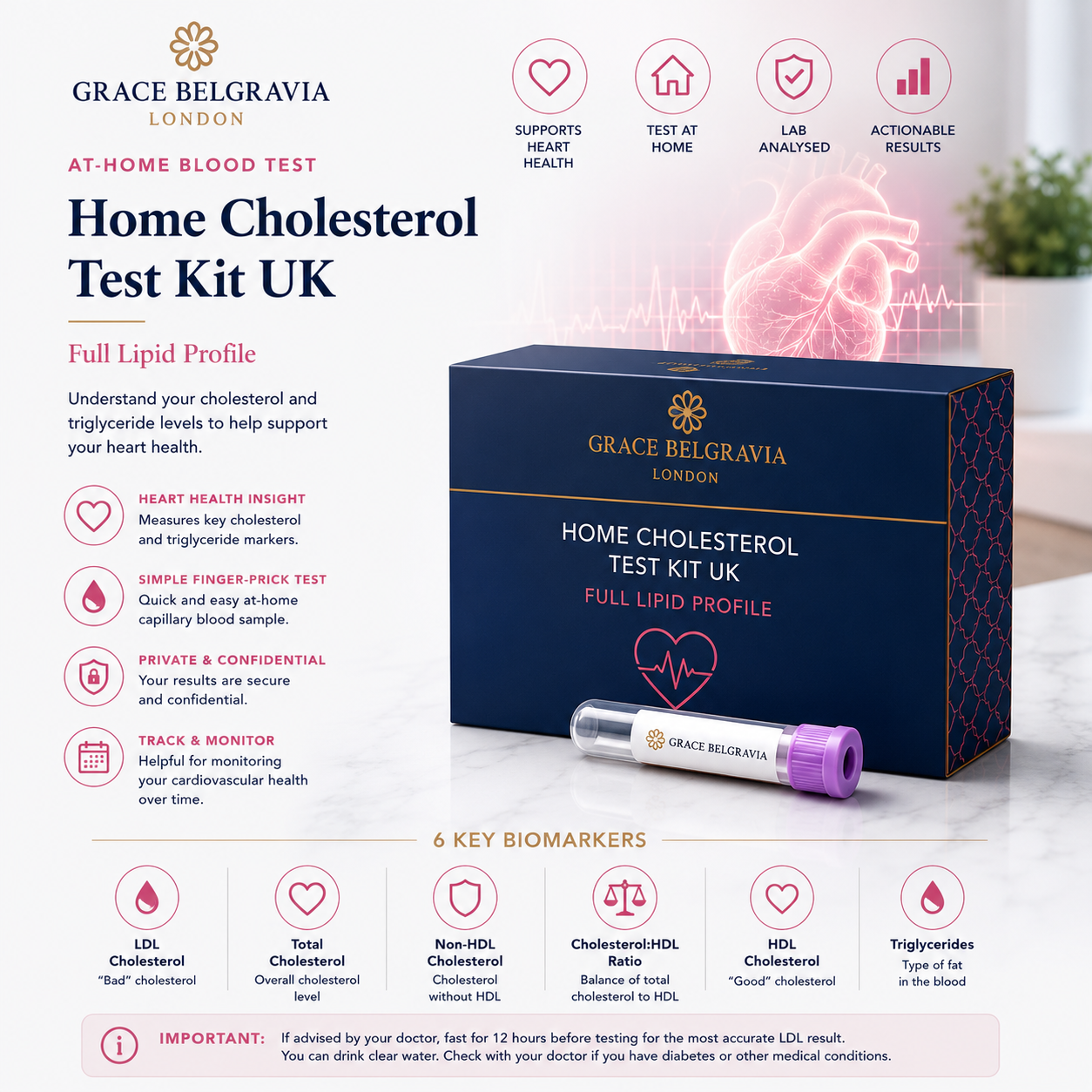
A six marker home blood test measuring the standard cholesterol and triglyceride profile.
The panel reports LDL, total, non HDL and HDL cholesterol, triglycerides and the total cholesterol to HDL ratio. It can support cardiovascular risk assessment and treatment monitoring, but it does not diagnose heart disease or calculate a complete personal risk score.
Cardiovascular risk also depends on age, blood pressure, smoking, diabetes, kidney disease, family history, ethnicity and other factors. In UK clinical practice, a clinician may use QRISK3 where appropriate.
Call 999 for central chest pain or pressure, severe breathlessness, collapse, new facial or arm weakness, speech difficulty or another possible heart attack or stroke symptom. Do not wait for a home test result.
Quality and compliance
Home cholesterol testing supported by UK standards
What this full lipid profile measures
| Health area | Biomarkers | What they may help show |
|---|---|---|
| Atherogenic cholesterol | LDL and non HDL cholesterol | Cholesterol carried in particles associated with atherosclerotic cardiovascular disease. |
| Overall cholesterol pattern | Total cholesterol and HDL cholesterol | The overall amount and distribution of cholesterol in the blood. |
| Risk ratio | Total cholesterol to HDL ratio | One component used within wider cardiovascular risk assessment. |
| Circulating fats | Triglycerides | Dietary and metabolic context, with very high levels carrying pancreatitis risk. |
Who may consider this test?
This home cholesterol test kit may be considered by adults who want to review selected lipid risk markers, including those with:
- A personal or family history of high cholesterol
- A close relative with premature heart disease or stroke
- High blood pressure, overweight, obesity or diabetes risk
- An earlier high LDL, non HDL or triglyceride result
- Statin or other lipid lowering treatment requiring clinician directed monitoring
- Diet, weight or alcohol changes being reviewed over time
- A request from a GP or another qualified clinician
A home lipid result cannot replace blood pressure measurement, examination, ECG, imaging or urgent assessment of symptoms.
Healthy adult comparison levels in the UK
These are general NHS guides for healthy adults. They are not universal treatment targets.
| Marker | General guide | Important qualification |
|---|---|---|
| Total cholesterol | Below 5 mmol/L | Targets may be lower in people with cardiovascular disease or high clinical risk. |
| LDL cholesterol | Below 3 mmol/L | Treatment targets depend on personal risk and existing disease. |
| Non HDL cholesterol | Below 4 mmol/L | NICE treatment monitoring may use percentage reduction or lower secondary prevention targets. |
| HDL cholesterol | Above 1.0 mmol/L for men and above 1.2 mmol/L for women | HDL must be interpreted with LDL and non HDL cholesterol. |
| Fasting triglycerides | Below 1.7 mmol/L | The reporting laboratory interval takes priority. |
| Non fasting triglycerides | Below 2.3 mmol/L | Unexpected elevation may require a fasting repeat. |
Fasting and collection guidance
| Testing point | Recommended approach |
|---|---|
| Routine lipid profile | Most routine profiles can be measured without fasting. |
| High triglycerides or calculated LDL | A fasting repeat may be requested when triglycerides are raised or LDL needs confirmation. |
| Comparison over time | Use similar fasting status, medicine timing and collection conditions when comparing results. |
| Water | Plain water is normally allowed and may help capillary collection. |
| Fasting safety | Seek advice before fasting if you use medicines that can cause low glucose or need to eat regularly. |
How the home cholesterol test kit works
Review preparation
Check fasting instructions, medicines, recent illness, alcohol and previous lipid results.
Collect and return
Collect capillary blood into the supplied microtainer and return it using the provided packaging.
Review the complete risk picture
Interpret the laboratory values with blood pressure, smoking, age, family history and medical conditions.
Preparing for the test
| Preparation | What to do |
|---|---|
| Fasting status | Follow the kit instruction and record whether the sample was fasting or non fasting. |
| Alcohol | Avoid unusually heavy alcohol intake before testing because it can raise triglycerides. |
| Medicines | Record statins, fibrates, steroids, retinoids, hormone treatment and other relevant medicines. Do not stop prescribed treatment yourself. |
| Recent illness | Acute illness can temporarily affect lipid results. Delay non urgent testing until recovered where practical. |
| Pregnancy and recent birth | Record pregnancy or recent birth because lipid levels can differ from usual adult ranges. |
| Previous results | Keep earlier lipid values available so trends and treatment response can be reviewed. |
Common lipid result patterns
These simplified examples support discussion and are not diagnoses.
| Pattern | Possible context | Possible next step |
|---|---|---|
| High LDL and non HDL cholesterol | May reflect inherited or acquired dyslipidaemia and increased atherosclerotic risk. | Arrange formal risk assessment and review secondary causes. |
| High triglycerides with low HDL | May form part of an insulin resistant or metabolic pattern. | Review glucose, blood pressure, weight, alcohol and relevant medicines. |
| Normal total cholesterol but high LDL | The total value may conceal an unfavourable distribution of cholesterol particles. | Use LDL and non HDL values rather than total cholesterol alone. |
| Very high total or LDL cholesterol | May suggest familial hypercholesterolaemia, particularly with premature heart disease in the family. | Seek prompt GP or lipid specialist assessment. |
| Very high triglycerides | May create acute pancreatitis risk as well as long term cardiovascular risk. | Seek prompt medical review. |
Biomarkers and result interpretation
Select each marker to read what it measures, preparation guidance and how low, normal, high or urgent results may be considered.
LDL cholesterol
LDL carries cholesterol from the liver to tissues. Higher LDL concentrations are causally associated with atherosclerotic cardiovascular disease and are an important treatment target.
LDL may be measured directly or calculated from the other lipid values. Calculated LDL can become less reliable when triglycerides are markedly raised.
Most routine lipid profiles do not require fasting. Follow the kit instructions and record whether the sample was fasting. Record recent alcohol, acute illness, statins, fibrates, steroids, retinoids, hormone treatment and any major dietary or weight change.
How to understand this result
| Result | What it may mean | What to do |
|---|---|---|
| Critical low | Very low LDL may reflect intensive treatment, genetics, malabsorption, hyperthyroidism or another medical condition. | Discuss an unexpected result with a clinician. |
| Low | May reflect favourable risk reduction, lipid lowering treatment or genetic factors. | Interpret it with overall cardiovascular risk and treatment goals. |
| Normal | Falls within the laboratory or general comparison range. | A normal result does not remove risk from smoking, blood pressure, diabetes or family history. |
| Borderline high | May increase long term cardiovascular risk, especially when other risk factors are present. | Discuss formal risk assessment and lifestyle or treatment options with a GP. |
| High | May reflect inherited or acquired dyslipidaemia and increases atherosclerotic risk. | Arrange GP review and assessment for secondary causes. |
| Critical high | A very high result can suggest familial hypercholesterolaemia or another significant lipid disorder. | Seek prompt clinical review and follow the laboratory advice. |
Total cholesterol
Total cholesterol includes cholesterol carried in LDL, HDL and other lipoprotein particles. It provides an overview but is less specific than LDL or non HDL cholesterol.
NHS guidance commonly uses below 5 mmol/L as a general guide for healthy adults, although individual treatment targets may be considerably lower.
Most routine lipid profiles do not require fasting. Follow the kit instructions and record whether the sample was fasting. Record recent alcohol, acute illness, statins, fibrates, steroids, retinoids, hormone treatment and any major dietary or weight change.
How to understand this result
| Result | What it may mean | What to do |
|---|---|---|
| Critical low | Very low total cholesterol may reflect treatment, low body weight, malabsorption, hyperthyroidism, liver disease or chronic illness. | Discuss an unexpected result with a clinician. |
| Low | May reflect treatment, genetics, diet or another health factor. | Interpret it with LDL, HDL, non HDL cholesterol and triglycerides. |
| Normal | Falls within the general or laboratory comparison range. | Continue to consider blood pressure, smoking, diabetes and family history. |
| Borderline high | May indicate increased risk depending on the distribution of LDL, non HDL and HDL cholesterol. | Review the complete lipid profile and overall cardiovascular risk. |
| High | May arise from inherited factors, diet, diabetes, thyroid disease, kidney disease, liver conditions or medicines. | Arrange clinical review. |
| Critical high | A markedly raised value may indicate familial hypercholesterolaemia or severe secondary dyslipidaemia. | Seek prompt medical review. |
Non HDL cholesterol
Non HDL cholesterol is calculated by subtracting HDL cholesterol from total cholesterol. It captures cholesterol carried by LDL and other potentially atherogenic particles.
It can be used in fasting and non fasting samples and is an important treatment monitoring marker in UK cardiovascular guidance.
Most routine lipid profiles do not require fasting. Follow the kit instructions and record whether the sample was fasting. Record recent alcohol, acute illness, statins, fibrates, steroids, retinoids, hormone treatment and any major dietary or weight change.
How to understand this result
| Result | What it may mean | What to do |
|---|---|---|
| Low | Generally indicates a lower concentration of atherogenic cholesterol particles. | Interpret it with treatment status and overall risk. |
| Normal | Falls within the laboratory or general healthy adult comparison range. | A normal result does not remove risk from other cardiovascular factors. |
| High | Indicates a higher burden of cholesterol in potentially atherogenic particles. | Discuss lifestyle, secondary causes and treatment options with a GP. |
| Critical high | A markedly raised result may suggest severe inherited or secondary dyslipidaemia. | Seek prompt clinical review. |
Total cholesterol to HDL ratio
The total cholesterol to HDL ratio divides total cholesterol by HDL cholesterol. It is used as one component in cardiovascular risk assessment.
A lower ratio is generally more favourable, but the ratio can conceal a high LDL or non HDL concentration and should never replace the individual values.
Most routine lipid profiles do not require fasting. Follow the kit instructions and record whether the sample was fasting. Record recent alcohol, acute illness, statins, fibrates, steroids, retinoids, hormone treatment and any major dietary or weight change.
How to understand this result
| Result | What it may mean | What to do |
|---|---|---|
| Critical low | A very low ratio may reflect high HDL, low total cholesterol, treatment or analytical factors. | Interpret the individual lipid values rather than treating the ratio alone. |
| Low | Usually reflects a favourable balance between total and HDL cholesterol. | Continue to review LDL, non HDL and the wider risk profile. |
| Normal | Falls within the reporting laboratory range. | Use it as one part of cardiovascular risk assessment. |
| High | May reflect higher total cholesterol, lower HDL or both and is associated with higher cardiovascular risk. | Discuss formal risk assessment and treatment options with a GP. |
| Critical high | A markedly high ratio may indicate substantial lipid imbalance. | Seek prompt clinical review. |
HDL cholesterol
HDL transports cholesterol from tissues towards the liver. Lower HDL is associated with higher cardiovascular risk, but HDL does not cancel the effects of raised LDL or non HDL cholesterol.
Very high HDL is not automatically protective and may be influenced by genetics, alcohol, liver factors or other conditions.
Most routine lipid profiles do not require fasting. Follow the kit instructions and record whether the sample was fasting. Record recent alcohol, acute illness, statins, fibrates, steroids, retinoids, hormone treatment and any major dietary or weight change.
How to understand this result
| Result | What it may mean | What to do |
|---|---|---|
| Low | May be associated with insulin resistance, smoking, obesity, inactivity, high triglycerides, medicines or genetic factors. | Focus on the complete cardiovascular risk profile rather than HDL alone. |
| Normal | Falls within the laboratory or general comparison range. | Continue to review LDL, non HDL and other risk factors. |
| High | Often associated with lower risk, but very high levels are not always protective. | Do not assume high HDL offsets high LDL or non HDL cholesterol. |
Triglycerides
Triglycerides are fats carried in the blood. Levels can rise after food, alcohol, poorly controlled diabetes, weight gain, kidney or liver disease and some medicines.
Persistent elevation is associated with cardiovascular risk. Very high triglycerides may increase the risk of acute pancreatitis.
Common UK guides use below 1.7 mmol/L for fasting triglycerides and below 2.3 mmol/L for non fasting triglycerides. The reporting laboratory's range takes priority.
Most routine lipid profiles do not require fasting. Follow the kit instructions and record whether the sample was fasting. Record recent alcohol, acute illness, statins, fibrates, steroids, retinoids, hormone treatment and any major dietary or weight change.
How to understand this result
| Result | What it may mean | What to do |
|---|---|---|
| Critical low | Very low triglycerides are uncommon and may reflect low intake, malabsorption, hyperthyroidism, genetics or chronic illness. | Discuss an unexpected result with a clinician. |
| Low | Often not concerning and may reflect diet, treatment or genetic factors. | Interpret it with the complete profile and health history. |
| Normal | Falls within the reference interval for the stated fasting status. | Maintain established cardiovascular risk reduction measures. |
| Borderline high | May reflect recent food or alcohol intake, insulin resistance, weight, medicines or early metabolic disturbance. | Review preparation and discuss repeat testing if needed. |
| High | May be associated with diabetes, alcohol, obesity, kidney disease, liver disease, thyroid disease or medicines. | Arrange GP review and assessment of secondary causes. |
| Critical high | Very high triglycerides may increase the risk of acute pancreatitis. | Seek prompt medical review and follow the laboratory's urgent advice. |
What this test does not include
| Not included | Why it may matter |
|---|---|
| Blood pressure and QRISK3 | Required for a more complete estimate of ten year cardiovascular risk. |
| HbA1c or glucose | Diabetes and insulin resistance can influence lipid results and cardiovascular risk. |
| Kidney and liver tests | May identify secondary causes and support safe lipid lowering treatment. |
| Thyroid function | An underactive thyroid can raise cholesterol. |
| ApoB and lipoprotein(a) | May provide additional risk information in selected people. |
| ECG, imaging or troponin | These answer different clinical questions and are required for acute symptom assessment. |
Evidence and content standards
How this product information was prepared
This page was prepared from the supplied six marker cholesterol and lipid test specification and checked against current NHS and NICE information on cholesterol levels, non fasting testing, cardiovascular risk, treatment monitoring and severe lipid abnormalities.
Clinical accountability
Medical accuracy, lipid evidence and quality assurance
The review roles are separated across general medical accuracy, cardiometabolic evidence and laboratory safety. The reviewers are not presented as consultant cardiologists or lipid specialists.
Dr Snieguole Geige
Dentist, Medical Doctor and Senior Adviser
Reviewed symptom escalation, fasting limitations, medicine disclosure, diagnostic boundaries and patient facing medical accuracy.
View professional profileDr Rimas Geiga
Medical Doctor, Nutritional Sciences Adviser and Healthy Ageing Expert
Reviewed LDL, non HDL, triglycerides, nutrition, metabolic risk, healthy ageing context and responsible lifestyle information.
View professional profileVeronika Matutyte
Medical Doctor and Healthcare Management Expert
Reviewed laboratory pathway wording, fasting safety, severe triglyceride escalation, result follow up and governance safeguards.
View professional profileAuthoritative references
UK cholesterol and cardiovascular information
View NHS, NICE, UKAS and CQC sources
- NHS cholesterol levels
- NHS cholesterol testing information
- NHS London cholesterol and triglyceride guidance
- NICE cardiovascular risk assessment and lipid modification
- NHS assessment and management of lipids
- HEART UK home cholesterol testing guidance
- UKAS medical laboratory accreditation
- CQC diagnostic and screening services guidance
Search led questions
Home cholesterol and lipid profile FAQs
Can I check my cholesterol at home?
Yes. This kit uses capillary blood collected at home and returned for laboratory analysis. It is a send away blood test rather than an instant self test.
What does a full lipid profile blood test include?
This panel reports LDL cholesterol, total cholesterol, non HDL cholesterol, HDL cholesterol, triglycerides and the total cholesterol to HDL ratio.
Is a cholesterol test the same as a heart disease test?
No. Cholesterol is one cardiovascular risk factor. A complete assessment also considers age, blood pressure, smoking, diabetes, kidney disease, family history and other clinical information.
Do I need to fast for a cholesterol test?
Most routine lipid profiles can be measured without fasting. A fasting sample may be requested when triglycerides are raised, calculated LDL needs confirmation or a clinician wants a controlled comparison.
How long should I fast when fasting is requested?
Follow the laboratory instruction. A fasting lipid profile commonly involves water only for approximately 9 to 12 hours. Do not fast without advice if medicines or a medical condition require regular food.
What is a healthy total cholesterol level in the UK?
For healthy adults, NHS guidance commonly uses below 5 mmol/L as a general guide. Personal targets may be lower for people with cardiovascular disease, diabetes or other high risk conditions.
What is a healthy LDL cholesterol level?
A general NHS guide for healthy adults is below 3 mmol/L. People receiving treatment or living with cardiovascular disease may have lower individual targets.
What is non HDL cholesterol?
Non HDL cholesterol is calculated by subtracting HDL from total cholesterol. It includes cholesterol carried by LDL and other potentially atherogenic particles.
What is a healthy non HDL cholesterol level?
For healthy adults, NHS guidance commonly uses below 4 mmol/L as a general guide. Treatment targets may be lower and are personalised.
What is HDL cholesterol?
HDL carries cholesterol away from tissues towards the liver. A higher HDL may be associated with lower cardiovascular risk, but it should not be interpreted separately from LDL and non HDL cholesterol.
What HDL level is considered healthy?
NHS guidance commonly uses above 1.0 mmol/L for men and above 1.2 mmol/L for women as general healthy adult guides.
What is the cholesterol to HDL ratio?
The ratio divides total cholesterol by HDL cholesterol. Lower values are generally more favourable, but the ratio can hide a high LDL or non HDL result and should not be used alone.
What is a healthy triglyceride level?
Common UK guides use below 1.7 mmol/L for a fasting sample and below 2.3 mmol/L for a non fasting sample. The reporting laboratory range takes priority.
Can very high triglycerides be dangerous?
Yes. Persistent elevation is associated with cardiovascular risk. Very high triglycerides can increase the risk of acute pancreatitis and may require urgent clinical review.
What can cause high cholesterol?
Possible causes include inherited lipid disorders, diet, obesity, diabetes, an underactive thyroid, kidney disease, liver conditions, alcohol and some medicines.
What can cause low cholesterol?
Low levels may occur because of lipid lowering medicines, genetics, low body weight, malabsorption, hyperthyroidism, liver disease or chronic illness.
Can I use this test to monitor statin treatment?
It may provide useful lipid information, but monitoring should follow the prescriber's requested timing and targets. Do not start, stop or change a statin from a home result alone.
Can a normal cholesterol result mean my cardiovascular risk is low?
Not necessarily. Blood pressure, smoking, age, family history, kidney disease, diabetes and other factors may still create significant risk.
What happens after a high cholesterol result?
A GP may repeat the profile, assess blood pressure and overall risk, review family history and medicines, and request thyroid, liver, kidney or glucose tests before discussing treatment.
When should familial hypercholesterolaemia be considered?
Very high cholesterol, a close family history of premature heart disease or several affected relatives may suggest an inherited lipid disorder and justify specialist assessment.
Does this test include ApoB or lipoprotein(a)?
No. ApoB and lipoprotein(a) may provide additional information in selected people, particularly where family history is strong or routine lipid results do not fully explain risk.
When should heart symptoms be treated as urgent?
Call 999 for central chest pain or pressure, severe breathlessness, collapse, new facial or arm weakness, speech difficulty or another possible heart attack or stroke symptom.
Are the laboratories UKAS accredited and CQC registered?
Samples are processed through UKAS accredited laboratories within a CQC registered diagnostic pathway. Collection equipment is UKCA and CE marked and supported by an ISO 13485 quality management framework.