






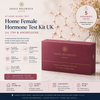
At home female hormone blood test
Home Female Hormone Test Kit UK | LH, FSH & Androgens
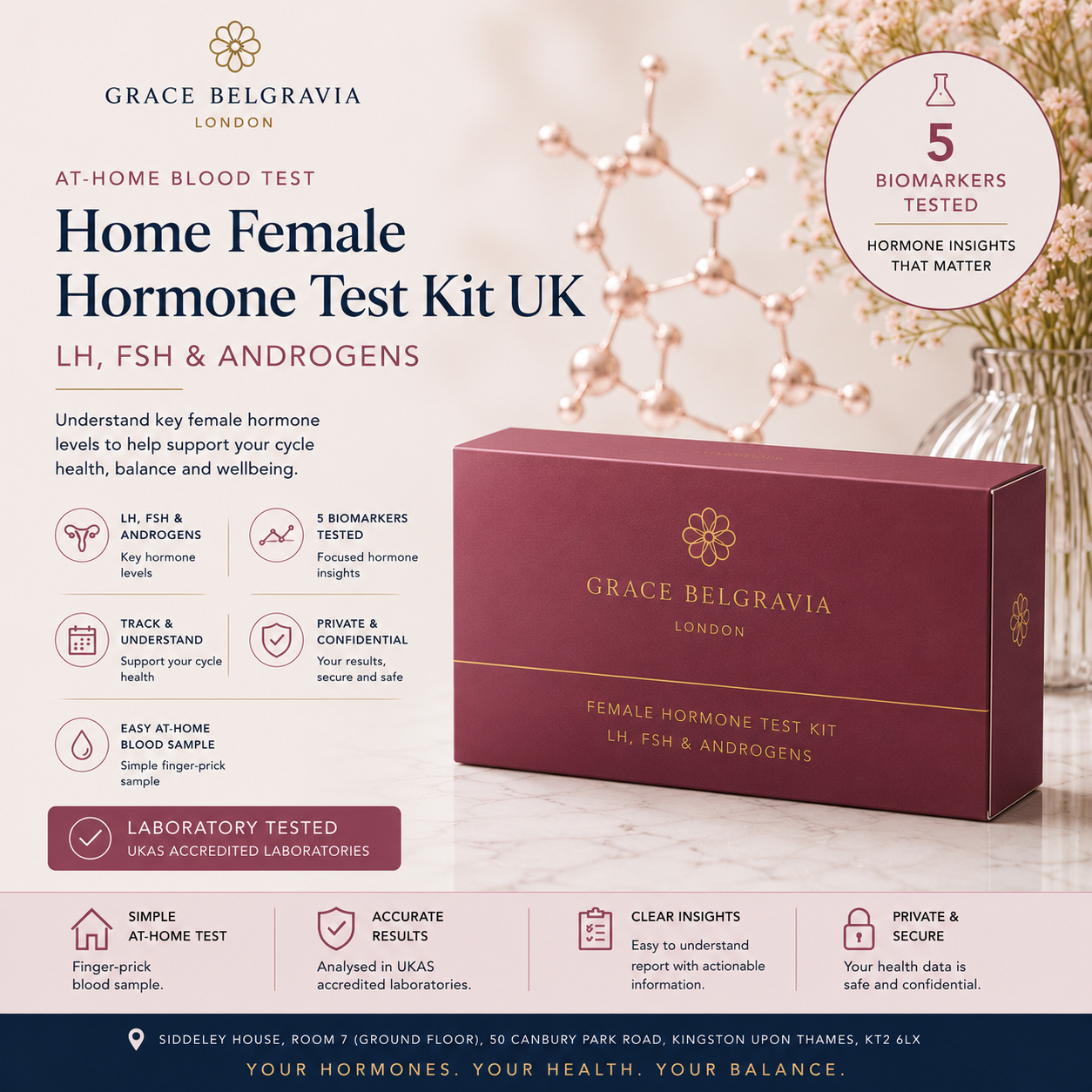
A focused 5 biomarker home blood test measuring LH, FSH, total testosterone, SHBG and calculated free androgen index.
The panel provides information about pituitary and ovarian hormone patterns and biochemical androgen context. Cycle day is recorded so LH and FSH can be considered against the relevant stage of the menstrual cycle.
This focused panel does not diagnose or exclude polycystic ovary syndrome, infertility, menopause, premature ovarian insufficiency, pituitary disease or another endocrine condition by itself.
Quality and compliance
Home testing supported by UK clinical standards
What this hormone test measures
| Health area | Biomarkers | What they may help show |
|---|---|---|
| Pituitary and ovarian signalling | LH and FSH | Cycle stage dependent patterns involving pituitary signals and ovarian response. |
| Androgen context | Total testosterone, SHBG and FAI | Selected information about total testosterone, hormone binding and estimated androgen availability. |
Who may consider this test?
This focused screen may be considered by adults who want selected hormone information in the context of:
- Irregular, infrequent or absent periods
- Acne, increased facial or body hair, or scalp hair thinning
- Possible androgen excess
- Changes in cycle pattern
- Possible pituitary or ovarian hormone patterns
- Monitoring requested by a GP, gynaecologist or endocrinologist
The panel does not include oestradiol, progesterone, prolactin, AMH, DHEAS or thyroid hormones. Those markers may be relevant depending on the symptoms and reason for testing.
Cycle timing and interpretation
| Testing situation | Suggested approach |
|---|---|
| Baseline LH and FSH | Early follicular collection, usually cycle days 2 to 5, is preferred for baseline comparison. |
| Irregular cycles | Collect on a convenient day and record the date of the last period and cycle day if known. |
| No periods | Record how long periods have been absent and any contraception, hormone treatment or pregnancy possibility. |
| Age 45 or over | Hormone testing is not usually required to identify menopause where the symptoms and menstrual history are typical. |
| Hormone medicines | Hormonal contraception, HRT, fertility medicines and testosterone can change the results. |
How the home hormone test kit works
Record cycle details
Note the first day of the last period, cycle day and any hormone medicines.
Collect and return the sample
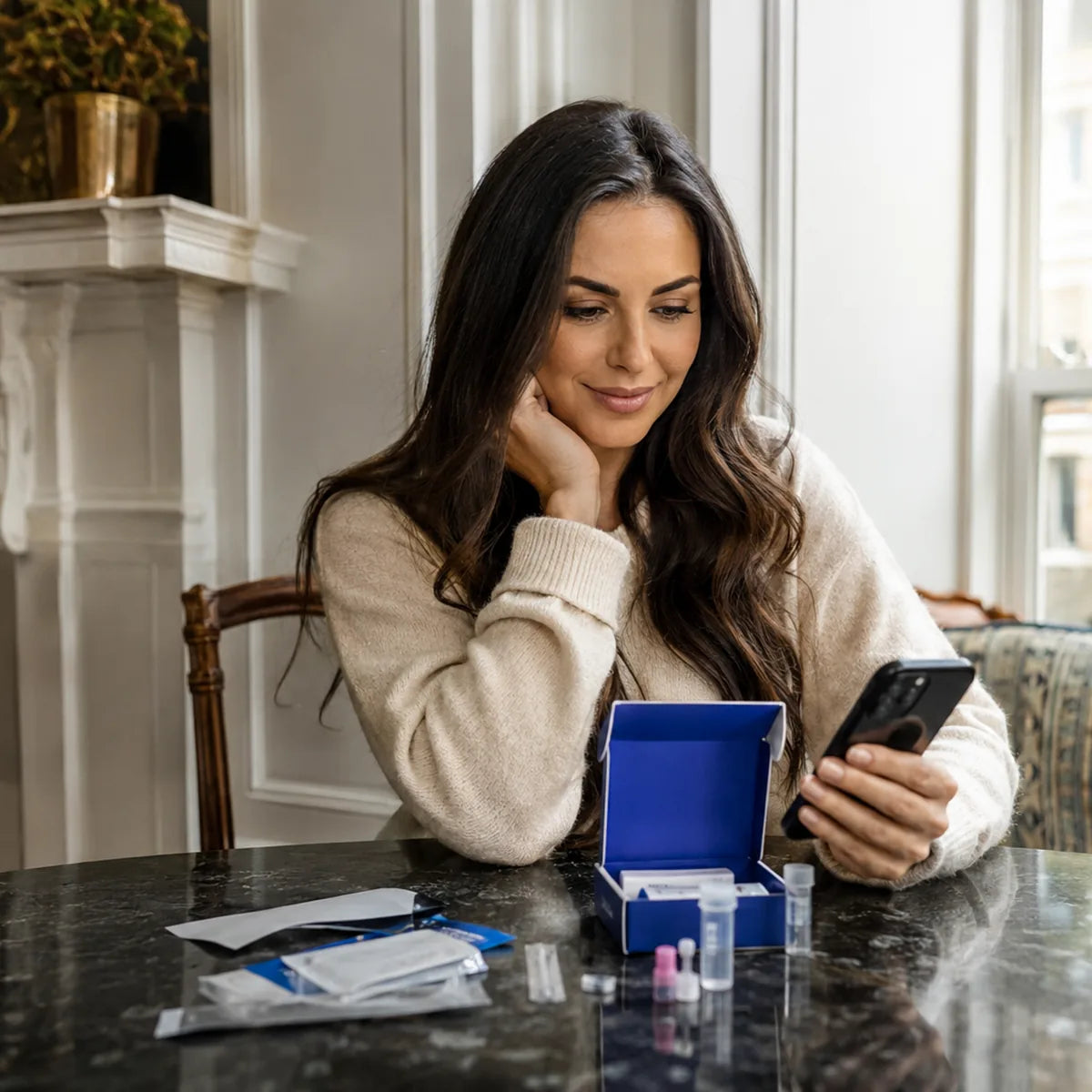
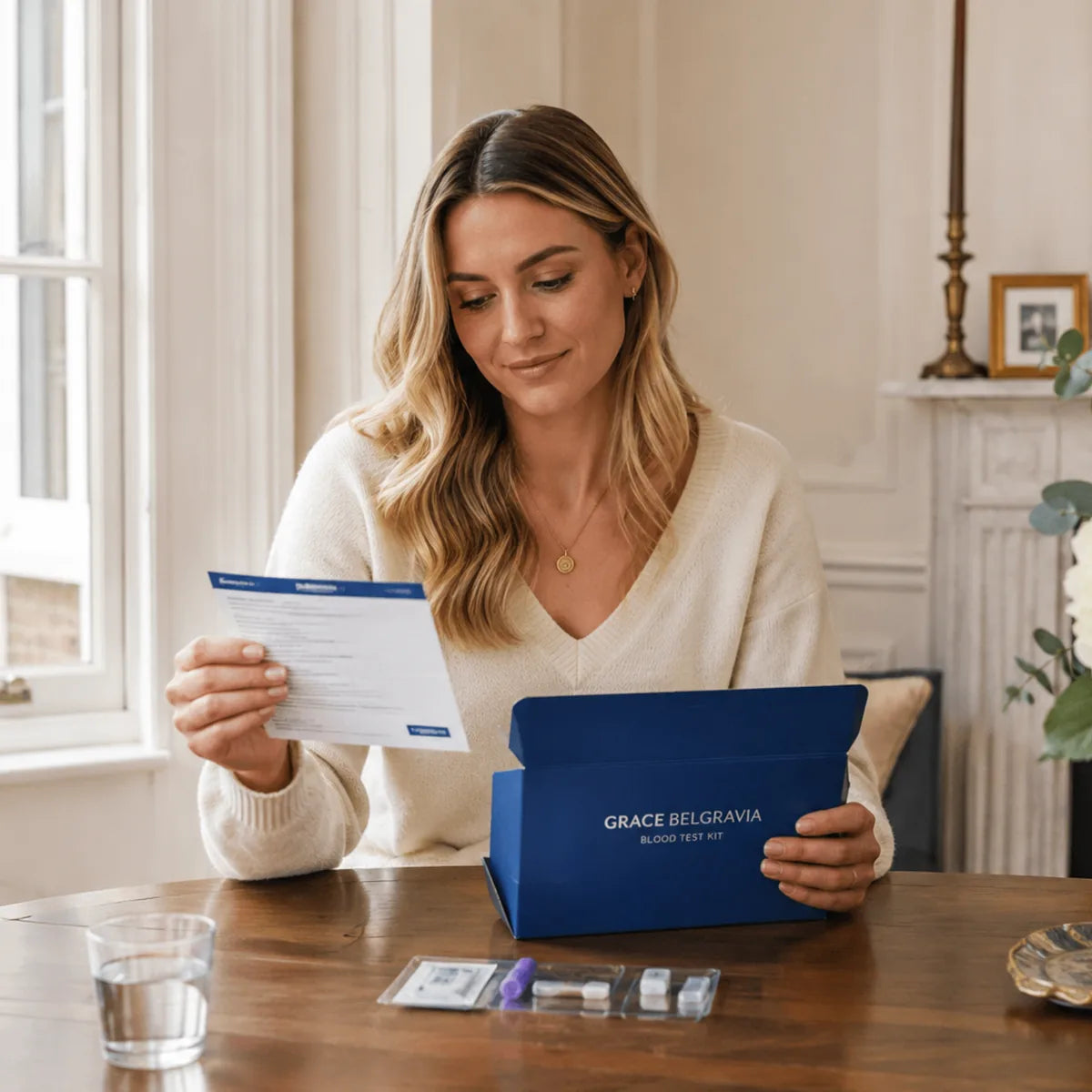
Follow the supplied instructions to collect capillary blood and return the microtainer for analysis.
Review the results
Read the report with the cycle stage and laboratory reference intervals and seek medical advice where appropriate.
Preparing for your test
| Preparation | What to do |
|---|---|
| Cycle information | Record the first day of full menstrual bleeding as day 1 and note the exact cycle day at collection. |
| Hormonal contraception | Tell the provider about the pill, injection, implant, hormonal coil or other contraception. Do not stop it without medical advice. |
| Hormone treatment | Record HRT, fertility medicines, progesterone, testosterone or other endocrine treatment. |
| Biotin | Biotin, vitamin B7, can interfere with some laboratory hormone tests. Ask your doctor whether it should be paused. |
| Hormone gels | Tell the provider if you use or regularly touch testosterone gel because sample contamination can affect results. |
| Fasting | Fasting is not usually required for this panel. Follow the specific instructions supplied with the kit. |
| Pregnancy and illness | Pregnancy, recent illness, substantial weight change and intense exercise may alter hormone results. |
Understanding the result tables
Reference intervals vary by laboratory method, units, age, cycle stage, pregnancy status and hormone treatment. The interval printed on your individual report takes priority.
Biomarkers and result interpretation
Select each biomarker to read what it measures, preparation guidance and how low, normal, high or undefined results may be considered.
Luteinising hormone
Luteinising hormone, known as LH, is produced by the pituitary gland. In women it helps regulate the menstrual cycle and triggers ovulation.
LH changes substantially through the cycle and reaches a natural surge around ovulation. It should be interpreted with the recorded cycle day, FSH, symptoms, age and medicines.
Record day 1 as the first day of full menstrual bleeding. Early follicular collection, usually days 2 to 5, is preferred when comparing baseline LH and FSH.
How to understand this result
| Result | What it may mean | What to do |
|---|---|---|
| Low | A low result may be normal at some cycle stages. It can also occur with reduced pituitary stimulation, low energy availability, significant weight change, chronic illness or some medicines. | Discuss the result with a doctor in the context of cycle day and symptoms. |
| Normal | The result falls within the reference interval for the recorded cycle stage or postmenopausal status. | A normal result does not exclude every cause of irregular cycles or other symptoms. |
| High | A high result may represent the normal midcycle surge. Outside that context it may occur after menopause, with reduced ovarian function or in some people with polycystic ovary syndrome. | Discuss the result with a clinician before drawing conclusions. |
Free androgen index
Free androgen index, known as FAI, is a calculated value based on total testosterone and sex hormone binding globulin.
It can provide useful context where symptoms suggest androgen excess, such as acne, increased facial or body hair, scalp hair thinning or irregular cycles. It does not diagnose polycystic ovary syndrome by itself.
Free androgen index is calculated from total testosterone and SHBG. It estimates androgen availability rather than directly measuring free testosterone.
How to understand this result
| Result | What it may mean | What to do |
|---|---|---|
| Low | A low result may reflect lower testosterone, higher SHBG, hormone treatment, pregnancy, thyroid or liver factors, or normal variation. | Discuss persistent symptoms with your GP. |
| Normal | The calculated value falls within the laboratory reference interval. | A normal result does not exclude every cause of symptoms. |
| Undefined | The calculation could not be produced or interpreted reliably, often because testosterone or SHBG was outside the analytical range. | Follow the laboratory recommendation and discuss repeat testing with a clinician. |
| High | A high result may reflect higher testosterone, lower SHBG or both. It can occur with polycystic ovary syndrome, some medicines, hormone use or less common ovarian or adrenal conditions. | See your GP for clinical assessment before making treatment decisions. |
Sex hormone binding globulin
Sex hormone binding globulin, known as SHBG, is a protein produced mainly by the liver. It binds testosterone and oestradiol and influences how much hormone is available to tissues.
SHBG is used with total testosterone to calculate FAI. It may be influenced by thyroid function, liver health, body weight, insulin resistance, pregnancy and hormone medicines.
How to understand this result
| Result | What it may mean | What to do |
|---|---|---|
| Low | Low SHBG may occur with insulin resistance, higher body weight, an underactive thyroid, androgen exposure or some medicines. It can increase calculated FAI. | Discuss the result with your GP in the context of symptoms and other results. |
| Normal | The result falls within the expected interval and supports interpretation of testosterone and FAI. | A normal result does not exclude every hormone related condition. |
| High | High SHBG may occur with pregnancy, an overactive thyroid, liver conditions or oestrogen containing treatment. It can reduce calculated FAI. | Discuss an unexpected result with your GP. |
Total testosterone
Testosterone is present in women as well as men. In women it is produced by the ovaries and adrenal glands and contributes to sexual function, muscle, bone and other physiological processes.
Total testosterone should be interpreted with SHBG, FAI, symptoms, cycle information and medicines.
Tell the provider about biotin, anticonvulsants, anabolic steroids, hormone treatment and regular contact with testosterone gels or creams. Do not stop prescribed treatment unless advised by a clinician.
How to understand this result
| Result | What it may mean | What to do |
|---|---|---|
| Low | A low result may occur with ovarian or adrenal factors, illness, some medicines, hormone treatment or normal individual variation. | Discuss persistent symptoms with your GP. |
| Normal | The result falls within the laboratory reference interval. | A normal result does not exclude every cause of acne, hair changes, irregular cycles or low libido. |
| High | A high result may occur with polycystic ovary syndrome, anabolic steroid or testosterone exposure, some medicines or less common ovarian or adrenal conditions. | See your GP for clinical assessment and possible further testing. |
Follicle stimulating hormone
Follicle stimulating hormone, known as FSH, is produced by the pituitary gland. In women it supports the growth of ovarian follicles and changes throughout the menstrual cycle and reproductive life.
FSH may provide context when reviewing cycle irregularity, ovarian function, pituitary signalling or suspected premature ovarian insufficiency. It should not be used alone to assess fertility or diagnose menopause.
Record the cycle day at collection. Early follicular sampling, usually days 2 to 5, is preferred when the aim is to compare baseline FSH and LH.
How to understand this result
| Result | What it may mean | What to do |
|---|---|---|
| Low | A low result may be normal at some cycle stages. It can also occur with reduced pituitary stimulation, low energy availability, significant weight change, chronic illness or some medicines. | Discuss the result with a doctor in the context of cycle day and symptoms. |
| Normal | The result falls within the reference interval for the recorded cycle stage or postmenopausal status. | Interpret it with LH, symptoms and medical history. |
| High | A high result may occur as ovarian function declines, including around menopause. It can also occur after ovarian treatment or with other ovarian conditions. | Discuss the result with your GP, particularly if cycles are irregular or absent. |
Content standards
How this product information was prepared
This page was prepared from the supplied product specification and interpretation material. It was expanded using current UK clinical and laboratory guidance while correcting claims that could overstate what a focused female hormone panel can diagnose.
Expert review
Medical and editorial review
This product information has been reviewed for general medical accuracy, cycle timing, androgen interpretation, patient safety and responsible communication of the test limitations.
The review applies to the general information on this page. It is not personal medical advice and does not provide an individual diagnosis or treatment recommendation.
Dr Snieguole Geige
Dentist, Medical Doctor and Senior Adviser
Reviewed the general hormone health boundaries, preventative health context, patient communication and guidance on when specialist assessment is more appropriate.
View professional profileVeronika Matutyte
Medical Doctor and Healthcare Management Expert
Reviewed cycle dependent interpretation, urgent symptom guidance, clinical limitations and patient safety information.
View professional profileDr Laura Geige
Medical Director, Senior Practitioner and Skin Expert
Reviewed the patient friendly presentation, androgen related symptom context, safety wording and the distinction between home testing and individual medical assessment.
View professional profileFurther reading
Authoritative UK hormone and laboratory information
These resources provide additional context. They do not replace the instructions, reference intervals or comments supplied with your individual laboratory report.
View NHS, NICE and UK quality references
Search led questions
Home female hormone test FAQs
Can I test female hormones at home?
Yes. This kit uses a capillary blood sample collected at home and returned to a laboratory. Home collection offers convenience, but results still need to be interpreted with symptoms, age, medicines and cycle timing.
What does a female hormone blood test check?
This panel checks LH, FSH, total testosterone, SHBG and calculated FAI. It focuses on pituitary and ovarian signalling and androgen context.
What is not included in this hormone test?
The panel does not include oestradiol, progesterone, prolactin, AMH, DHEAS or thyroid hormones. A clinician may recommend additional tests depending on your symptoms and the purpose of testing.
What day of my cycle should I take a hormone test?
For baseline LH and FSH comparison, early follicular testing on days 2 to 5 is usually preferred. Day 1 is the first day of full menstrual bleeding.
Can this test diagnose PCOS?
No. Testosterone, SHBG and FAI can contribute to an assessment, but PCOS diagnosis also considers symptoms, menstrual history, exclusion of other causes and sometimes ultrasound or other blood tests.
Can a hormone blood test diagnose menopause?
Usually not in otherwise healthy people aged 45 or over, where menopause is generally identified from symptoms and menstrual history. Testing may be considered in younger people or when the clinical situation is unclear.
Is this a fertility test?
It provides LH and FSH context, but it is not a complete fertility test. It does not measure AMH, progesterone or oestradiol and cannot assess egg quality, the fallopian tubes, the womb or a partner's fertility.
Does hormonal contraception affect hormone blood tests?
Yes. The pill, implant, injection, hormonal coil, HRT and fertility medicines can alter hormone patterns. Do not stop prescribed treatment without medical advice.
Do I need to fast for a female hormone blood test?
Fasting is not usually required for this five marker panel. Follow the instructions supplied with the kit and tell the provider about medicines and supplements.
What do high LH and FSH levels mean?
The meaning depends on cycle stage and age. LH can rise naturally around ovulation. FSH and LH may be higher after menopause or when ovarian function is reduced. One result does not establish a diagnosis.
What is the free androgen index?
FAI is a calculation using total testosterone and SHBG. It estimates androgen availability and may support assessment of androgen excess symptoms, but it does not diagnose PCOS by itself.
How accurate are home female hormone tests?
A suitable sample can be analysed accurately by the laboratory, but clinical interpretation can be affected by cycle timing, hormones, medicines and the markers omitted from the panel.
Are the laboratories UKAS accredited and CQC registered?
Samples are processed through UKAS accredited laboratories within a CQC registered diagnostic pathway. Collection equipment is UKCA and CE marked and supported by an ISO 13485 quality management framework.