

















At home liver blood test
Home Liver Function Test UK | Liver Blood Test Kit
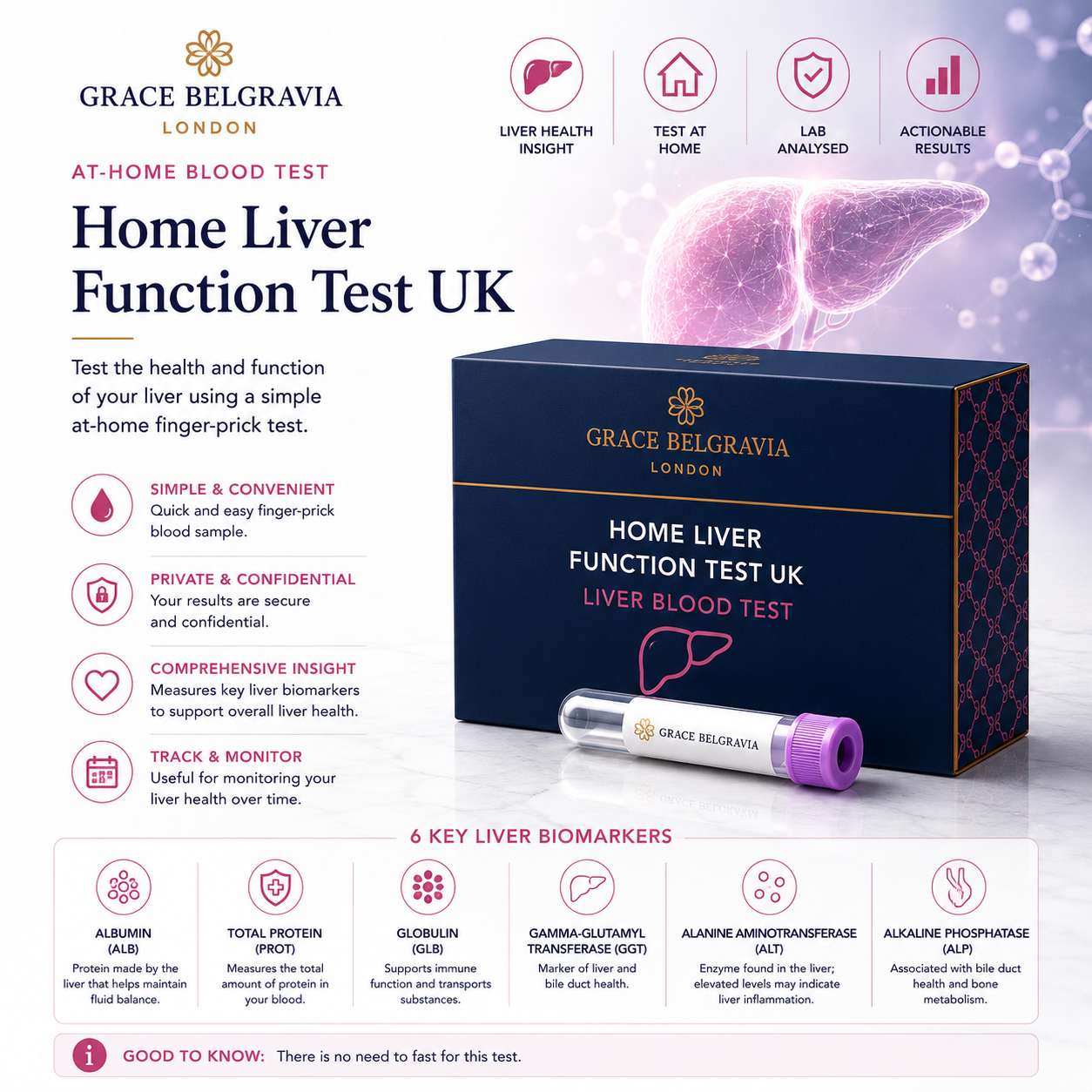
A six marker home blood test measuring selected liver enzymes and blood proteins through a UK laboratory pathway.
The panel reports albumin, total protein, globulin, GGT, ALT and ALP. These markers may provide information about liver cell injury, bile duct patterns and protein status, but they cannot prove that the liver is healthy or diagnose a specific condition by themselves.
This product does not include bilirubin, AST, clotting or INR, platelet count, hepatitis screening, ultrasound, fibrosis scoring or FibroScan. ALT, GGT and ALP are enzymes associated with injury or cholestasis and are not direct measurements of liver function.
Seek urgent help for vomiting blood, black stools, severe abdominal pain, collapse, confusion, marked drowsiness, rapidly increasing abdominal swelling, or jaundice with fever or severe illness.
Quality and compliance
Home liver testing supported by UK standards
What this liver panel measures
| Health area | Biomarkers | What they may help show |
|---|---|---|
| Liver cell injury | ALT | Possible hepatocellular injury, interpreted with symptoms, medicines and other tests. |
| Biliary and enzyme pattern | GGT and ALP | Possible cholestatic pattern and whether a raised ALP may be liver related. |
| Protein status | Albumin, total protein and globulin | Liver synthesis context alongside inflammation, kidney loss, nutrition and immune activity. |
Who may consider this test?
This home liver function test may be considered by adults seeking selected liver and protein information in the context of:
- An earlier abnormal ALT, GGT, ALP, albumin or protein result
- Alcohol, weight or metabolic risk being reviewed with a clinician
- Medicines or supplements that may require liver monitoring
- A history of fatty liver or another liver condition
- Persistent tiredness, nausea, itching or right upper abdominal discomfort alongside medical advice
- A request from a GP or another qualified clinician
Symptoms such as jaundice, abdominal swelling, bleeding, confusion or severe pain require clinical assessment rather than routine home screening.
Understanding common liver blood patterns
These simplified patterns support discussion and are not diagnoses.
| Pattern | Possible context | Important limitation |
|---|---|---|
| Predominantly raised ALT | May suggest a hepatocellular injury pattern from metabolic liver disease, alcohol, viral hepatitis, medicines or other causes. | ALT height does not reliably stage fibrosis or remaining liver function. |
| Raised ALP and GGT | May support a cholestatic or biliary pattern. | Imaging, bilirubin and wider tests may be required to identify the cause. |
| Raised ALP with normal GGT | May suggest a non hepatic source such as bone, growth, pregnancy or vitamin D deficiency. | Additional bone and vitamin D assessment may be needed. |
| Low albumin | May occur with chronic liver disease, kidney loss, inflammation, poor nutrition or fluid overload. | Albumin is non specific and changes slowly. |
| High globulin | May reflect inflammation, infection, autoimmune disease, chronic liver disease or increased immunoglobulins. | Persistent elevation may require immunoglobulins or protein electrophoresis. |
How the home liver blood test works
Review preparation
Record alcohol, medicines, supplements, recent illness, exercise and previous liver results.
Collect and return
Collect capillary blood into the supplied microtainer and return it using the provided packaging.
Review the complete pattern
Interpret enzymes and proteins with symptoms, risk factors, medicines and any previous results.
Preparing for the test
| Preparation | What to do |
|---|---|
| Fasting | Fasting is not generally required. Follow the supplied kit instructions. |
| Alcohol | Avoid unusually heavy drinking before collection and record your usual intake. |
| Medicines | Record all prescribed and over the counter medicines, including paracetamol, statins, antibiotics and antiepileptics. Do not stop treatment yourself. |
| Supplements | Record herbal remedies, bodybuilding products, vitamins and weight loss products. |
| Exercise | Avoid unusually strenuous exercise before collection because muscle injury can influence some enzyme results. |
| Recent illness | Acute illness may temporarily change liver enzymes and proteins. Delay non urgent routine testing until recovered where practical. |
| Pregnancy | Record pregnancy because ALP can rise from placental production and requires appropriate interpretation. |
Biomarkers and result interpretation
Select each marker to read what it measures, preparation guidance and how low, normal, high or urgent results may be considered.
Albumin
Albumin is the most abundant protein in blood plasma and is produced by the liver. It transports hormones, medicines and other substances and helps maintain fluid balance.
Albumin changes relatively slowly and is not a sensitive marker of acute liver injury. Low levels may reflect chronic liver disease, but kidney loss, inflammation, malnutrition, malabsorption and fluid overload are also important causes.
Fasting is not generally required. Record alcohol intake, prescribed medicines, paracetamol, antibiotics, statins, antiepileptics, steroids, bodybuilding products, herbal supplements, recent illness and unusually strenuous exercise. Do not stop prescribed treatment yourself.
How to understand this result
| Result | What it may mean | What to do |
|---|---|---|
| Critical low | A very low result may occur with advanced liver disease, kidney protein loss, severe inflammation, malnutrition or critical illness. | Arrange prompt clinical review and follow the laboratory escalation advice. |
| Low | May reflect reduced synthesis, protein loss, inflammation, poor nutrition, malabsorption or fluid overload. | Discuss liver, kidney, inflammatory and nutritional assessment with a GP. |
| Normal | Falls within the laboratory reference interval. | A normal albumin does not exclude liver inflammation, fatty liver, fibrosis or early cirrhosis. |
| High | Most commonly reflects dehydration or concentration of the sample. | Review hydration and discuss a persistent or unexpected result. |
| Critical high | A markedly high result is unusual and commonly reflects significant dehydration, sample concentration or analytical factors. | Follow urgent or repeat testing advice from the laboratory. |
Total protein
Total protein is the combined amount of albumin and globulin in the blood. It provides broad information but does not identify which protein group is responsible for an abnormal result.
High and low results are not specific to the liver and should be interpreted with albumin, globulin, hydration, inflammation, kidney function and clinical history.
Fasting is not generally required. Record alcohol intake, prescribed medicines, paracetamol, antibiotics, statins, antiepileptics, steroids, bodybuilding products, herbal supplements, recent illness and unusually strenuous exercise. Do not stop prescribed treatment yourself.
How to understand this result
| Result | What it may mean | What to do |
|---|---|---|
| Low | May occur with liver disease, kidney protein loss, malnutrition, malabsorption, inflammation or fluid overload. | Discuss albumin, globulin, kidney and nutritional assessment with a clinician. |
| Normal | Falls within the laboratory interval. | A normal total protein does not prove that liver function is normal. |
| High | May reflect dehydration, infection, inflammation, autoimmune disease or increased immunoglobulins. | A persistent unexplained result may require immunoglobulins or protein electrophoresis. |
Globulin
Globulin is usually calculated by subtracting albumin from total protein. The globulin fraction includes antibodies and several transport proteins.
Not all globulins are made by the liver. Changes may reflect immune activity, inflammation, infection, protein loss, liver disease or disorders that increase a particular immunoglobulin.
Fasting is not generally required. Record alcohol intake, prescribed medicines, paracetamol, antibiotics, statins, antiepileptics, steroids, bodybuilding products, herbal supplements, recent illness and unusually strenuous exercise. Do not stop prescribed treatment yourself.
How to understand this result
| Result | What it may mean | What to do |
|---|---|---|
| Low | May occur with immunodeficiency, protein loss, liver disease, malnutrition or some blood conditions. | Discuss repeat testing and the need for immunoglobulin or kidney assessment. |
| Normal | Falls within the laboratory interval. | A normal globulin does not exclude liver or immune disease. |
| High | May occur with infection, inflammation, autoimmune disease, chronic liver disease or paraprotein disorders. | A persistent unexplained rise may require immunoglobulins and protein electrophoresis. |
Gamma glutamyl transferase (GGT)
GGT is an enzyme found mainly in the liver and biliary system. It can support interpretation of a raised ALP and may rise with cholestasis, alcohol exposure, metabolic liver disease and several medicines.
GGT is sensitive but not specific. A raised result does not identify the cause, and a normal result does not exclude liver disease.
GGT cannot establish how much alcohol a person drinks or prove that alcohol is the cause of an abnormal result.
Fasting is not generally required. Record alcohol intake, prescribed medicines, paracetamol, antibiotics, statins, antiepileptics, steroids, bodybuilding products, herbal supplements, recent illness and unusually strenuous exercise. Do not stop prescribed treatment yourself.
How to understand this result
| Result | What it may mean | What to do |
|---|---|---|
| Low | A low GGT is usually not clinically concerning. | Interpret the wider panel and symptoms rather than the low result alone. |
| Normal | Falls within the laboratory interval. | A normal result does not exclude fatty liver, fibrosis, hepatitis or another liver condition. |
| High | May occur with alcohol exposure, cholestasis, metabolic liver disease, hepatitis, medicines or enzyme induction. | Discuss alcohol, medicines, metabolic risk and the ALP and ALT pattern with a GP. |
| Critical high | A markedly raised result may accompany significant cholestasis, alcohol related injury, medicine effects or other liver disease. | Arrange prompt clinical review and follow the laboratory escalation advice. |
Alanine aminotransferase (ALT)
ALT is an enzyme concentrated in liver cells. It may enter the blood when hepatocytes are injured and is therefore a marker of hepatocellular injury rather than a direct measure of liver function.
ALT may rise with metabolic fatty liver, alcohol, viral hepatitis, medicines, supplements and other causes. The magnitude of elevation does not reliably indicate the amount of fibrosis or remaining liver function.
Fasting is not generally required. Record alcohol intake, prescribed medicines, paracetamol, antibiotics, statins, antiepileptics, steroids, bodybuilding products, herbal supplements, recent illness and unusually strenuous exercise. Do not stop prescribed treatment yourself.
How to understand this result
| Result | What it may mean | What to do |
|---|---|---|
| Low | A low ALT is usually not clinically concerning, although it may occur with low muscle mass, frailty or nutritional factors. | Interpret the result with symptoms and the wider clinical picture. |
| Normal | Falls within the laboratory interval. | A normal ALT does not exclude fatty liver, hepatitis, fibrosis, cirrhosis or liver cancer. |
| High | May indicate liver cell injury from metabolic liver disease, alcohol, viral hepatitis, medicines, supplements or other causes. | Discuss the result, trend, alcohol and medicine history with a GP. |
| Critical high | A marked rise can occur with acute hepatitis, medicine related injury, ischaemia or another significant liver insult. | Seek prompt medical assessment and follow the laboratory's urgent advice. |
Alkaline phosphatase (ALP)
ALP is an enzyme found in the bile ducts, bones, placenta and other tissues. It is not specific to the liver.
A raised ALP together with a raised GGT supports a liver or biliary source. An isolated ALP rise may come from bone growth, healing, vitamin D deficiency, pregnancy or bone disease.
Fasting is not generally required. Record alcohol intake, prescribed medicines, paracetamol, antibiotics, statins, antiepileptics, steroids, bodybuilding products, herbal supplements, recent illness and unusually strenuous exercise. Do not stop prescribed treatment yourself.
How to understand this result
| Result | What it may mean | What to do |
|---|---|---|
| Critical low | A markedly low ALP is uncommon and may reflect malnutrition, zinc or magnesium deficiency, hypothyroidism, severe anaemia or rare hypophosphatasia. | Arrange clinical review where the result is persistent or symptoms are present. |
| Low | May occur with nutritional deficiency, hypothyroidism, anaemia, medicine effects or rare inherited conditions. | Discuss repeat testing and the clinical context with a GP. |
| Normal | Falls within the laboratory interval. | A normal ALP does not exclude liver or bone disease. |
| High | May arise from cholestasis, bile duct obstruction, bone turnover, vitamin D deficiency, pregnancy or other causes. | Interpret it with GGT, symptoms, pregnancy and bone or vitamin D context. |
| Critical high | A markedly raised result can occur with significant biliary obstruction, cholestatic liver disease or major bone pathology. | Arrange prompt medical review and follow the laboratory escalation advice. |
What this panel does not include
| Not included | Why it may matter |
|---|---|
| Bilirubin | Helps assess bilirubin handling, jaundice and some cholestatic or haemolytic patterns. |
| AST | May support hepatocellular pattern assessment and fibrosis scoring. |
| INR or clotting | Provides more direct information about liver synthetic function in acute or advanced disease. |
| Platelet count | May contribute to fibrosis risk assessment and portal hypertension context. |
| Hepatitis screening | Specific antigen, antibody or molecular tests are required to identify viral hepatitis. |
| Ultrasound, ELF or FibroScan | May be required to assess fat, bile ducts, structural change or liver fibrosis. |
Evidence and content standards
How this product information was prepared
This page was prepared from the supplied six marker Liver Panel specification and checked against current NHS Specialist Pharmacy Service, NHS pathway, British Liver Trust, UKAS and CQC information on liver enzymes, protein markers, cholestasis, fibrosis limitations and home testing.
Clinical accountability
Medical interpretation, metabolic context and governance review
The review roles are separated across medical interpretation, metabolic and nutritional context, and clinical governance. The reviewers are not presented as consultant hepatologists or gastroenterologists.
Dr Snieguole Geige
Dentist, Medical Doctor and Senior Adviser
Reviewed enzyme and protein interpretations, urgent symptoms, medicine disclosure and the distinction between selected blood markers and diagnosis.
View professional profileDr Rimas Geiga
Medical Doctor, Nutritional Sciences Adviser and Healthy Ageing Expert
Reviewed metabolic liver risk, alcohol and nutrition context, protein markers, healthy ageing boundaries and responsible lifestyle information.
View professional profileDr Laura Geige
Medical Director, Senior Practitioner and Skin Expert
Reviewed patient facing clarity, urgent escalation, claims compliance, follow up boundaries and the separation of laboratory information from prescribing.
View professional profileAuthoritative references
UK liver blood test and home testing sources
View the evidence sources used
- NHS Specialist Pharmacy Service: assessing liver function and interpreting liver blood tests
- Royal United Hospitals Bath NHS: liver function tests in adults
- North Bristol NHS: investigation of abnormal liver blood tests in primary care
- British Liver Trust: home testing for liver disease
- NICE information on liver fibrosis assessment
- UKAS ISO 15189 medical laboratory accreditation information
- CQC guidance on diagnostic and screening procedures
Search led questions
Home liver function test FAQs
Can I take a liver function test at home?
Yes. This kit uses capillary blood collected at home and returned for laboratory analysis. It measures six selected enzymes and proteins, but a home result cannot by itself confirm that the liver is healthy or diagnose liver disease.
What does this liver blood test measure?
The panel reports albumin, total protein, globulin, gamma glutamyl transferase, alanine aminotransferase and alkaline phosphatase.
Is this a complete liver function test?
It is a selected six marker liver blood panel. It does not include bilirubin, AST, clotting or INR, platelet count or imaging, so it should not be described as a complete assessment of liver function.
Do I need to fast for a liver function test?
Fasting is not generally required for these six markers. Follow the kit instructions and record recent alcohol, medicines, supplements, illness and unusually strenuous exercise.
Can alcohol affect liver blood test results?
Yes. Alcohol can raise GGT and may influence other liver markers. Avoid unusually heavy drinking before collection and record your typical intake. Do not use a single result to judge whether alcohol has or has not damaged the liver.
Can medicines or supplements affect liver results?
Yes. Prescribed medicines, over the counter products, bodybuilding products and herbal supplements can alter liver enzymes or cause liver injury. Record everything taken and do not stop prescribed treatment without medical advice.
What does a high ALT result mean?
ALT commonly rises when liver cells are injured. Possible causes include metabolic dysfunction associated steatotic liver disease, alcohol, viral hepatitis, medicines and other liver conditions. The height of ALT does not reliably show how much permanent liver damage is present.
What does a normal ALT result mean?
A normal ALT is reassuring but does not exclude fatty liver, fibrosis, cirrhosis, hepatitis or another liver condition. Symptoms and risk factors may require further assessment.
What does a high GGT result mean?
GGT may rise with alcohol exposure, cholestasis, metabolic liver disease and several medicines. It is sensitive but not specific, so the cause cannot be determined from GGT alone.
What does a high ALP result mean?
ALP may come from the liver, bile ducts, bones or placenta. A raised ALP together with a raised GGT supports a liver or biliary source, while an isolated ALP rise may require bone and vitamin D assessment.
What does low albumin mean?
Low albumin can occur with chronic liver disease, kidney protein loss, inflammation, malnutrition, malabsorption or fluid overload. It is not specific to the liver and requires clinical review.
What does high albumin mean?
High albumin most commonly reflects dehydration or concentration of the blood sample. It is not usually a sign that the liver is producing too much protein.
What does high total protein mean?
High total protein may occur with dehydration, inflammation, infection or increased immunoglobulins, including paraprotein disorders. Albumin and globulin should be considered separately.
What does high globulin mean?
High globulin may occur with infection, inflammation, autoimmune disease, chronic liver disease or increased immunoglobulins. A persistent unexplained rise may require immunoglobulin tests or protein electrophoresis.
Can this test detect fatty liver?
No. Liver enzymes may be normal in metabolic dysfunction associated steatotic liver disease. Diagnosis and fibrosis risk assessment may require clinical review, metabolic tests, ultrasound, FIB 4, ELF or FibroScan.
Can this test detect liver fibrosis or cirrhosis?
No. Routine enzymes and proteins cannot reliably stage liver scarring. Fibrosis assessment may use platelet count, AST, FIB 4, ELF testing, transient elastography or imaging.
Can this test diagnose hepatitis?
No. Viral hepatitis requires specific antigen, antibody or molecular tests. Liver enzymes may be raised or normal and cannot identify the virus.
Can normal liver blood tests rule out liver disease?
No. Some liver conditions cause normal or only mildly abnormal blood results, particularly early disease or established fibrosis. Risk factors and symptoms remain important.
What happens after an abnormal liver result?
A GP may repeat the panel, review alcohol, weight, medicines and supplements, and request bilirubin, AST, full blood count, clotting, hepatitis screening, autoimmune tests, iron studies, ultrasound or fibrosis assessment.
Can this test monitor medicines that affect the liver?
It may provide selected information, but medicine monitoring must follow the prescriber's requested markers, timing and action thresholds. This panel may not contain every test required for a particular medicine.
What liver symptoms need urgent medical assessment?
Seek urgent help for vomiting blood, black stools, severe abdominal pain, collapse, confusion, marked drowsiness, rapidly increasing abdominal swelling, or jaundice with fever or severe illness.
Does this test check for liver cancer?
No. These markers do not screen for or exclude liver cancer. Assessment may require examination, imaging and specialist tests based on symptoms and risk.
Are the laboratories UKAS accredited and CQC registered?
Samples are processed through UKAS accredited laboratories within a CQC registered diagnostic pathway. Collection equipment is UKCA and CE marked and supported by an ISO 13485 quality management framework.