





















At home high sensitivity CRP blood test
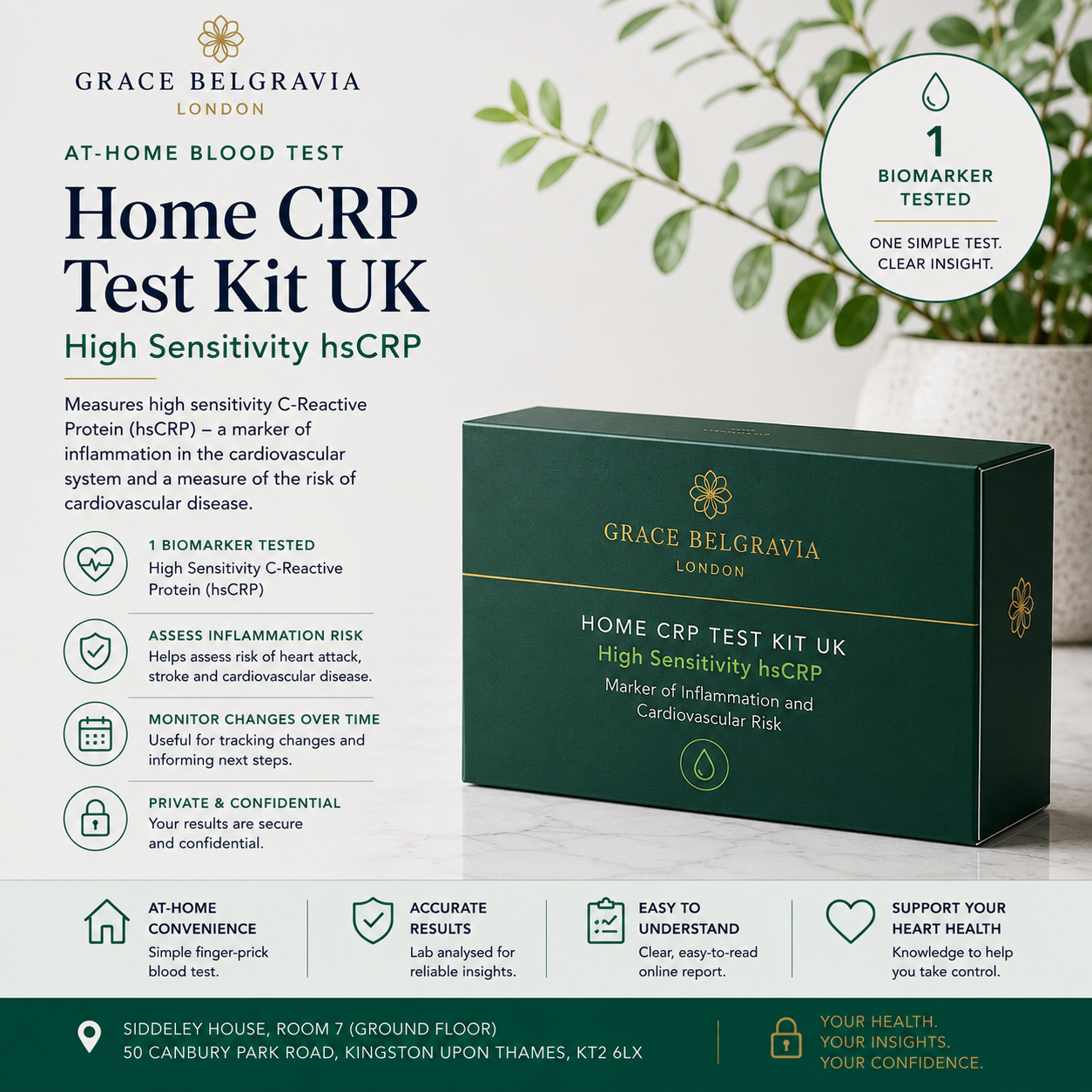
Home CRP Test Kit UK | High Sensitivity hsCRP
A single biomarker home blood test measuring high sensitivity C reactive protein, a non specific marker of low grade systemic inflammation.
hsCRP can provide additional context about inflammation associated with cardiovascular risk. It does not identify the cause of inflammation and it cannot diagnose or rule out heart disease.
Current UK cardiovascular risk guidance does not recommend hsCRP as a routine standalone screening test. Heart and stroke risk should be assessed using established factors such as age, blood pressure, cholesterol, diabetes, smoking, kidney health, family history and QRISK3.
Do not use this home test to investigate urgent symptoms. Call 999 for severe or persistent chest pain, pain spreading to the arm, jaw, back or stomach, severe breathlessness, collapse or symptoms that may represent a heart attack.
Quality and compliance
Home testing supported by UK clinical standards
What is high sensitivity CRP?
C reactive protein is produced mainly by the liver in response to inflammatory signals. Its concentration can rise with infection, injury, surgery, autoimmune activity and many other conditions.
A high sensitivity assay measures lower concentrations of the same protein than a standard CRP test. These lower concentrations have been studied as an additional marker when considering cardiovascular risk.
hsCRP is not inflammation located specifically inside the heart or blood vessels. It is a systemic and non specific marker. A raised result cannot show where inflammation is occurring or establish its cause.
What this test can and cannot tell you
| Question | What the test may show | What it cannot show |
|---|---|---|
| Low grade inflammation | Whether a low concentration of CRP is detectable at the time of collection. | The location, cause or duration of the inflammation. |
| Cardiovascular context | Additional information that may be considered with established cardiovascular risk factors. | Your overall risk of heart attack or stroke by itself. |
| Heart disease | Nothing diagnostic. A raised result may prompt a wider discussion. | Blocked arteries, angina, a heart attack, heart failure or another cardiac diagnosis. |
| Change over time | A repeat test may show whether a raised result persists when you are well. | Whether a treatment has prevented a future cardiovascular event. |
Who may consider this test?
This test may be considered by adults who:
- Want to discuss low grade inflammation alongside a wider cardiovascular assessment
- Have already reviewed cholesterol, blood pressure, glucose and other established risk factors
- Have been advised by a doctor to monitor hsCRP
- Want to repeat a previous result when free from acute illness
- Understand that the result is non specific and not diagnostic
This single marker test is not a complete heart health screen. A broader assessment may include a lipid profile, blood pressure, HbA1c or glucose, kidney function, smoking status, family history and QRISK3.
How the home hsCRP test kit works
Check the timing
Collect when you are well and free from recent infection, injury, surgery or an inflammatory flare.
Collect and return
Collect capillary blood into the supplied microtainer and return it using the provided packaging.
Review in context
Use the laboratory reference interval and discuss a raised or unexpected result with a healthcare professional.
Preparing for the test
| Preparation | What to do |
|---|---|
| Fasting | Fasting is not normally required for hsCRP alone. Follow the specific kit instructions. |
| Illness or infection | Delay cardiovascular hsCRP testing until you have recovered. Follow the supplied recommendation about how long to wait. |
| Inflammatory conditions | Discuss testing with a doctor if you have an autoimmune or inflammatory condition or are experiencing a flare. |
| Surgery or injury | Recent surgery, trauma or tissue injury can raise CRP and make cardiovascular interpretation unreliable. |
| Exercise | Avoid unusually strenuous or unfamiliar exercise before collection. |
| Medicines | Record steroids, anti inflammatory medicines, immunosuppressants, statins and other prescribed treatment. Do not stop medicine without advice. |
| Smoking | Smoking is associated with cardiovascular risk and may also be associated with higher inflammation markers. Record smoking status for wider assessment. |
Understanding your hsCRP result
The unit, reference interval and laboratory comment printed on your individual report take priority. hsCRP varies over time and should not be interpreted in isolation.
| Result category | What it may mean | What to do |
|---|---|---|
| Within laboratory range | No raised hsCRP was identified using the laboratory reference interval. This does not mean that overall cardiovascular risk is low. | Continue to assess cholesterol, blood pressure, diabetes risk, smoking and other established factors. |
| Above cardiovascular comparison level | Some interpretations compare results below and above 2 mg/L, while some UK laboratories use a reference interval up to 3 mg/L. | Use the exact laboratory comment. Consider repeat testing and a wider cardiovascular review rather than treating the number alone. |
| High | A raised result indicates inflammation but does not identify the cause. Infection, injury, autoimmune activity, smoking, weight and other factors may contribute. | Discuss the result with a GP or qualified clinician, particularly if it is unexpected or persistent. |
| Markedly raised | A result above approximately 10 mg/L is more likely to reflect an active inflammatory, infectious or tissue injury process than stable low grade cardiovascular inflammation. | Seek clinical advice and consider repeat testing after recovery. Follow urgent laboratory instructions where provided. |
When hsCRP is being considered for cardiovascular context, an unexpected raised result may be repeated when you are well. Some guidance recommends averaging two measurements taken approximately two weeks apart.
hsCRP and a complete cardiovascular assessment
| Risk factor or test | Why it matters |
|---|---|
| Cholesterol profile | LDL, non HDL cholesterol, HDL and triglycerides are established components of cardiovascular assessment. |
| Blood pressure | High blood pressure is a major modifiable risk factor for heart attack, stroke and kidney disease. |
| HbA1c or glucose | Diabetes and raised blood glucose increase cardiovascular risk. |
| Smoking status | Smoking substantially increases heart and circulatory disease risk. |
| QRISK3 | UK clinicians use validated risk calculation to estimate ten year cardiovascular risk in appropriate adults. |
| hsCRP | A non specific inflammation marker that may offer additional context but is not a replacement for the factors above. |
Content standards
How this product information was prepared
This page was prepared from the supplied hsCRP product information and expanded using current UK cardiovascular risk, laboratory and emergency symptom guidance.
Expert review
Medical and editorial review
This product information has been reviewed for cardiovascular and metabolic context, inflammation test limitations, patient safety and appropriate escalation of urgent symptoms.
The reviewers are not presented as consultant cardiologists. This review does not replace individual cardiovascular assessment by a GP or cardiology professional.
Dr Rimas Geiga
Medical Doctor, Nutritional Sciences Adviser and Healthy Ageing Expert
Reviewed the metabolic health, inflammation, established cardiovascular risk factor and responsible lifestyle context.
View professional profileVeronika Matutyte
Medical Doctor and Healthcare Management Expert
Reviewed chest pain and emergency guidance, clinical limitations, repeat testing advice and the safety of the home testing pathway.
View professional profileDr Laura Geige
Medical Director, Senior Practitioner and Skin Expert
Reviewed the patient friendly presentation, risk communication and distinction between an inflammation marker and a cardiovascular diagnosis.
View professional profileFurther reading
Authoritative UK cardiovascular and laboratory information
These resources provide additional context. They do not replace the instructions, reference interval or comments supplied with your individual laboratory report.
View NICE and UK laboratory references
- NICE cardiovascular disease risk assessment and reduction
- Association for Laboratory Medicine information about hsCRP
- Cambridge University Hospitals hsCRP test information
- Sheffield Laboratory Medicine hsCRP information
- British Heart Foundation guide to blood tests and heart risk
- UKAS medical laboratory accreditation
- CQC diagnostic and screening services guidance
Search led questions
Home CRP and hsCRP test FAQs
Can I test CRP at home?
Yes. This kit uses a capillary blood sample collected at home and returned for laboratory analysis. It measures high sensitivity C reactive protein rather than providing an instant home reading.
What is an hsCRP blood test?
An hsCRP test measures very low concentrations of C reactive protein. It is designed to detect low grade systemic inflammation that may provide additional cardiovascular context.
What is the difference between CRP and hsCRP?
Both tests measure the same protein. Standard CRP is commonly used when more substantial inflammation, infection or autoimmune activity is suspected. High sensitivity CRP measures lower concentrations that may be considered in cardiovascular risk discussions.
Does hsCRP diagnose heart disease?
No. hsCRP does not diagnose coronary heart disease, a heart attack, blocked arteries or stroke. It is one non specific inflammation marker and must not replace assessment of cholesterol, blood pressure, diabetes, smoking, family history and QRISK.
Is hsCRP recommended for routine heart risk screening in the UK?
Current UK cardiovascular risk guidance does not routinely recommend hsCRP as a standard screening test. UK assessment usually relies on established risk factors and a validated score such as QRISK3. A clinician can advise whether hsCRP adds useful context in an individual case.
What is a normal hsCRP result?
Reference intervals vary by laboratory method. Some UK laboratories use an interval up to 3 mg/L, while other cardiovascular interpretations compare results below and above 2 mg/L. Use the range and comment printed on your report.
What does a high hsCRP result mean?
A raised result means that more C reactive protein was detected. It can occur with infection, injury, surgery, an autoimmune or inflammatory condition, smoking, higher body weight or other factors. It does not identify the source of inflammation.
What does an hsCRP result above 10 mg/L mean?
A markedly raised result is more likely to reflect an active infection, injury or inflammatory process than low grade cardiovascular inflammation. Clinical review and repeat testing after recovery may be appropriate.
Should an elevated hsCRP test be repeated?
Because CRP changes over time, an unexpected raised result may be repeated when you are well. Some laboratory guidance recommends using the average of two tests taken around two weeks apart when hsCRP is being considered for cardiovascular context.
Do I need to fast for an hsCRP test?
Fasting is not usually required for hsCRP alone. Follow the instructions supplied with the kit, particularly where another biomarker has been added to the order.
Can illness affect an hsCRP test?
Yes. Infection, fever, recent surgery, injury and an inflammatory or autoimmune flare can raise CRP. Wait until the condition has settled before using hsCRP for cardiovascular context unless a clinician advises otherwise.
Can exercise raise hsCRP?
Strenuous or unfamiliar exercise can temporarily increase inflammation markers. Avoid unusually intense exercise before collection and follow the kit preparation instructions.
Can medicines affect hsCRP?
Steroids, anti inflammatory medicines, statins and immunosuppressive treatment may affect CRP. Do not stop prescribed medicine. Record what you take and discuss the result with a clinician.
What other tests are used to assess heart risk?
A fuller cardiovascular assessment may include cholesterol and triglycerides, blood pressure, HbA1c or glucose, kidney function, smoking status, age, family history and a QRISK3 calculation. hsCRP cannot replace these.
When should chest pain or breathlessness be treated as urgent?
Call 999 for persistent or severe chest pain, pain spreading to the arm, jaw, back or stomach, severe breathlessness, collapse, fainting, sweating with chest discomfort or symptoms that may represent a heart attack.
Are the laboratories UKAS accredited and CQC registered?
Samples are processed through UKAS accredited laboratories within a CQC registered diagnostic pathway. Collection equipment is UKCA and CE marked and supported by an ISO 13485 quality management framework.