




















At home total PSA blood test
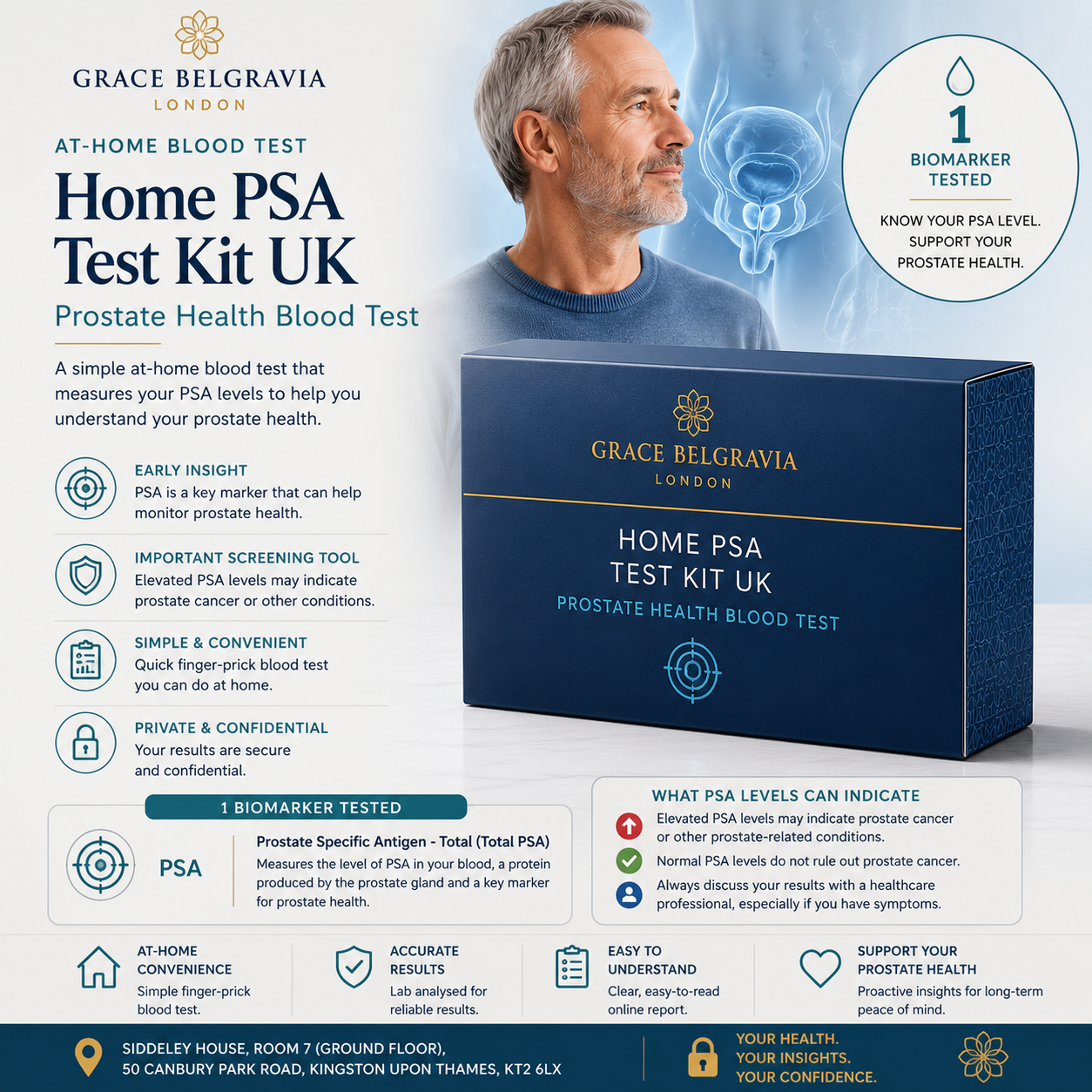
Home PSA Test Kit UK | Prostate Health Blood Test
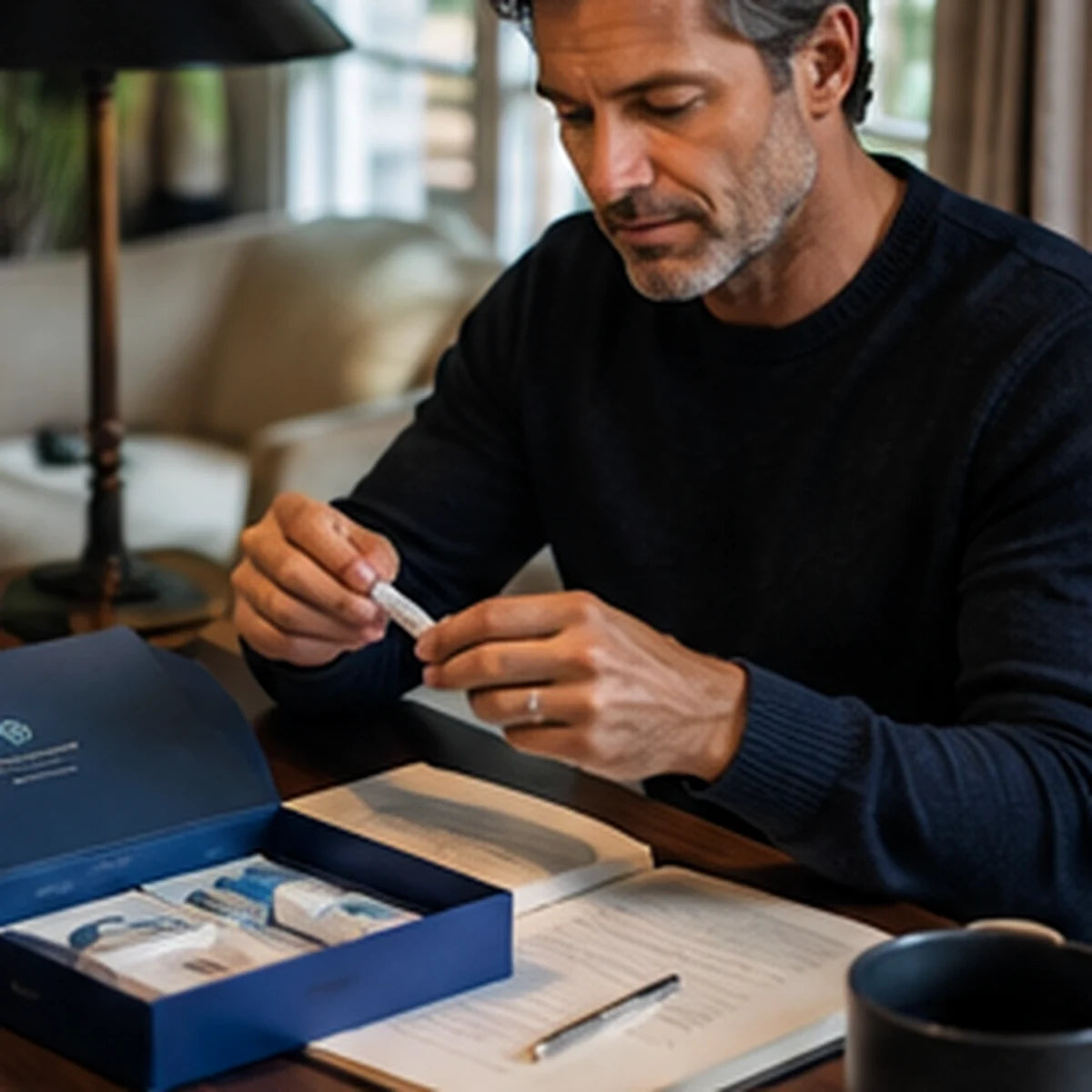
A laboratory analysed home blood test measuring total prostate specific antigen.
PSA can help identify whether further prostate assessment may be appropriate. A raised result is not a diagnosis of prostate cancer, and a low result cannot completely rule it out.
The result must be considered with age, symptoms, family history, ethnicity, medicines, prostate size, infection, previous PSA measurements and any clinical examination. Further assessment may include a repeat PSA, urine testing, MRI and sometimes biopsy.
Speak with a GP about urinary symptoms, blood in urine or semen, a new erectile problem or persistent pelvic or back pain. Seek urgent help for inability to pass urine, heavy bleeding, severe infection symptoms or back pain with new leg weakness, numbness or bladder or bowel changes.
Quality and compliance
Home testing supported by UK clinical standards
What is a PSA blood test?
Prostate specific antigen is a protein produced by normal prostate cells and prostate cancer cells. A small amount is normally present in the blood.
The PSA level may rise as the prostate enlarges with age. It may also rise because of benign prostate enlargement, prostatitis, a urine infection, recent ejaculation, prostate stimulation, vigorous exercise, cycling, a biopsy or another urinary procedure.
The test is therefore best understood as a signal that may justify further assessment, not as a positive or negative cancer result.
Who may consider this test?
A total PSA blood test may be considered by people with a prostate who:
- Want to discuss prostate health and PSA testing with a GP
- Have urinary symptoms or a new erectile problem
- Are over 50 and want to understand the benefits and limitations of PSA testing
- Are Black or have a close family history and want to discuss testing from age 45
- Have a previous PSA result that requires comparison
- Have been asked to monitor PSA after a prostate diagnosis or treatment
- Have a known BRCA2 or other relevant inherited risk factor
Routine population PSA screening is not currently offered by the NHS. A GP can discuss whether testing is appropriate and place the result within your personal risk context.
Benefits and limitations of PSA testing
| Potential benefit | Important limitation |
|---|---|
| May identify a prostate problem before it causes obvious symptoms. | A raised result is not specific to cancer and may lead to repeat tests, MRI or biopsy. |
| May support earlier investigation where cancer is present. | Some prostate cancers do not produce a clearly raised PSA. |
| May help monitor a known prostate condition or treatment. | Expected PSA values differ after surgery, radiotherapy, hormone treatment and other interventions. |
| Can be compared over time when collection conditions are consistent. | Short term factors such as infection, ejaculation, cycling and procedures can distort comparison. |
| Provides a numerical result that can inform discussion with a clinician. | Testing may identify slow growing cancer that would never have caused harm, leading to anxiety or unnecessary treatment. |
How the home PSA test kit works
Prepare correctly
Check infection, exercise, ejaculation, cycling, medicine and recent procedure guidance.
Collect and return
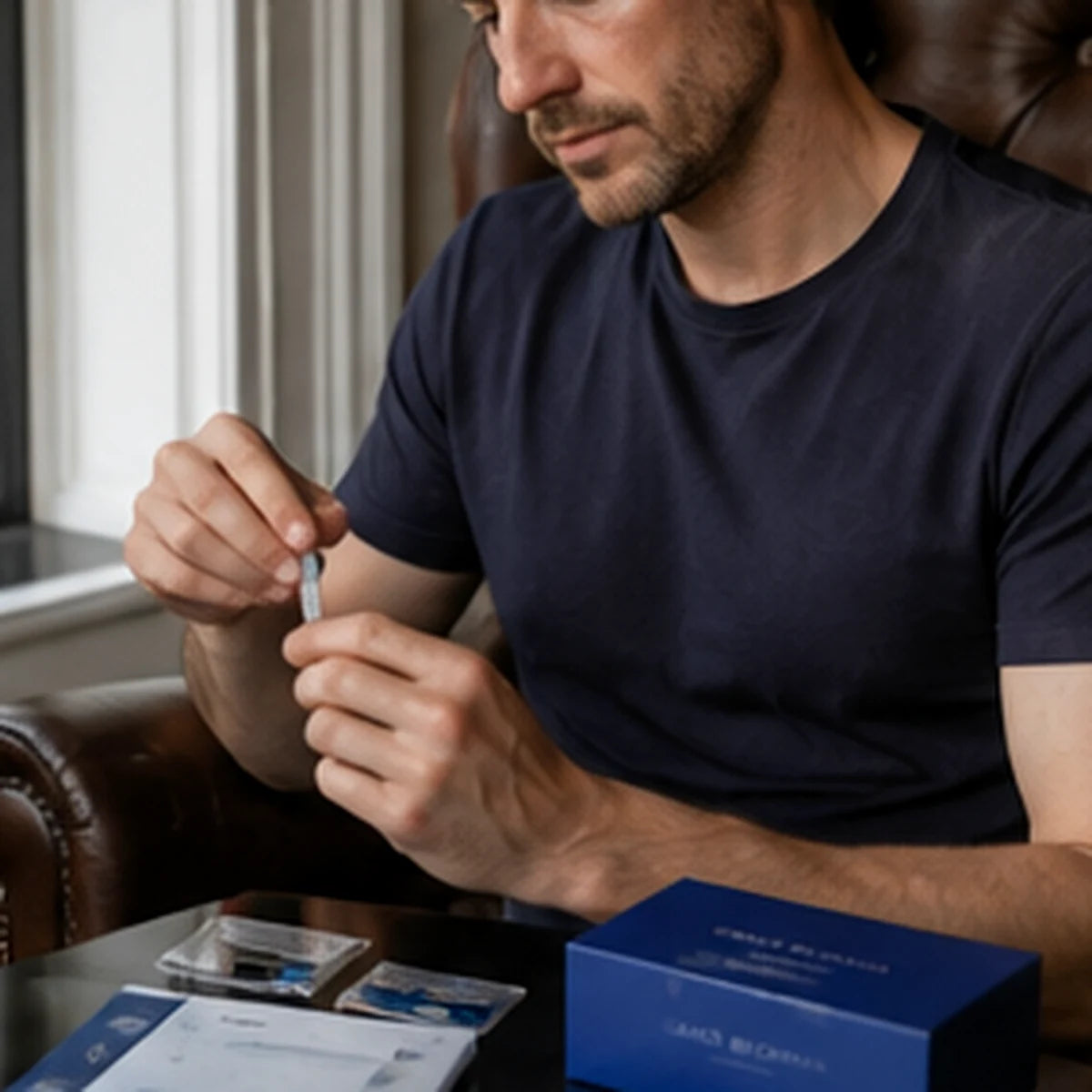
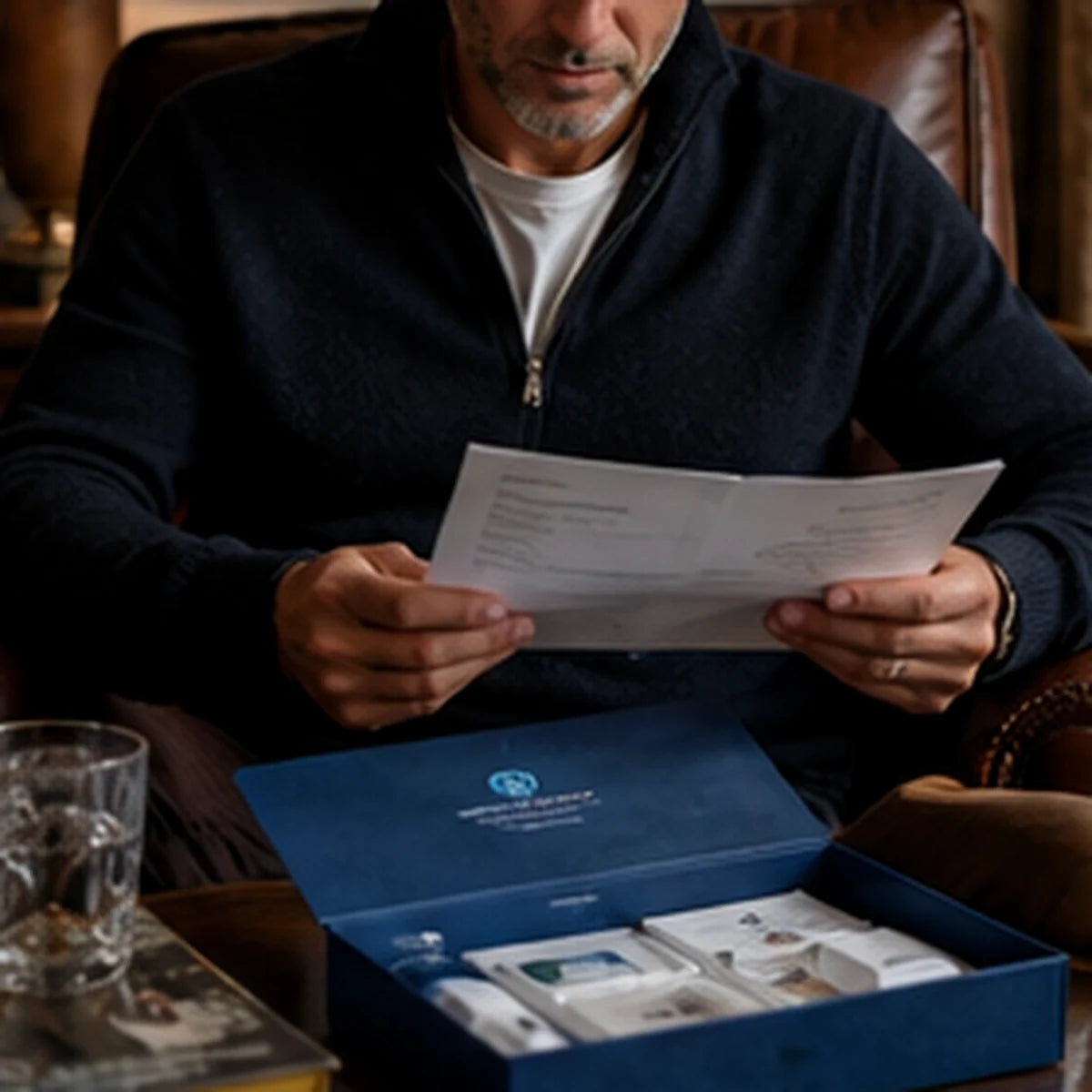
Collect capillary blood into the supplied microtainer and return it using the provided packaging.
Share the result
Discuss the numerical PSA value with a GP, particularly when it is raised, changing or symptoms are present.
Preparing for your PSA test
| Preparation | What to do |
|---|---|
| Food and water | Fasting is not required. Eat and drink normally and remain well hydrated. |
| Ejaculation | Avoid ejaculation for 48 hours before collection. |
| Exercise and cycling | Avoid vigorous exercise and cycling for 48 hours before collection. |
| Anal sex and prostate stimulation | Avoid receiving anal sex or prostate stimulation for one week before the test. |
| Urine infection | Wait until the infection has cleared. UK guidance commonly advises waiting about four to six weeks. |
| Prostate biopsy | Wait six weeks after a biopsy unless the specialist team gives different instructions. |
| Catheter or urinary procedure | Tell the provider. You may need to wait up to six weeks depending on the procedure. |
| Medicines | Record finasteride, dutasteride, testosterone, hormone treatment, chemotherapy and all other prescribed or non prescribed medicines. Do not stop treatment yourself. |
| Biotin | High dose biotin may interfere with some assays. Ask the laboratory or clinician whether it should be paused. |
Understanding your total PSA result
The numerical result, units, age specific guidance and laboratory comment take priority. A single threshold cannot safely classify every person.
| Report category | What it may mean | What to do |
|---|---|---|
| Detected | PSA is normally detectable in people with a prostate. The value must be interpreted in ng/mL using the laboratory interval, age, symptoms, previous results and medicines. | Share the numerical result with a GP rather than interpreting the word detected as abnormal. |
| Undetected | A result below the assay detection limit may occur naturally or after prostate treatment. Medicines such as finasteride or dutasteride may also lower PSA. | An undetected result does not exclude every prostate condition. Post treatment results must be reviewed by the treating team. |
| Low | A low PSA is generally less concerning than a raised value, but it is not a guarantee that prostate cancer is absent. | See a GP if symptoms, a prostate abnormality, family history or another risk factor is present. |
| Normal | The value falls within the reporting laboratory or age related comparison range. | A result described as normal does not override concerning symptoms or a significant change from your previous PSA. |
| High | A raised result can occur with prostate cancer, benign enlargement, prostatitis, urine infection, ejaculation, cycling, vigorous exercise or recent prostate procedures. | Arrange GP review. Repeat testing, infection assessment, MRI or specialist referral may be considered. |
| Rising | A meaningful increase over time may be important even when the result remains within a broad laboratory interval. | Provide previous PSA results and collection dates to the clinician assessing you. |
| Urgent clinical context | PSA itself rarely creates an emergency, but urinary retention, heavy bleeding, sepsis symptoms or possible spinal cord compression require immediate assessment. | Use urgent NHS services or call 999 for severe or rapidly progressive symptoms. |
PSA tends to rise with age. NICE referral decisions may use age specific thresholds, but a significant change from a previous result or concerning symptoms may still justify assessment even when the number is below a general threshold.
What may happen after a raised PSA?
| Possible next step | Why it may be considered |
|---|---|
| Clinical review | To assess symptoms, family history, ethnicity, medicines, infection risk and previous PSA results. |
| Repeat PSA | To confirm that the result remains raised after temporary influences have been excluded. |
| Urine testing | To look for urinary infection or another explanation for symptoms. |
| Specialist referral | Age specific thresholds, a rising PSA, symptoms or another clinical concern may justify referral. |
| MRI scan | MRI is commonly used to look for suspicious areas and decide whether biopsy is needed. |
| Biopsy | A tissue sample may be recommended when imaging and the wider assessment indicate sufficient concern. |
Evidence and content standards
How this product information was fact checked
The page was developed from the supplied total PSA product specification and checked against current NHS, NICE and Prostate Cancer UK information on informed testing, preparation, interpretation, referral and the diagnostic pathway.
Clinical accountability
Fact checked, medically reviewed and editorially overseen
The review structure separates evidence verification, medical safety review and patient facing editorial oversight. Reviewers are not presented as consultant urologists or oncologists, and the page does not replace specialist prostate assessment.
Dr Rimas Geiga
Medical Doctor, Nutritional Sciences Adviser and Healthy Ageing Expert
Checked the healthy ageing context, risk factor wording, evidence references and distinction between prostate awareness and diagnosis.
View professional profileDr Snieguole Geige
Dentist, Medical Doctor and Senior Adviser
Reviewed medical limitations, symptom escalation, preparation advice and the need for GP interpretation and follow up.
View professional profileDr Laura Geige
Medical Director, Senior Practitioner and Skin Expert
Reviewed patient facing clarity, risk communication, responsible claims and the separation of laboratory information from personalised diagnosis.
View professional profileAuthoritative references
UK prostate and PSA information
The references below support the preparation, limitations and follow up information on this page.
View NHS, NICE and Prostate Cancer UK sources
- NHS PSA test guidance
- NHS prostate cancer symptoms and diagnostic information
- NICE prostate cancer assessment and age specific PSA context
- Prostate Cancer UK guide to the PSA blood test
- Prostate Cancer UK diagnostic pathway after a raised PSA
- Prostate Cancer UK discussion of home PSA test benefits and risks
- UKAS medical laboratory accreditation
- CQC diagnostic and screening services guidance
Search led questions
Home PSA test kit FAQs
Can I do a PSA test at home?
Yes. This kit uses a capillary blood sample collected at home and returned for laboratory analysis. It is not an instant prostate cancer test, and the result should be shared with a GP.
What does a PSA blood test measure?
It measures total prostate specific antigen, a protein produced by normal prostate cells and prostate cancer cells. A raised level can occur for several cancerous and non cancerous reasons.
Is a PSA test a prostate cancer test?
Not by itself. PSA is a first line blood test that can identify whether further assessment may be appropriate. It cannot diagnose or rule out prostate cancer.
What is a normal PSA level in the UK?
There is no single normal number for everyone. PSA generally rises with age, and UK referral decisions may use age specific thresholds, previous results, symptoms, examination findings and other risk factors.
What can cause a high PSA result?
Possible causes include prostate cancer, benign prostate enlargement, prostatitis, a urine infection, ejaculation, prostate stimulation, vigorous exercise, cycling and recent prostate procedures.
Can a low PSA result rule out prostate cancer?
No. A low or apparently normal PSA lowers concern in some situations but does not completely exclude prostate cancer, particularly when symptoms, examination findings or other risk factors are present.
Should I avoid ejaculation before a PSA test?
Yes. NHS and Prostate Cancer UK guidance advises avoiding ejaculation for 48 hours before the test because it may temporarily raise PSA.
Should I avoid cycling or exercise before a PSA test?
Avoid cycling and vigorous exercise for 48 hours before collection. Activities that raise your heart rate or place pressure on the perineal area may temporarily affect PSA.
Can I eat and drink before a PSA test?
Yes. Fasting is not normally required. You can eat and drink as usual, and being well hydrated may make capillary collection easier.
How long should I wait after a urine infection?
Wait until the infection has cleared and follow clinical advice. Current UK guidance commonly recommends waiting about four to six weeks before PSA testing.
How long should I wait after a prostate biopsy?
A prostate biopsy can raise PSA. Prostate Cancer UK advises waiting six weeks before testing.
Can a rectal examination affect PSA?
Tell the testing service about any recent digital rectal examination, prostate stimulation, catheter or urinary procedure. Timing recommendations vary by procedure, so follow the laboratory or clinician instructions.
Do finasteride or dutasteride affect PSA?
Yes. Five alpha reductase inhibitors such as finasteride and dutasteride can lower PSA and alter interpretation. Do not stop them without medical advice; ensure the clinician knows what you take.
Can biotin affect a PSA test?
High dose biotin, which is vitamin B7, can interfere with some laboratory immunoassays. Ask the testing service whether it should be paused and do not stop prescribed supplements without advice.
Who is at higher risk of prostate cancer?
Risk increases with age. Black men and people with a close family history of prostate cancer have higher risk, and some inherited gene changes such as BRCA2 also increase risk.
Is routine PSA screening offered by the NHS?
Routine population PSA screening is not currently offered by the NHS. Men and anyone with a prostate can ask a GP to discuss the benefits and limitations of testing.
What happens after a raised PSA result?
A GP may repeat the PSA test, check for infection, review age and risk factors, and consider referral for further assessment. MRI is commonly the next specialist investigation when further checks are needed.
Can PSA be used after prostate cancer treatment?
Yes. PSA is often monitored after treatment, but the expected result and the importance of a change depend on the treatment received. A home result should be reviewed by the treating team.
When are urinary or prostate symptoms urgent?
Seek urgent help if you cannot pass urine, have heavy visible bleeding or clots, severe infection symptoms, or back pain with new leg weakness, numbness or loss of bladder or bowel control.
Are the laboratories UKAS accredited and CQC registered?
Samples are processed through UKAS accredited laboratories within a CQC registered diagnostic pathway. Collection equipment is UKCA and CE marked and supported by an ISO 13485 quality management framework.