




















At home vitamin, mineral and iron blood test
Home Vitamin Deficiency Test Kit UK | Vitamins, Minerals & Iron
A 9 biomarker home blood test covering vitamin D, active vitamin B12, folate, magnesium and a detailed iron profile.
The panel provides selected nutritional marker context relevant to blood health, bones, muscles, nerves and general wellbeing. It combines vitamin and mineral markers with ferritin, serum iron, TIBC, UIBC and transferrin saturation.
This test does not diagnose anaemia, malabsorption, iron overload or the cause of a low nutrient result by itself. It does not include a full blood count, inflammatory markers or every vitamin and mineral.
Seek prompt medical help for severe weakness, chest pain, severe breathlessness, collapse, confusion, seizures, new numbness, walking difficulty, black stools, visible blood loss or severe persistent vomiting.
Quality and compliance
Home testing supported by UK clinical standards
What this vitamin deficiency test kit measures
| Health area | Biomarkers | What they may help show |
|---|---|---|
| Vitamin status | 25 hydroxyvitamin D, active vitamin B12 and serum folate | Selected vitamin markers relevant to bone, muscle, nerve and red blood cell health. |
| Mineral status | Serum magnesium | The amount of magnesium circulating in the blood at the time of testing. |
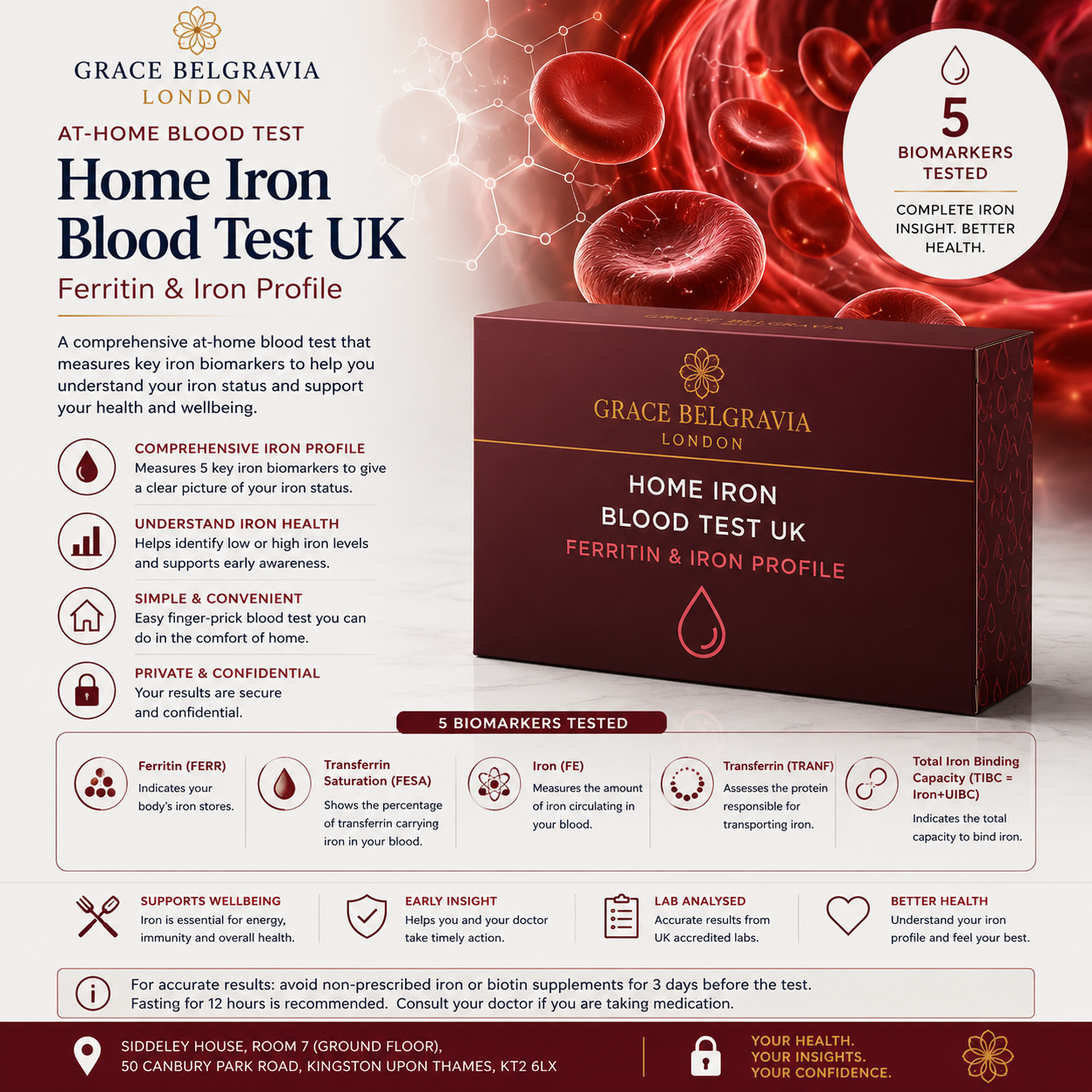
| Iron stores | Ferritin | A principal marker of stored iron, with important limitations during inflammation. |
| Iron transport and availability | Serum iron, TIBC, UIBC and transferrin saturation | A broader view of circulating iron, binding capacity and transferrin occupancy. |
Who may consider this test?
This panel may be considered by adults who want to review selected nutritional markers in the context of:
- Persistent tiredness, weakness or reduced energy
- A restrictive, vegan or vegetarian diet
- Heavy menstrual bleeding or previous low iron stores
- Limited sunlight exposure or increased vitamin D risk
- Muscle cramps, weakness or possible magnesium concerns
- Long term proton pump inhibitor, metformin or other medicine use
- Gastrointestinal disease, surgery or possible malabsorption
- Monitoring requested by a GP or another qualified clinician
- Reviewing supplements before increasing the dose
Pregnancy, breastfeeding, known kidney disease, an iron overload condition or prescribed high dose supplementation require individual clinical advice.
How the home vitamin and mineral test works
Review supplements and medicines
Record vitamins, minerals, iron, injections and medicines that may affect the results.
Collect and return
Collect capillary blood into the supplied microtainer and return it using the provided packaging.
Review the complete pattern
Use the laboratory reference intervals and discuss low, high or discordant results with a clinician.
Preparing for the test
| Preparation | What to do |
|---|---|
| Fasting | Follow the kit instructions. Serum iron can vary with meals, so morning collection before food may be recommended for consistency. |
| Supplements | Record vitamin D, B12, folic acid, iron, magnesium, multivitamins and recent injections. Do not stop prescribed treatment without advice. |
| Recent iron treatment | Iron tablets, infusions, transfusions and injections can affect serum iron, ferritin and transferrin saturation. |
| Inflammation or infection | Ferritin may rise and serum iron may fall during inflammation. A clinician may recommend CRP or repeat testing. |
| Medicines | Record metformin, proton pump inhibitors, anticonvulsants, methotrexate, diuretics, antacids and laxatives. |
| Kidney disease | Kidney function affects magnesium and the interpretation of iron markers. Seek clinical advice before changing supplements. |
| Pregnancy | Pregnancy changes nutrient requirements and reference intervals. Results should be reviewed by a midwife, GP or obstetric team. |
Understanding the iron profile
Iron markers should be interpreted as a pattern. The examples below are simplified and do not replace clinical assessment.
| Possible pattern | Markers that may be seen | Important qualification |
|---|---|---|
| Depleted iron stores | Low ferritin, low TSAT, lower serum iron and higher TIBC or UIBC. | A full blood count is required to determine whether anaemia is present. |
| Inflammation related pattern | Normal or high ferritin with low serum iron, low TSAT and low or normal TIBC. | Ferritin may be raised by inflammation and can mask iron deficiency. |
| Possible iron overload | Raised serum iron or TSAT with low or normal TIBC, sometimes with raised ferritin. | Repeat fasting tests, liver tests and genetic assessment may be required. |
| Recent supplementation | Temporarily raised serum iron or TSAT, with ferritin depending on longer term stores. | Record the dose and timing before collection. |
Biomarkers and result interpretation
Select each marker to read what it measures, preparation guidance and how low, normal, high or indeterminate results may be considered.
Transferrin saturation
Transferrin saturation, often shortened to TSAT, estimates the percentage of iron binding sites on transferrin that are occupied. It is calculated from serum iron and TIBC.
Low TSAT may support iron deficiency, while a persistently high result may require assessment for iron overload. It should be interpreted with ferritin, TIBC, UIBC, inflammation, liver health and any supplement use.
Record iron tablets, multivitamins, injections and recent transfusions. Serum iron can vary with meals and time of day, so follow the collection instructions. Do not stop prescribed iron without medical advice.
How to understand this result
| Result | What it may mean | What to do |
|---|---|---|
| Low | A low result may occur with iron deficiency, chronic blood loss, poor absorption, inflammation or increased iron requirements. | Discuss the complete iron pattern with a GP. A full blood count may also be required. |
| Normal | The result falls within the laboratory reference interval. | Interpret it with ferritin and the other iron studies. |
| High | A high result may occur with excessive supplementation, recent iron treatment, hereditary haemochromatosis, liver disease or other causes. | Discuss a persistent or unexplained result with a clinician. |
Active vitamin B12
Active vitamin B12, also called holotranscobalamin, measures the portion of vitamin B12 available for cells to use. Vitamin B12 supports normal red blood cell formation and neurological function.
Low levels may be related to autoimmune gastritis, diet, gastrointestinal disease, surgery, metformin, proton pump inhibitors, nitrous oxide exposure or other causes. Neurological symptoms can occur without anaemia.
Record vitamin B12 tablets, fortified products, injections, metformin, proton pump inhibitors and nitrous oxide use. Do not delay medical care for neurological symptoms.
How to understand this result
| Result | What it may mean | What to do |
|---|---|---|
| Low | An active B12 result below 25 pmol/L is consistent with vitamin B12 deficiency under NICE guidance. | Arrange GP review, particularly if numbness, balance problems, memory changes or weakness are present. |
| Indeterminate | An active B12 result from 25 to 70 pmol/L is considered indeterminate and possible deficiency remains. | A clinician may consider symptoms, risk factors and further testing such as methylmalonic acid. |
| Normal | A result above 70 pmol/L makes vitamin B12 deficiency less likely. | Persistent symptoms still need a wider medical assessment. |
| High | High active B12 commonly reflects supplements or injections. Unexplained elevation may also occur with liver, kidney or blood conditions. | Discuss an unexplained high result with your GP. |
Ferritin
Ferritin is the main laboratory marker used to estimate stored iron. A low result strongly supports depleted iron stores.
Ferritin is also an acute phase protein and may rise during inflammation, infection, liver disease and other conditions. A normal or high result can therefore sometimes mask iron deficiency.
Record iron tablets, multivitamins, injections and recent transfusions. Serum iron can vary with meals and time of day, so follow the collection instructions. Do not stop prescribed iron without medical advice.
How to understand this result
| Result | What it may mean | What to do |
|---|---|---|
| Low | Low ferritin indicates depleted iron stores. NICE guidance states that a result below 30 micrograms per litre confirms iron deficiency in adults. | Discuss the cause with a GP. Blood loss, diet, absorption and a full blood count may need assessment. |
| Normal | The result falls within the reference interval. | Consider it with symptoms, TSAT, inflammation and the full blood count where available. |
| High | High ferritin may occur with inflammation, infection, liver disease, alcohol use, metabolic conditions, iron overload or supplementation. | Do not assume iron overload from ferritin alone. Discuss the pattern with a clinician. |
Serum iron
Serum iron measures the amount of iron circulating in the blood at the time of collection. Iron is needed to produce haemoglobin, but serum iron varies with meals, time of day, supplements and illness.
It should not be used alone to diagnose iron deficiency or haemochromatosis.
Record iron tablets, multivitamins, injections and recent transfusions. Serum iron can vary with meals and time of day, so follow the collection instructions. Do not stop prescribed iron without medical advice.
How to understand this result
| Result | What it may mean | What to do |
|---|---|---|
| Low | Low serum iron may occur with iron deficiency, inflammation, chronic illness, blood loss or poor absorption. | Interpret it with ferritin, TIBC, UIBC, TSAT and a full blood count. |
| Normal | The result falls within the laboratory interval. | A normal serum iron result does not exclude depleted iron stores. |
| High | High serum iron may reflect recent supplements, iron treatment, transfusion, liver disease, haemolysis or iron overload. | Discuss an unexpected result with a clinician. |
25 hydroxyvitamin D
25 hydroxyvitamin D is the principal blood marker used to assess vitamin D status. Vitamin D supports calcium and phosphate regulation and normal bones, teeth and muscles.
Low levels are more common during autumn and winter, with limited sunlight exposure, darker skin, covering most of the skin, poor absorption or increased requirements.
Record vitamin D supplements, multivitamins, prescribed loading doses and calcium supplements. Tell the provider about kidney disease, sarcoidosis, parathyroid conditions and pregnancy.
How to understand this result
| Result | What it may mean | What to do |
|---|---|---|
| Severely deficient | A very low result requires assessment of the cause and any related bone, muscle or calcium problems. | Discuss the result promptly with a clinician. |
| Deficient | Below 25 nmol/L is generally regarded in UK guidance as deficient. | Discuss treatment and the reason for deficiency with a doctor or pharmacist. |
| Insufficient | A result from 25 to 50 nmol/L may be inadequate for some people. | Review risk factors, diet, sunlight exposure and suitable supplementation. |
| Adequate | Above 50 nmol/L is sufficient for most people according to current UK laboratory guidance. | Avoid unnecessary high dose supplementation. |
| Normal | The result falls within the laboratory reference interval. | Maintain sensible dietary and supplementation measures. |
| Optimal | The result falls within a range described as favourable by the reporting laboratory. | More is not necessarily better. Avoid excessive doses. |
| High | High vitamin D is usually caused by excessive supplementation and may raise calcium. | Stop non prescribed high dose supplements and arrange medical review. |
| Consider toxicity | Very high vitamin D may cause nausea, thirst, frequent urination, weakness, confusion, kidney problems and abnormal heart rhythm. | Seek immediate medical advice. |
Magnesium
Magnesium supports normal nerve, muscle, heart and bone function. This test measures magnesium circulating in serum or plasma.
Most magnesium is stored inside cells and bones, so a normal serum result does not exclude every magnesium related problem. Kidney function and medicines are important when interpreting high or low levels.
Fasting is not usually required. Record magnesium supplements, antacids, laxatives, proton pump inhibitors, diuretics and kidney disease.
How to understand this result
| Result | What it may mean | What to do |
|---|---|---|
| Critical low | Severe hypomagnesaemia can cause seizures, muscle spasm and abnormal heart rhythms. UK guidance commonly regards below 0.5 mmol/L as severe. | Seek urgent medical review. |
| Low | Below the laboratory range may occur with poor intake, diarrhoea, malabsorption, alcohol use, diuretics, proton pump inhibitors or kidney losses. | Discuss the result with your GP. |
| Normal | A typical adult serum reference interval is approximately 0.7 to 1.0 mmol/L, although the reporting laboratory range takes priority. | Persistent symptoms may need wider electrolyte and medical assessment. |
| High | High magnesium is uncommon and may occur with kidney impairment or excessive magnesium containing medicines and supplements. | Stop non prescribed magnesium and discuss the result with a clinician. |
| Critical high | A very high result can affect breathing, blood pressure, consciousness and heart rhythm. | Seek urgent medical review. |
Total iron binding capacity
Total iron binding capacity, known as TIBC, estimates how much iron the proteins in the blood could bind. It mainly reflects transferrin, the principal iron transport protein.
TIBC often rises when iron stores are low. It may be lower with inflammation, liver disease, poor nutrition or iron overload.
Record iron tablets, multivitamins, injections and recent transfusions. Serum iron can vary with meals and time of day, so follow the collection instructions. Do not stop prescribed iron without medical advice.
How to understand this result
| Result | What it may mean | What to do |
|---|---|---|
| Low | Low TIBC may occur with inflammation, liver disease, poor nutrition, kidney disease or iron overload. | Interpret it with ferritin, serum iron and TSAT. |
| Normal | The result falls within the laboratory reference interval. | Review the complete iron pattern rather than TIBC alone. |
| High | High TIBC commonly occurs when iron stores are depleted and may also be influenced by pregnancy or oestrogen treatment. | Discuss the result with a GP if ferritin or TSAT is also low. |
Unsaturated iron binding capacity
Unsaturated iron binding capacity, known as UIBC, estimates the amount of transferrin binding capacity that is not currently occupied by iron.
UIBC is used with serum iron to calculate TIBC and transferrin saturation. It is most useful as part of the complete iron profile.
Record iron tablets, multivitamins, injections and recent transfusions. Serum iron can vary with meals and time of day, so follow the collection instructions. Do not stop prescribed iron without medical advice.
How to understand this result
| Result | What it may mean | What to do |
|---|---|---|
| Low | Low UIBC may occur when more binding sites are occupied, including with high serum iron, recent supplementation or possible iron overload. It may also fall with low transferrin. | Interpret it with ferritin, serum iron and TSAT. |
| Normal | The result falls within the laboratory reference interval. | Consider the overall iron pattern. |
| High | High UIBC may occur when many binding sites remain unoccupied, which is commonly seen with low iron stores. | Discuss the complete iron profile with a GP. |
Serum folate
Folate, also called vitamin B9, supports cell division and normal red blood cell production. Serum folate is influenced by recent diet and supplementation.
Low folate may reflect poor intake, alcohol use, increased requirements, malabsorption or medicines. Vitamin B12 status should be considered before high dose folic acid treatment because folic acid can improve anaemia while neurological B12 complications continue.
Record folic acid, pregnancy vitamins, anticonvulsants, methotrexate and recent dietary supplements. People trying to conceive should follow current UK folic acid advice.
How to understand this result
| Result | What it may mean | What to do |
|---|---|---|
| Critical low | A very low result may be associated with significant deficiency, poor intake, malabsorption, pregnancy related demand, alcohol use or medicine effects. | Discuss the result promptly with a doctor. |
| Low | Low folate may contribute to abnormal red blood cell formation and symptoms such as tiredness, weakness or a sore tongue. | See your GP to assess the cause and check vitamin B12 and a full blood count. |
| Normal | The result falls within the laboratory reference interval. | Persistent symptoms still require wider assessment. |
| High | High folate most commonly reflects folic acid supplements or fortified foods. | Review supplement use and ensure vitamin B12 has been assessed. |
| Critical high | A markedly high result may reflect prolonged high dose folic acid use. The clinical importance depends on vitamin B12 status and symptoms. | Discuss the result and supplement dose with a doctor. |
Content standards
How this product information was prepared
This page was prepared from the supplied nine marker product specification and expanded using current UK guidance on vitamin B12, vitamin D, iron studies, folate, magnesium and accredited laboratory testing.
Expert review
Medical and editorial review
This product information has been reviewed for nutritional and iron marker context, preparation guidance, medical limitations, patient safety and responsible interpretation.
The review applies to general product information. It is not personal medical advice and does not replace a GP assessment, full blood count or investigation of the cause of an abnormal result.
Dr Rimas Geiga
Medical Doctor, Nutritional Sciences Adviser and Healthy Ageing Expert
Reviewed the vitamin, magnesium, iron, nutritional sciences and responsible supplementation context.
View professional profileDr Snieguole Geige
Dentist, Medical Doctor and Senior Adviser
Reviewed the general medical boundaries, neurological symptom guidance, patient communication and advice on when direct clinical assessment is required.
View professional profileVeronika Matutyte
Medical Doctor and Healthcare Management Expert
Reviewed urgent symptom guidance, kidney and medicine considerations, clinical limitations and the safety of the home testing pathway.
View professional profileFurther reading
Authoritative UK vitamin, mineral and iron information
These resources provide additional context. They do not replace the instructions, units, reference intervals or comments supplied with your laboratory report.
View NICE and NHS laboratory references
- NICE vitamin B12 deficiency guidance
- NHS active vitamin B12 interpretation
- NHS TIBC and transferrin information
- NICE iron deficiency guidance
- NHS 25 hydroxyvitamin D thresholds
- NHS magnesium reference information
- NHS vitamin B12 and folate deficiency diagnosis
- UKAS medical laboratory accreditation
- CQC diagnostic and screening services guidance
Search led questions
Home vitamin deficiency test FAQs
Can I test for vitamin deficiency at home?
Yes. This kit uses a capillary blood sample collected at home and returned for laboratory analysis. It measures selected vitamin, mineral and iron related biomarkers rather than every possible nutrient.
What does a vitamin and mineral blood test check?
This panel checks 25 hydroxyvitamin D, active vitamin B12, serum folate, magnesium, ferritin, serum iron, TIBC, UIBC and transferrin saturation.
Does this test diagnose all vitamin deficiencies?
No. It does not measure every vitamin or mineral and cannot identify every cause of tiredness, neurological symptoms, anaemia or malabsorption. The panel does not include a full blood count, calcium, zinc, copper or vitamin A.
What is active vitamin B12?
Active B12, also called holotranscobalamin, measures the fraction of vitamin B12 available for cells to use. NICE accepts active B12 as an initial test when vitamin B12 deficiency is suspected.
What active B12 level suggests deficiency?
Using NICE interpretation, an active B12 result below 25 pmol/L is consistent with deficiency, 25 to 70 pmol/L is indeterminate and above 70 pmol/L makes deficiency less likely. The laboratory report takes priority.
What is the difference between iron and ferritin?
Serum iron measures iron circulating at the time of collection and can vary through the day. Ferritin reflects stored iron, although inflammation, liver disease and other conditions can raise ferritin independently of iron stores.
What ferritin level indicates iron deficiency?
NICE guidance states that ferritin below 30 micrograms per litre confirms iron deficiency in adults. A higher ferritin does not always exclude deficiency where inflammation or chronic illness is present.
What is transferrin saturation?
Transferrin saturation estimates the percentage of iron carrying sites on transferrin that are occupied. It is calculated from serum iron and total iron binding capacity and can help assess iron deficiency or possible iron overload.
What are TIBC and UIBC?
TIBC estimates the total amount of iron that blood proteins could bind. UIBC estimates the unused binding capacity. TIBC or UIBC may rise when iron stores are low and may be lower in inflammation, liver disease or iron overload.
Can this blood test diagnose anaemia?
No. Anaemia is diagnosed using haemoglobin and red blood cell measurements from a full blood count, which are not included. The iron, B12 and folate results can provide nutritional context but cannot diagnose anaemia alone.
What is a normal vitamin D level in the UK?
Current UK laboratory guidance generally regards below 25 nmol/L as deficient, 25 to 50 nmol/L as potentially inadequate and above 50 nmol/L as sufficient for most people. Use the interval and comment printed on your report.
Can a magnesium blood test show magnesium deficiency?
Serum magnesium can identify clearly low or high circulating magnesium, but most magnesium is stored inside cells and bones. A normal serum result does not rule out every problem involving magnesium.
Do I need to fast for a vitamins and minerals blood test?
Fasting is not always required, but serum iron can vary with meals and time of day. Follow the kit instructions. Where consistency is important, morning collection before food may be recommended.
Should I stop vitamins or iron supplements before testing?
Do not stop prescribed supplements without medical advice. Record all vitamins, iron, folic acid, magnesium and injections. Recent supplementation can affect results and may influence how they are interpreted.
Can inflammation affect ferritin and iron results?
Yes. Ferritin can rise during inflammation, while serum iron and transferrin can fall. A clinician may request CRP, a full blood count or repeat testing to interpret the pattern.
Can high vitamin B12 be caused by supplements?
Yes. Tablets, injections and fortified products commonly raise B12. An unexplained high result without supplementation can also occur with liver, kidney or blood conditions and should be discussed with a clinician.
When should abnormal vitamin or mineral symptoms be treated as urgent?
Seek prompt help for severe weakness, collapse, chest pain, severe breathlessness, confusion, seizures, new balance or walking problems, black stools, visible blood loss or severe persistent vomiting.
Are the laboratories UKAS accredited and CQC registered?
Samples are processed through UKAS accredited laboratories within a CQC registered diagnostic pathway. Collection equipment is UKCA and CE marked and supported by an ISO 13485 quality management framework.