












Private blood sugar and metabolic testing at home
Blood Sugar, HbA1c & Diabetes Blood Test Home Kits UK
Compare long-term HbA1c testing, a fasting glucose snapshot and a broader metabolic health panel before choosing the home blood test that matches your question.
HbA1c and fasting glucose do not measure the same thing. HbA1c reflects average glycaemic exposure over roughly the previous two to three months, while fasting glucose measures blood glucose at one point after the required fasting period. An unexpected result may need clinical confirmation and should be interpreted alongside symptoms, medicines, pregnancy status, red-blood-cell health and medical history.

Seek urgent medical assessment for increasing thirst and urination, unexplained weight loss, marked tiredness or suspected type 1 diabetes. Vomiting, abdominal pain, drowsiness, confusion, fruity-smelling breath or deep rapid breathing can indicate a medical emergency.
Interactive test finder
What would you like to understand?
Select the closest question. This tool helps with product navigation only and does not diagnose diabetes or determine whether testing is medically appropriate.
Understand the measurement first
HbA1c and fasting glucose answer different questions
HbA1c measures glycated haemoglobin and reflects average blood glucose over approximately eight to twelve weeks. It normally does not require fasting, but conditions affecting haemoglobin or red-cell lifespan can make the result misleading.
Useful when the question concerns longer-term blood-sugar patterns rather than one morning reading.Fasting glucose measures glucose after the specified period without food. It can be influenced by fasting accuracy, acute illness, medicines, sleep, stress and the timing of collection.
Useful when a correctly prepared fasting snapshot is specifically required.HbA1c and glucose-based tests can identify overlapping but not identical groups. Symptoms, pregnancy, rapid-onset illness or conditions affecting red blood cells can change which clinical test is most appropriate.
Reasons people consider blood sugar testing
Choose according to risk, symptoms and the intended time window
The Grace Belgravia experience
Private testing with guidance before and after collection

A focused HbA1c or fasting glucose result may be more useful than broader testing when the health question is specific.

Symptoms, medicines, pregnancy and red-cell conditions can influence the next appropriate step.
Browse the collection
Blood sugar, HbA1c and diabetes blood test home kits

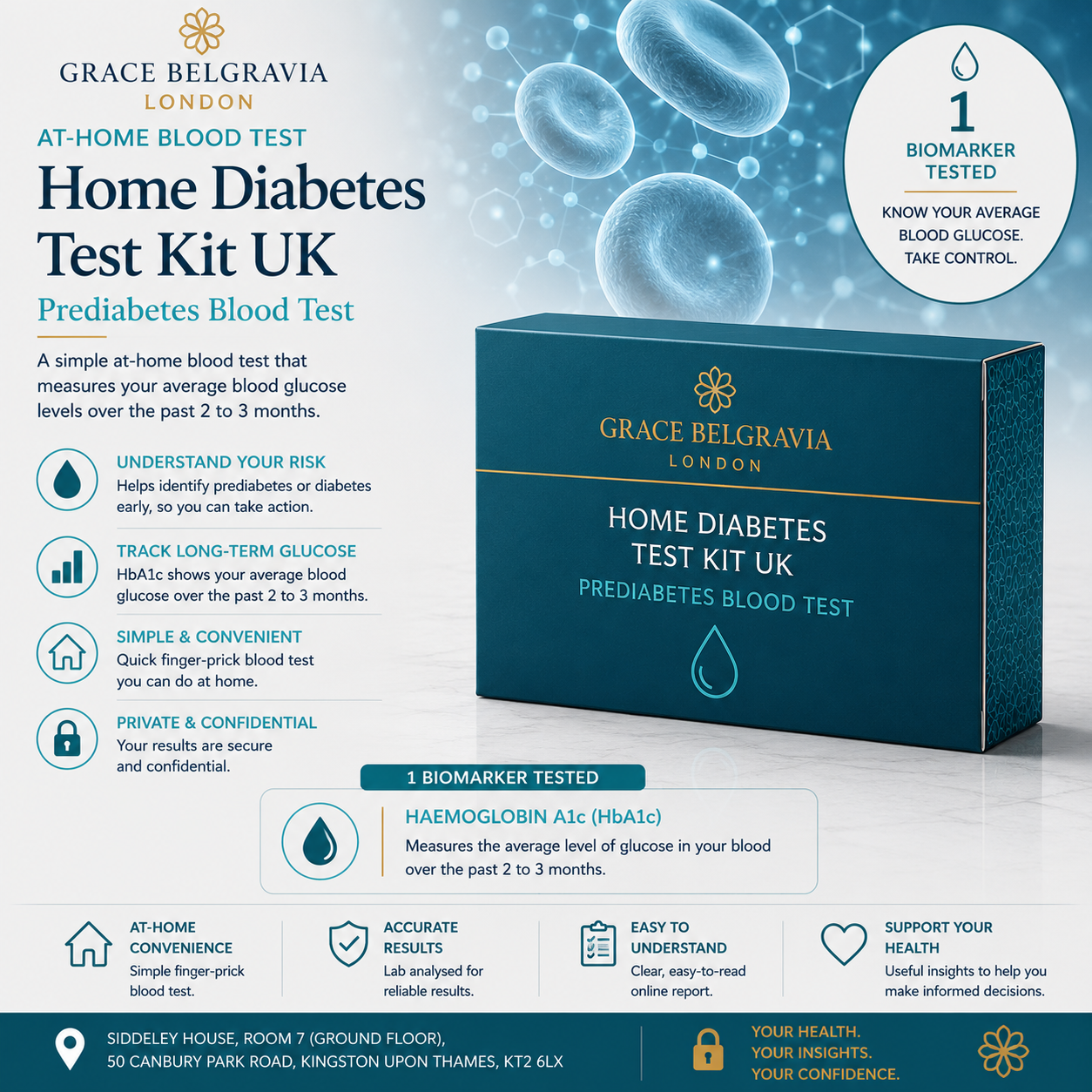
Home Diabetes Test Kit UK – Prediabetes Blood Test
A focused home blood test for people seeking diabetes or prediabetes-related glycaemic context. Review the precise reported marker, sample requirements and interpretation notes on the individual product page before ordering.

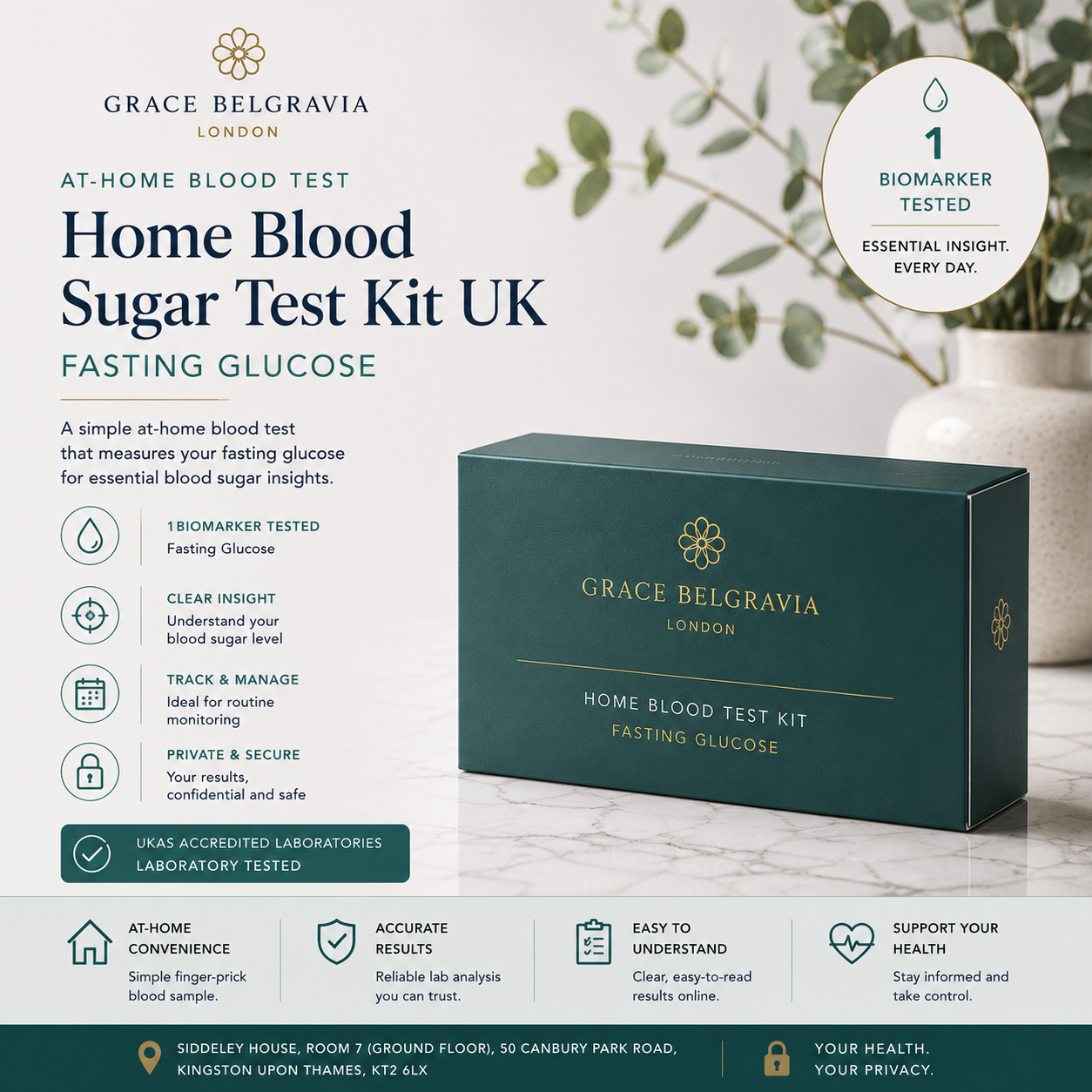
Home Blood Sugar Test Kit UK – Fasting Glucose
Measures fasting glucose at the time of collection. It is the most relevant option when a properly prepared fasting measurement is the specific question, rather than a longer-term average.

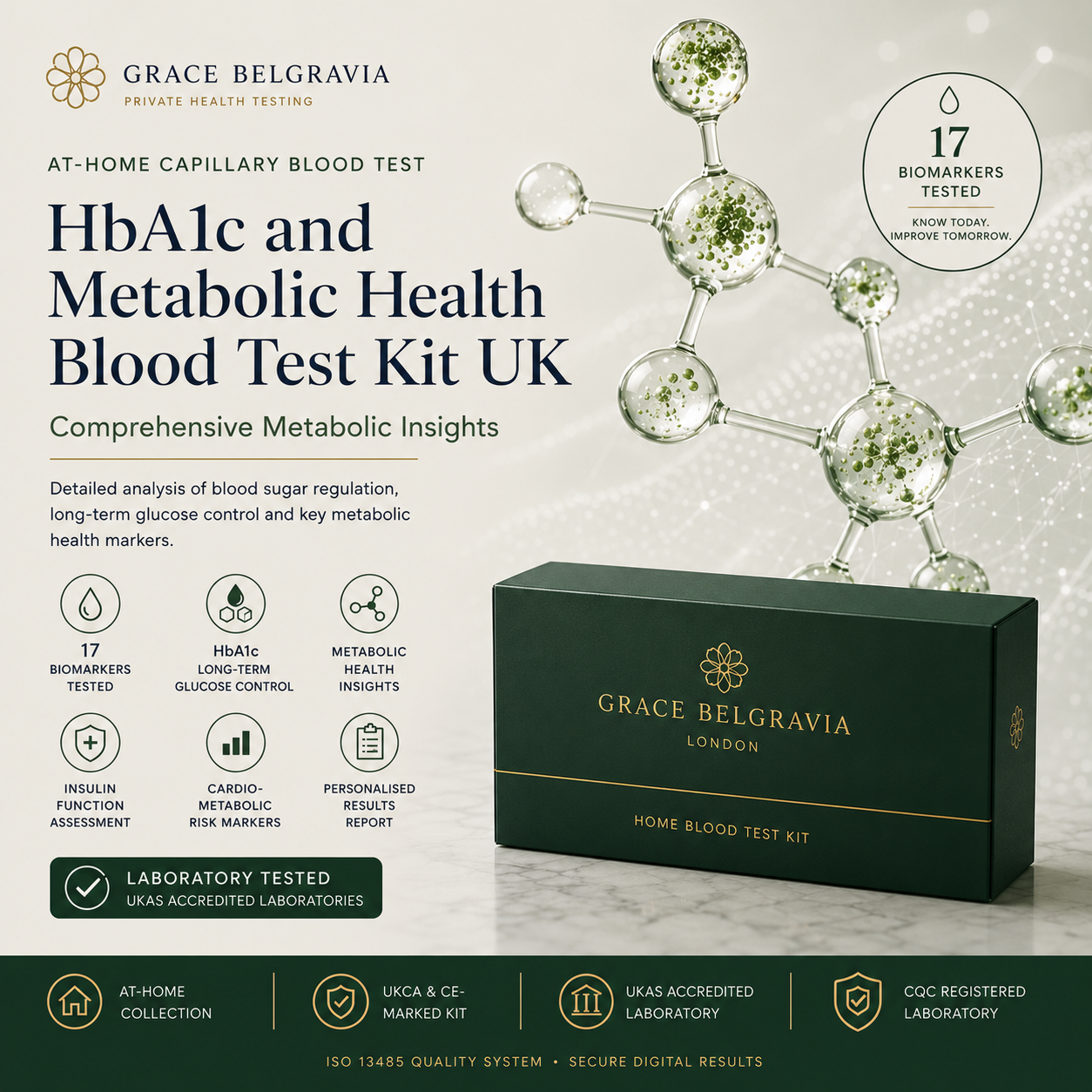
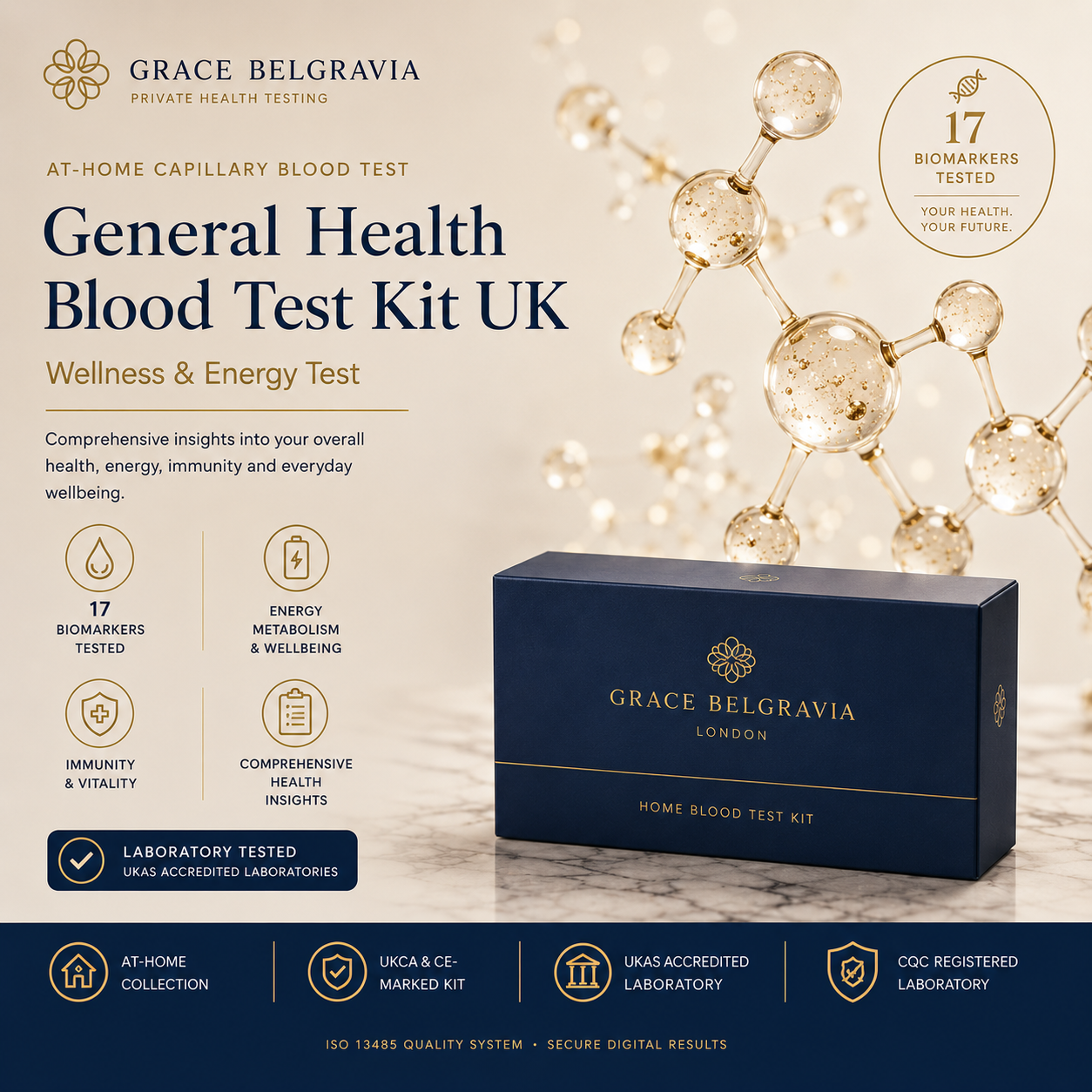
HbA1c and Metabolic Health Blood Test Kit UK
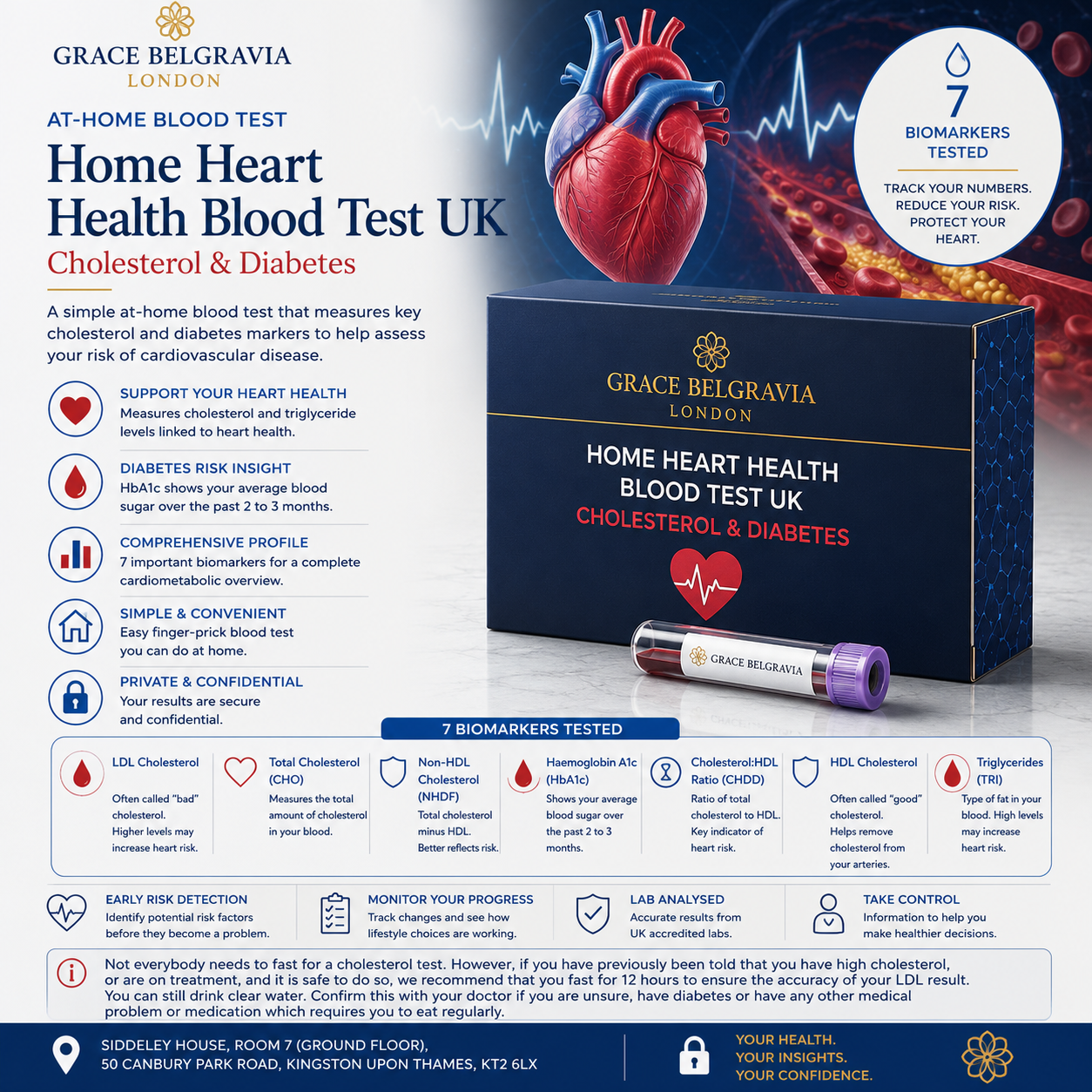
Combines HbA1c with the additional metabolic markers listed on the individual product page. It is intended for people who want wider context from one collection rather than a standalone fasting glucose result.
Side-by-side guide
Compare diabetes and blood sugar home tests
| Test | Main question | Time window | Preparation | Best suited to |
|---|---|---|---|---|
| Diabetes & Prediabetes Test | Focused diabetes or prediabetes-related glycaemic context | Check the reported marker on the product page | Follow product guidance | A focused home blood test |
| Fasting Glucose Test | What is my glucose after a correctly completed fast? | Point in time | Fasting required as specified | A specifically requested fasting measurement |
| HbA1c & Metabolic Health Test | What is my longer-term glycaemic context alongside additional metabolic markers? | HbA1c reflects roughly 8–12 weeks | Check companion-marker requirements | A broader metabolic overview |
Diabetes & Prediabetes Test
- Main question
- Focused diabetes or prediabetes-related context
- Time window
- Depends on the reported marker
- Preparation
- Follow product guidance
- Best suited to
- A focused home blood test
Fasting Glucose Test
- Main question
- Glucose after a correctly completed fast
- Time window
- Point in time
- Preparation
- Fasting required as specified
- Best suited to
- A specifically requested fasting result
HbA1c & Metabolic Health Test
- Main question
- Longer-term glycaemia with broader metabolic context
- Time window
- HbA1c reflects roughly 8–12 weeks
- Preparation
- Check companion-marker requirements
- Best suited to
- A wider metabolic overview
Plain-English biomarker guide
Blood sugar and diabetes testing terms explained
HbA1c
Glycated haemoglobin. It reflects average glycaemic exposure over approximately the previous two to three months, with more recent weeks contributing more strongly than older weeks.
Fasting glucose
The glucose concentration measured after the required period without food. The exact preparation instructions supplied with the test should be followed.
Prediabetes or non-diabetic hyperglycaemia
A state in which blood glucose is above the normal range but below the diagnostic threshold for diabetes. In NICE prevention guidance, HbA1c of 42–47 mmol/mol or fasting plasma glucose of 5.5–6.9 mmol/L identifies high risk, but individual results require appropriate clinical context.
mmol/mol
The UK unit commonly used for HbA1c. Some reports may also show a percentage, so use the unit printed on the report when comparing values.
mmol/L
A concentration unit commonly used in the UK for blood glucose measurements.
Glycaemia
A general term referring to glucose levels in the blood.
Insulin resistance
A biological state in which cells respond less effectively to insulin. HbA1c or fasting glucose alone does not directly measure every aspect of insulin resistance.
Oral glucose tolerance test
A supervised clinical test that measures the response to a glucose drink over time. It is different from the home tests in this collection and may be selected in specific clinical situations.
Capillary and venous samples
Capillary blood is collected from a small skin puncture, while venous blood is drawn from a vein. Results may need confirmation through the sample pathway advised by a healthcare professional.
Preparation and limitations
Improve the usefulness of your result
Rapid-onset symptoms, particularly in a child or younger adult, require urgent clinical assessment because HbA1c averages previous weeks and may not fully reflect a recent deterioration.
How the home-testing pathway works
From choosing the test to reviewing the report
Choose the time window
Decide whether you need longer-term HbA1c context, fasting glucose or a broader metabolic panel.
Read preparation guidance
Check fasting, medicine, illness and sample requirements before collecting.
Collect the sample
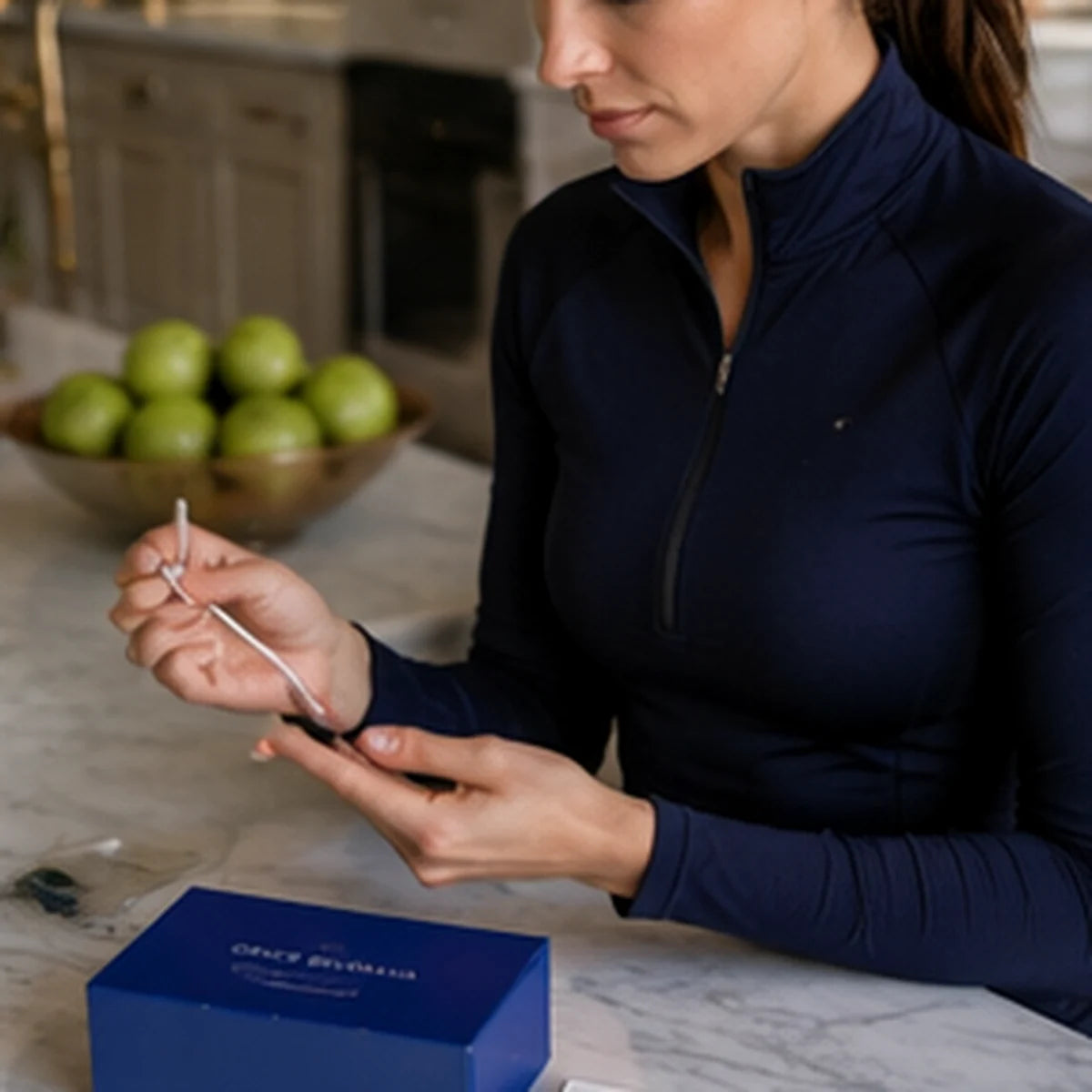
Use the supplied equipment and complete the collection exactly as instructed.
Return promptly
Package and return the sample using the specified route and timing.
Laboratory analysis
The sample follows the applicable assay and quality-control pathway.
Arrange follow-up
Discuss abnormal, unexpected or symptom-related results with an appropriate healthcare professional.
Laboratory and testing standards
Home collection supported by a defined laboratory pathway
HbA1c, fasting glucose and broader metabolic panels may use different analytical methods and preparation requirements. Check the individual product specification for the applicable laboratory, accreditation, sample and reporting details.
- Sample identity and acceptance checks
- Assay-specific quality-control procedures
- Defined sample stability and return requirements
- Secure digital reporting
- Laboratory comments and escalation where included
Quality and regulatory claims should be verified against the current specification for the individual test ordered.

Understanding the next step
What an unexpected result may mean
NICE guidance recommends discussing modifiable risk factors and ongoing monitoring. Structured lifestyle programmes have shown that progression to type 2 diabetes can be reduced in people at high risk.
Medical and editorial review
Medically checked blood sugar and diabetes guidance
The collection has been reviewed for responsible presentation of HbA1c, fasting glucose, prediabetes, red-cell limitations, urgent type 1 warning signs and laboratory-pathway wording.

Dr Laura Geige
Medical Director, Senior Practitioner and Skin Expert
Reviewed urgent-symptom escalation, diagnostic boundaries, pregnancy cautions and responsible consumer-facing wording.
View professional profile
Dr Rimas Geiga
Medical Doctor, Nutritional Sciences Adviser and Healthy Ageing Expert
Reviewed HbA1c, fasting glucose, prediabetes, metabolic context and the limits of interpreting a single result in isolation.
View professional profile
Veronika Matutyte
Medical Doctor and Healthcare Management Expert
Reviewed preparation, sample-pathway language, quality claims, result escalation and follow-up safeguards.
View professional profileAuthoritative references
UK, university and peer-reviewed diabetes sources
UK clinical and patient guidance
UK university research
Frequently asked questions
Blood sugar, HbA1c and diabetes test FAQs
Which diabetes blood test home kit should I choose?
Choose according to the intended time window. HbA1c is relevant to longer-term glycaemic exposure, fasting glucose is a point-in-time fasting measurement, and the broader panel adds the metabolic markers listed on its product page.
What does HbA1c measure?
HbA1c measures glycated haemoglobin and reflects average blood glucose exposure over approximately the previous two to three months.
Do I need to fast for an HbA1c test?
HbA1c alone normally does not require fasting. A combined panel may have other preparation requirements, so follow the individual kit instructions.
How long should I fast for a fasting glucose test?
Use the exact fasting duration provided with the test. Do not guess or extend the fast beyond the supplied guidance.
Can a home blood test diagnose diabetes?
A laboratory result can provide important information, but diagnosis may require repeat or additional testing and clinical assessment. Do not self-diagnose from one home result.
What is the UK prediabetes HbA1c range?
NICE prevention guidance uses HbA1c of 42–47 mmol/mol to identify people at high risk of type 2 diabetes. The result still needs interpretation in context.
What fasting glucose level indicates high risk?
NICE prevention guidance uses fasting plasma glucose of 5.5–6.9 mmol/L as a high-risk range. Home sample type, preparation and clinical context matter.
Can HbA1c be inaccurate?
Yes. Conditions affecting haemoglobin or red-cell lifespan, including some anaemias, haemoglobin variants, recent blood loss or transfusion, pregnancy and advanced kidney disease, can affect interpretation.
Can illness affect fasting glucose?
Yes. Acute illness, stress, sleep disruption and some medicines can alter glucose results.
Can I use a normal HbA1c to rule out type 1 diabetes?
No. Type 1 diabetes can develop rapidly. Seek urgent clinical assessment for symptoms such as thirst, frequent urination, tiredness and unexplained weight loss.
Can I test during pregnancy?
Pregnancy has specific screening and diagnostic pathways. Do not use a routine home test as a substitute for maternity or diabetes-team assessment.
What should I do if my result is high?
Read the laboratory comments and arrange clinical follow-up. Repeat testing, venous confirmation or another glucose test may be appropriate.
Can I change insulin or diabetes medication after a home result?
No. Do not alter insulin or prescribed glucose-lowering treatment without advice from the healthcare professional responsible for your diabetes care.
Does a prediabetes result mean I will develop type 2 diabetes?
No. It identifies increased risk, not certainty. Evidence supports structured lifestyle intervention and ongoing monitoring for people at high risk.
Are these collection materials medically reviewed?
This collection guide has named medical and quality reviewers. The review process for an individual laboratory report depends on the specific product pathway.