















At home testosterone and male hormone blood test
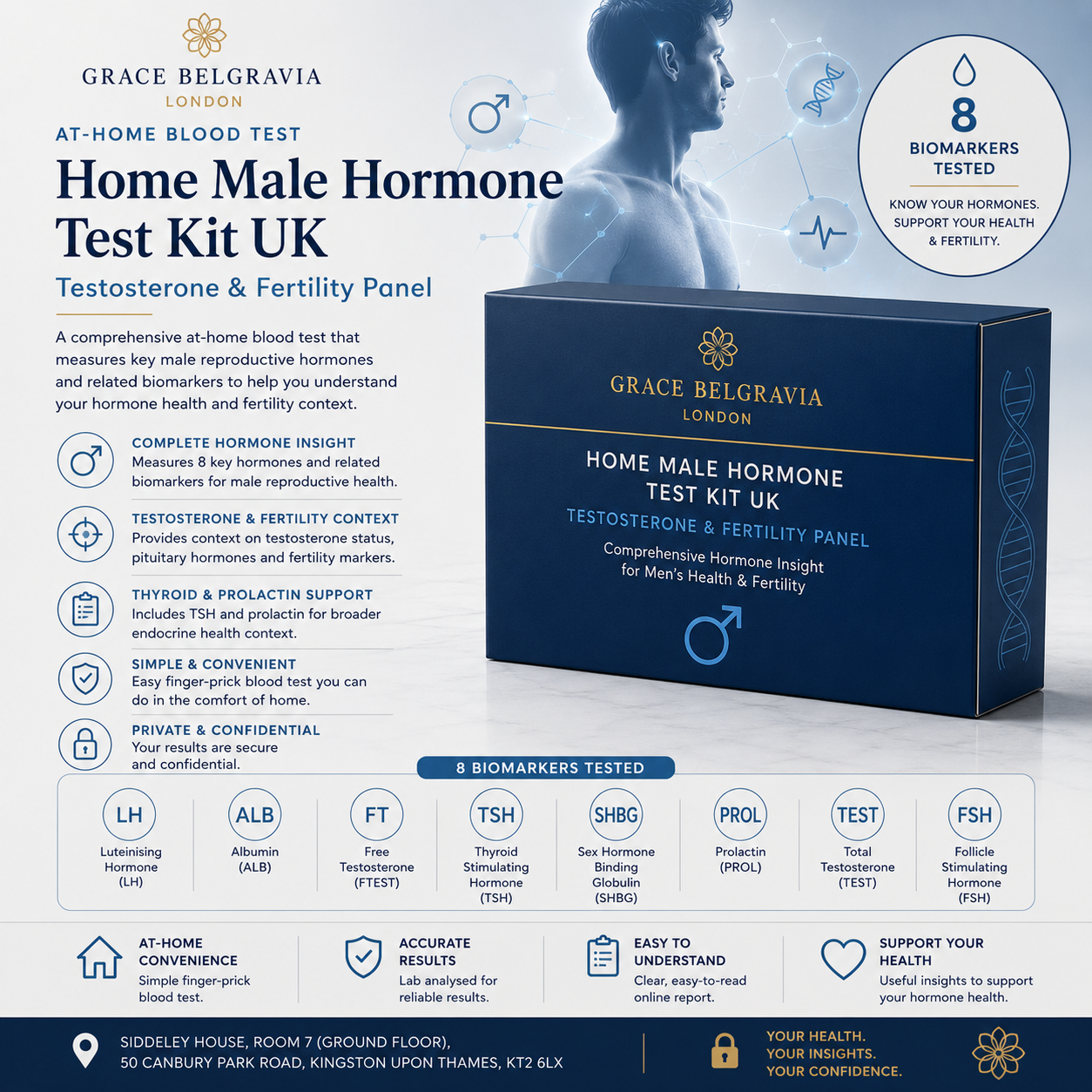
Home Male Hormone Test Kit UK | Testosterone & Fertility Panel
An 8 biomarker home blood test covering testosterone, pituitary reproductive hormones, prolactin, SHBG, albumin and thyroid context.
The panel provides selected information about androgen availability and the hormone signals involved in male reproductive function. It can support a clinical discussion about reduced libido, erectile symptoms, low energy or fertility concerns, but it cannot diagnose the cause by itself.
This is not a semen analysis and cannot diagnose infertility, low testosterone, erectile dysfunction, pituitary disease, testicular disease or thyroid disease. A low testosterone diagnosis normally requires symptoms, two separate morning results and clinical assessment.
Testosterone treatment can suppress sperm production and requires assessment of the cause, fertility intentions, contraindications and ongoing monitoring. Do not start, stop or alter hormone treatment without a prescribing clinician.
Quality and compliance
Home testing supported by UK clinical standards
What this male hormone test measures
| Health area | Biomarkers | What they may help show |
|---|---|---|
| Testosterone status | Total testosterone and free testosterone | The amount of circulating testosterone and the fraction available to tissues. |
| Hormone binding | SHBG and albumin | Proteins used to interpret the relationship between total and free testosterone. |
| Pituitary and testicular signalling | LH and FSH | Hormone signals involved in testosterone production and spermatogenesis. |
| Pituitary context | Prolactin | A hormone that can suppress reproductive signalling when persistently raised. |
| Thyroid context | TSH | A screening marker for thyroid signalling that may be relevant to energy, weight, mood and sexual symptoms. |
Who may consider this test?
This panel may be considered by adult men seeking selected hormone information in the context of:
- Reduced libido or loss of morning erections
- Erectile dysfunction
- Persistent tiredness, low mood or reduced muscle strength
- Fertility concerns alongside a semen analysis
- Breast enlargement or unexpected breast discharge
- Possible pituitary or thyroid hormone symptoms
- An earlier low or borderline testosterone result
- Monitoring requested by a GP, endocrinologist, urologist or fertility specialist
These symptoms are non specific. Sleep problems, depression, medicines, obesity, diabetes, vascular disease, alcohol and other conditions may produce similar symptoms.
Morning timing and repeat testing
| Testing point | Recommended approach |
|---|---|
| Collection time | Collect testosterone in the morning, ideally between 9 am and 11 am, because levels change through the day. |
| Fasting | Follow the kit instructions. UK diagnostic pathways commonly use a fasting morning sample for consistency. |
| Health status | Test when physiologically well. Acute illness, poor sleep, calorie restriction and overtraining can temporarily lower testosterone. |
| Repeat result | A low or borderline testosterone result should normally be repeated on a separate morning before diagnosis. |
| Fertility assessment | Use a semen analysis to assess sperm count, movement and shape. Hormone results provide additional context. |
How the home male hormone test kit works
Prepare for morning collection
Review fasting, medicine, supplement and hormone product instructions before testing.
Collect and return
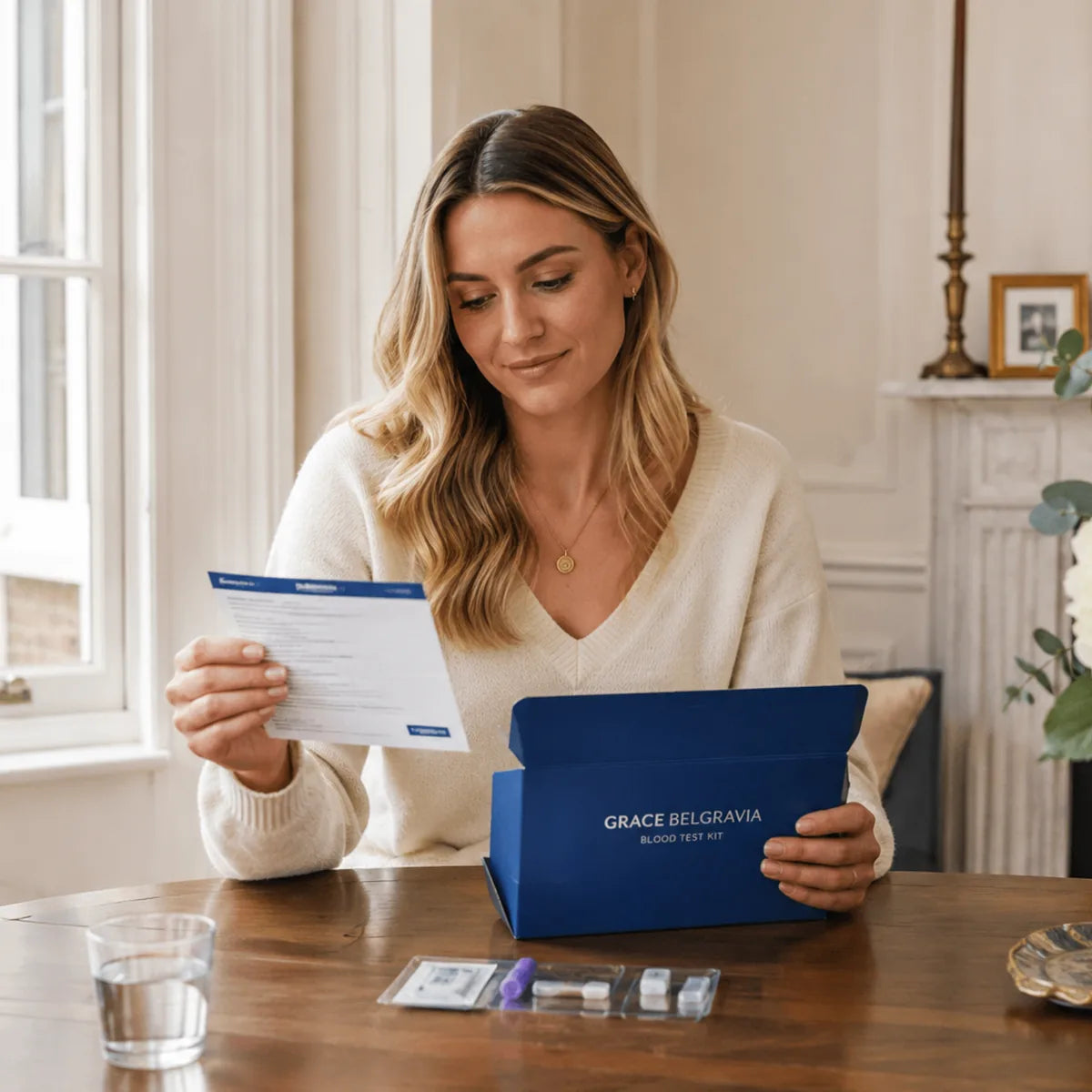
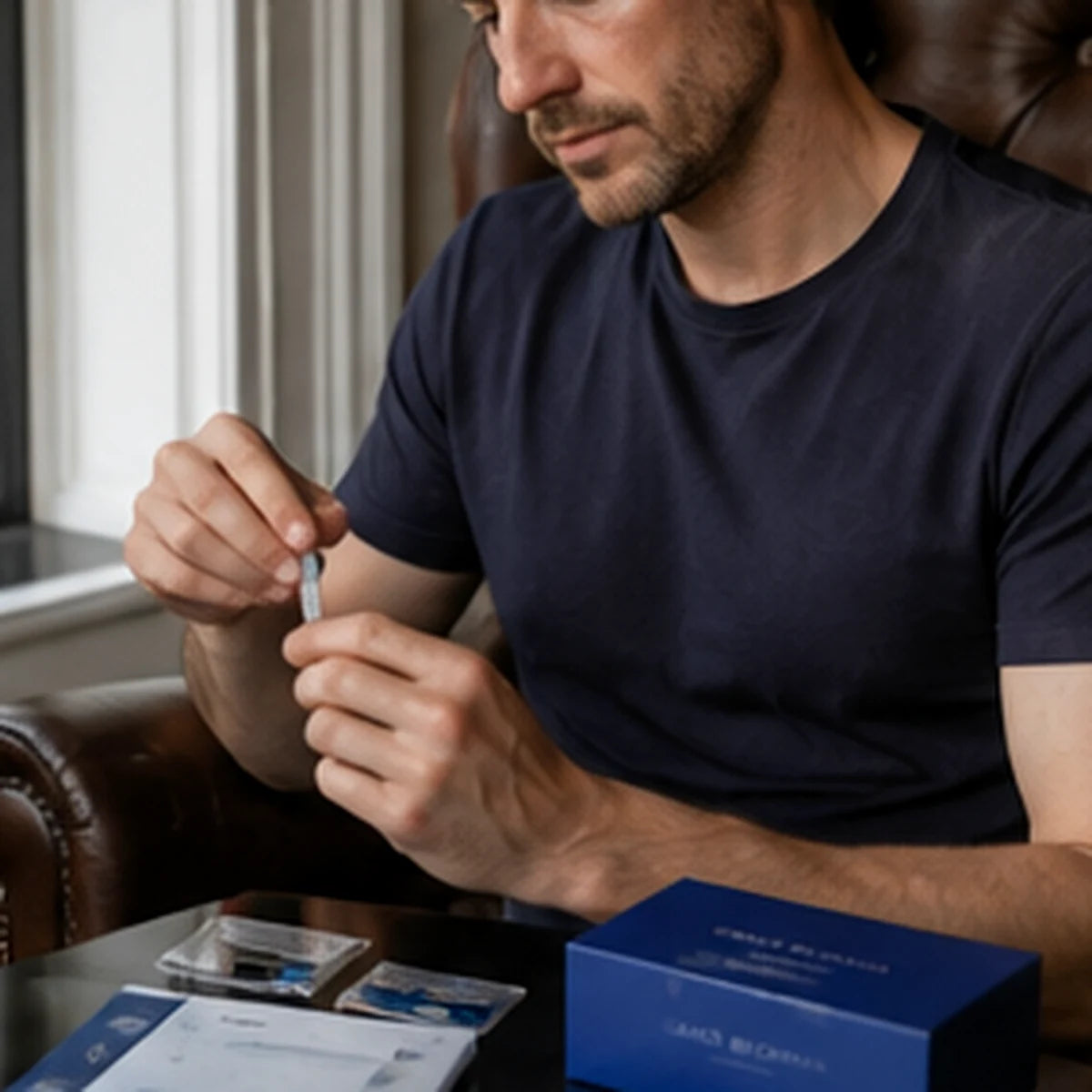
Collect capillary blood into the supplied microtainer and return it using the provided packaging.
Review the full pattern
Consider testosterone, LH, FSH, SHBG, prolactin and symptoms together rather than relying on one number.
Preparing for the test
| Preparation | What to do |
|---|---|
| Morning sample | Collect between 9 am and 11 am where possible and record the exact collection time. |
| Food and water | Follow the kit fasting instructions. Plain water is normally allowed and supports collection. |
| Prescribed medicines | Record opioids, antidepressants, antipsychotics, anti-sickness medicines, anticonvulsants, glucocorticoids and thyroid medicines. |
| Hormone products | Record testosterone, anabolic steroids, fertility medicines, supplements marketed as hormone boosters and contact with hormone gels. |
| Biotin | Biotin is vitamin B7 and may interfere with some assays. Ask whether it should be paused. |
| Exercise and stress | Avoid unusually strenuous exercise before testing and allow time to settle before collection, particularly for prolactin. |
| Recent illness | Delay non urgent testing until recovered where possible because illness can alter testosterone, prolactin and thyroid results. |
| Sleep | Record significant sleep deprivation, shift work or obstructive sleep apnoea because these may affect interpretation. |
Common hormone patterns
These simplified examples support discussion and are not diagnoses.
| Pattern | Possible context | Next step |
|---|---|---|
| Low testosterone with high LH or FSH | May suggest primary testicular dysfunction. | Repeat testosterone and seek endocrine or urology assessment. |
| Low testosterone with low or normal LH and FSH | May suggest pituitary or hypothalamic suppression, medicine effects, obesity or systemic illness. | Review prolactin, medicines, illness and possible further pituitary testing. |
| Low total testosterone with abnormal SHBG | The total result may not accurately represent available testosterone. | Consider free testosterone and clinical context. |
| Raised prolactin with low testosterone | Persistent hyperprolactinaemia may suppress reproductive signalling. | Repeat under controlled conditions and investigate medicines, thyroid, kidney and pituitary causes. |
| Abnormal TSH | May indicate thyroid dysfunction contributing to non specific symptoms. | Arrange free T4 and clinical review. |
Biomarkers and result interpretation
Select each marker to read what it measures, preparation guidance and how low, normal, high or critical results may be considered.
Luteinising hormone
Luteinising hormone, known as LH, is released by the pituitary gland. In men it stimulates Leydig cells in the testes to produce testosterone.
LH becomes particularly useful when testosterone is low. A high LH with low testosterone may suggest primary testicular dysfunction, while a low or inappropriately normal LH with low testosterone may suggest a pituitary or hypothalamic cause.
Collect in the morning, ideally between 9 am and 11 am, when physiologically well. Follow the kit fasting instructions. Record testosterone, anabolic steroids, opioids, anticonvulsants, glucocorticoids, fertility medicines and any hormone gel exposure.
How to understand this result
| Result | What it may mean | What to do |
|---|---|---|
| Low | A low result may occur with pituitary or hypothalamic suppression, acute illness, obesity, opioid use, anabolic steroids, testosterone treatment or other medicines. | Interpret it with testosterone, FSH, prolactin and symptoms. |
| Normal | The result falls within the laboratory interval. | A normal LH does not exclude a pituitary cause if testosterone is low because the value may be inappropriately normal. |
| High | A high result may indicate that the pituitary is increasing stimulation because the testes are not responding adequately. | Discuss the result with a GP or endocrinology professional. |
Albumin
Albumin is the main protein in blood plasma and carries hormones, medicines and other substances. Some testosterone binds loosely to albumin.
Albumin may be used with total testosterone and SHBG when estimating free testosterone. It is not included as a complete liver, kidney or nutritional assessment.
Maintain normal hydration. Record liver disease, kidney disease, significant inflammation, weight loss and prescribed medicines.
How to understand this result
| Result | What it may mean | What to do |
|---|---|---|
| Critical low | A very low result can occur with serious liver disease, kidney protein loss, severe inflammation, malnutrition or critical illness. | Arrange prompt clinical review and follow urgent laboratory advice. |
| Low | A low result may reflect inflammation, liver disease, kidney loss, poor intake, malabsorption or fluid overload. | Discuss it with a GP and consider wider liver, kidney and inflammatory testing. |
| Normal | The result falls within the laboratory reference interval. | Use it as part of free testosterone interpretation where relevant. |
| High | A high result most commonly reflects dehydration or concentration of the blood sample. | Review hydration and discuss a persistent unexpected result with a clinician. |
Free testosterone
Free testosterone represents the small fraction of testosterone that is not tightly bound to SHBG or albumin and is available to tissues.
Depending on the laboratory, free testosterone may be measured directly or calculated using total testosterone, SHBG and albumin. The report should state the method used.
Collect in the morning, ideally between 9 am and 11 am, when physiologically well. Follow the kit fasting instructions. Record testosterone, anabolic steroids, opioids, anticonvulsants, glucocorticoids, fertility medicines and any hormone gel exposure.
How to understand this result
| Result | What it may mean | What to do |
|---|---|---|
| Low | A low result may support reduced androgen availability when compatible symptoms are present. Causes can include testicular, pituitary, hypothalamic, medicine, metabolic or systemic illness factors. | Confirm the finding with clinical assessment and appropriate repeat testing. |
| Normal | The result falls within the laboratory interval. | Persistent symptoms may still require evaluation for sleep, mood, thyroid, medication, vascular or other causes. |
| High | A high result may reflect testosterone treatment, anabolic steroid use, low SHBG, assay factors or less common endocrine conditions. | Discuss an unexpected result with a clinician. |
Thyroid stimulating hormone
Thyroid stimulating hormone, known as TSH, is produced by the pituitary gland and regulates thyroid hormone production.
Thyroid dysfunction can contribute to tiredness, weight change, mood symptoms, reduced libido or erectile difficulty. TSH alone is a screening marker rather than a complete thyroid panel.
Biotin is vitamin B7 and can interfere with some thyroid assays. Do not stop thyroid medicine. Record levothyroxine, liothyronine, amiodarone, lithium and supplements.
How to understand this result
| Result | What it may mean | What to do |
|---|---|---|
| Critical low | A markedly suppressed TSH may occur with significant thyroid overactivity, excessive thyroid medicine or other medical factors. | Arrange prompt review, especially with palpitations, weight loss, heat intolerance or tremor. |
| Low | A low result may occur with an overactive thyroid, thyroid medicine, recent illness or pituitary factors. | A free T4 and sometimes free T3 result may be required. |
| Normal | The result falls within the laboratory range. | A normal TSH makes common primary thyroid dysfunction less likely but does not exclude every thyroid or pituitary condition. |
| High | A high result most commonly occurs when the thyroid is underactive or replacement treatment is insufficient. | Discuss the result with a GP and arrange free T4 testing. |
| Critical high | A very high result may indicate marked primary thyroid underactivity. Pituitary causes are much less common. | Arrange prompt clinical assessment. |
Sex hormone binding globulin
Sex hormone binding globulin, known as SHBG, is produced mainly by the liver and binds testosterone in the circulation.
SHBG changes the relationship between total and free testosterone. A total testosterone result can therefore appear lower or higher depending on the SHBG concentration.
Collect in the morning, ideally between 9 am and 11 am, when physiologically well. Follow the kit fasting instructions. Record testosterone, anabolic steroids, opioids, anticonvulsants, glucocorticoids, fertility medicines and any hormone gel exposure.
How to understand this result
| Result | What it may mean | What to do |
|---|---|---|
| Low | Low SHBG may occur with obesity, insulin resistance, an underactive thyroid, androgen exposure, liver factors or some medicines. | Interpret total testosterone with free testosterone and the wider metabolic context. |
| Normal | The result falls within the laboratory interval. | Use it with total testosterone and albumin where free testosterone is calculated. |
| High | High SHBG may occur with ageing, an overactive thyroid, liver disease, oestrogen exposure, some medicines or low body weight. | Discuss the complete hormone pattern with a clinician. |
Prolactin
Prolactin is produced by the pituitary gland. When persistently raised in men it can suppress LH and FSH, reduce testosterone and contribute to reduced libido, erectile dysfunction, breast changes or fertility problems.
Stress, exercise, sleep, sexual activity, medicines, hypothyroidism, kidney disease and pituitary conditions can affect the result.
Collect after a calm period where possible. Avoid unusually strenuous exercise before testing. Record antipsychotics, antidepressants, anti-sickness medicines, opioids and dopamine agonists.
How to understand this result
| Result | What it may mean | What to do |
|---|---|---|
| Low | A low result is often not clinically significant but may occur with dopamine agonist treatment or reduced pituitary function. | Discuss it with a clinician if other pituitary hormones are abnormal. |
| Normal | The result falls within the laboratory interval. | A normal result makes clinically significant hyperprolactinaemia less likely. |
| High | A raised result may be temporary or related to medicines, stress, hypothyroidism, kidney disease or pituitary disease. | Mild elevations are often repeated after resting and reviewing medicines. |
| Critical high | A markedly raised result requires prompt medical assessment, particularly with headache, visual change, breast discharge or low testosterone. | Seek urgent review according to the laboratory instruction. |
Total testosterone
Total testosterone measures testosterone circulating in both protein bound and unbound forms. It is the usual first laboratory test when testosterone deficiency is suspected.
A diagnosis cannot be made from symptoms or one result alone. UK pathways generally require compatible symptoms and two separate low morning testosterone results while the person is well.
Testosterone replacement does not improve male fertility and can suppress sperm production. Fertility intentions should be discussed before treatment is started or changed.
Collect in the morning, ideally between 9 am and 11 am, when physiologically well. Follow the kit fasting instructions. Record testosterone, anabolic steroids, opioids, anticonvulsants, glucocorticoids, fertility medicines and any hormone gel exposure.
How to understand this result
| Result | What it may mean | What to do |
|---|---|---|
| Low | A low result may occur with primary testicular dysfunction, pituitary or hypothalamic suppression, obesity, acute illness, sleep disruption, medicines, anabolic steroid withdrawal or systemic disease. | Repeat on a separate morning and interpret with LH, FSH, SHBG, free testosterone and prolactin. |
| Normal | The result falls within the laboratory reference interval. | Persistent symptoms may have another cause and still merit clinical assessment. |
| High | A high result most often reflects prescribed testosterone, anabolic steroids, supplements containing hormones or assay factors. Less common endocrine causes are possible. | Discuss an unexpected result and all hormone products with a clinician. |
Follicle stimulating hormone
Follicle stimulating hormone, known as FSH, is released by the pituitary gland. In men it acts on Sertoli cells and supports sperm production.
FSH can provide context where a semen analysis is abnormal or testosterone is low. It cannot measure sperm count, movement or shape.
Collect in the morning, ideally between 9 am and 11 am, when physiologically well. Follow the kit fasting instructions. Record testosterone, anabolic steroids, opioids, anticonvulsants, glucocorticoids, fertility medicines and any hormone gel exposure.
How to understand this result
| Result | What it may mean | What to do |
|---|---|---|
| Low | A low result may occur with pituitary or hypothalamic suppression, testosterone or anabolic steroid use, acute illness or some medicines. | Interpret it with LH, testosterone, prolactin and fertility history. |
| Normal | The result falls within the laboratory interval. | A normal FSH does not prove that semen quality is normal. |
| High | A high result may suggest reduced sperm producing function or broader testicular dysfunction, particularly when semen analysis is abnormal. | Discuss fertility concerns with a GP, urologist or fertility specialist. |
Content standards
How this product information was prepared
This page was prepared from the supplied eight marker male reproductive hormone specification and expanded using current UK guidance on testosterone timing, repeat testing, fertility assessment, prolactin, thyroid screening and treatment safety.
Expert review
Medical and editorial review
This product information has been reviewed for male hormone context, fertility limitations, morning collection, medicine and treatment safety, urgent symptoms and responsible communication.
The reviewers are not presented as consultant endocrinologists, urologists or fertility specialists. This review does not replace individual assessment by an appropriately qualified clinician.
Dr Rimas Geiga
Medical Doctor, Nutritional Sciences Adviser and Healthy Ageing Expert
Reviewed testosterone, metabolic and healthy ageing context, preparation factors and responsible discussion of supplements and lifestyle.
View professional profileDr Snieguole Geige
Dentist, Medical Doctor and Senior Adviser
Reviewed the general reproductive and endocrine boundaries, fertility communication and guidance on when direct clinical assessment is required.
View professional profileVeronika Matutyte
Medical Doctor and Healthcare Management Expert
Reviewed urgent testicular and pituitary symptoms, medicine and hormone treatment cautions, repeat testing and home pathway safety.
View professional profileFurther reading
Authoritative UK male hormone and fertility information
These resources provide additional context. They do not replace the reference intervals, comments or urgent instructions supplied with your laboratory report.
View NICE and NHS references
- NICE assessment of erectile dysfunction and morning testosterone testing
- NHS biochemical investigation of endocrine problems in men
- NHS low sperm count and semen analysis guidance
- NHS prolactin testing information
- NICE fertility problems assessment and treatment
- NHS testosterone replacement and fertility guidance
- NHS underactive thyroid information
- UKAS medical laboratory accreditation
- CQC diagnostic and screening services guidance
Search led questions
Home testosterone and male hormone test FAQs
Can I test testosterone at home?
Yes. This kit uses a capillary blood sample collected at home and returned for laboratory analysis. A home result can provide useful hormone context, but it cannot diagnose testosterone deficiency by itself.
What does a male hormone blood test check?
This panel checks total testosterone, free testosterone, LH, FSH, SHBG, albumin, prolactin and TSH. Together they provide selected androgen, pituitary, fertility hormone and thyroid context.
What is the best time of day for a testosterone blood test?
Collect in the morning, ideally between 9 am and 11 am, because testosterone follows a daily rhythm and is usually higher earlier in the day. Follow the timing instructions supplied with the kit.
Do I need to fast for a male hormone test?
For the most comparable testosterone result, UK guidance commonly recommends a morning fasting sample. Plain water is normally allowed. Follow the kit instructions and do not alter prescribed medicines without advice.
Can one testosterone test diagnose low testosterone?
No. Diagnosis requires compatible symptoms and usually two separate low morning testosterone results, alongside clinical assessment and investigation of the cause.
What testosterone level is considered low in the UK?
There is no single number that diagnoses every person. Laboratories use their own reference intervals, and UK pathways interpret the result with symptoms, time of collection, SHBG, free testosterone, illness and repeat testing.
What is the difference between total and free testosterone?
Total testosterone includes testosterone bound to proteins and the smaller unbound fraction. Free testosterone represents the fraction available to tissues and is interpreted with SHBG and albumin.
What do LH and FSH show in men?
LH stimulates testosterone production in the testes. FSH supports the cells involved in sperm production. Their pattern can help distinguish a possible testicular problem from a pituitary or hypothalamic cause when testosterone is low.
Does this male hormone test check fertility?
It provides hormone context relevant to male reproductive function, but it is not a fertility diagnosis. The main test for sperm count, movement and shape is a semen analysis.
Can testosterone treatment affect fertility?
Yes. Testosterone replacement can suppress LH and FSH and reduce sperm production. People trying to conceive should discuss fertility intentions before starting or changing testosterone treatment.
What does a high prolactin result mean in men?
Raised prolactin can occur because of stress, exercise, medicines, hypothyroidism, kidney disease or a pituitary condition. A mildly raised result may need repeating under controlled conditions.
Can stress or exercise affect prolactin?
Yes. Stress from collection, strenuous exercise, poor sleep, sexual activity and some medicines can temporarily raise prolactin. Follow the preparation guidance and discuss an unexpected result with a clinician.
What does SHBG mean in a testosterone test?
SHBG is a protein that binds testosterone. A high or low SHBG can change how total testosterone relates to the amount available to tissues, which is why free testosterone may add useful context.
Why is albumin included in a male hormone test?
Albumin carries some testosterone in the blood and may be used with total testosterone and SHBG when estimating free testosterone. It also provides limited general context on hydration, liver function, kidney protein loss and nutrition.
Does TSH diagnose a thyroid condition?
No. TSH is a thyroid screening marker. An abnormal result usually needs free T4 and sometimes additional thyroid tests before a diagnosis can be made.
Can biotin affect male hormone test results?
Yes. High dose biotin, which is vitamin B7, can interfere with some laboratory hormone and thyroid assays. Ask the testing service or a clinician whether it should be paused.
Can illness, poor sleep or weight change affect testosterone?
Yes. Acute illness, sleep disruption, major calorie restriction, significant weight change, overtraining, alcohol and some medicines can alter testosterone. Test when physiologically well where possible.
When should a male hormone test be repeated?
A low or borderline testosterone result is usually repeated on a separate morning before diagnosis. Other abnormal markers may also be repeated after controlling for timing, illness, stress or medicines.
When should symptoms be treated as urgent?
Seek urgent medical help for sudden severe testicular pain, a new testicular lump, severe headache with visual changes, collapse, severe breathlessness or another rapidly worsening symptom.
Are the laboratories UKAS accredited and CQC registered?
Samples are processed through UKAS accredited laboratories within a CQC registered diagnostic pathway. Collection equipment is UKCA and CE marked and supported by an ISO 13485 quality management framework.