
















At home advanced thyroid blood test
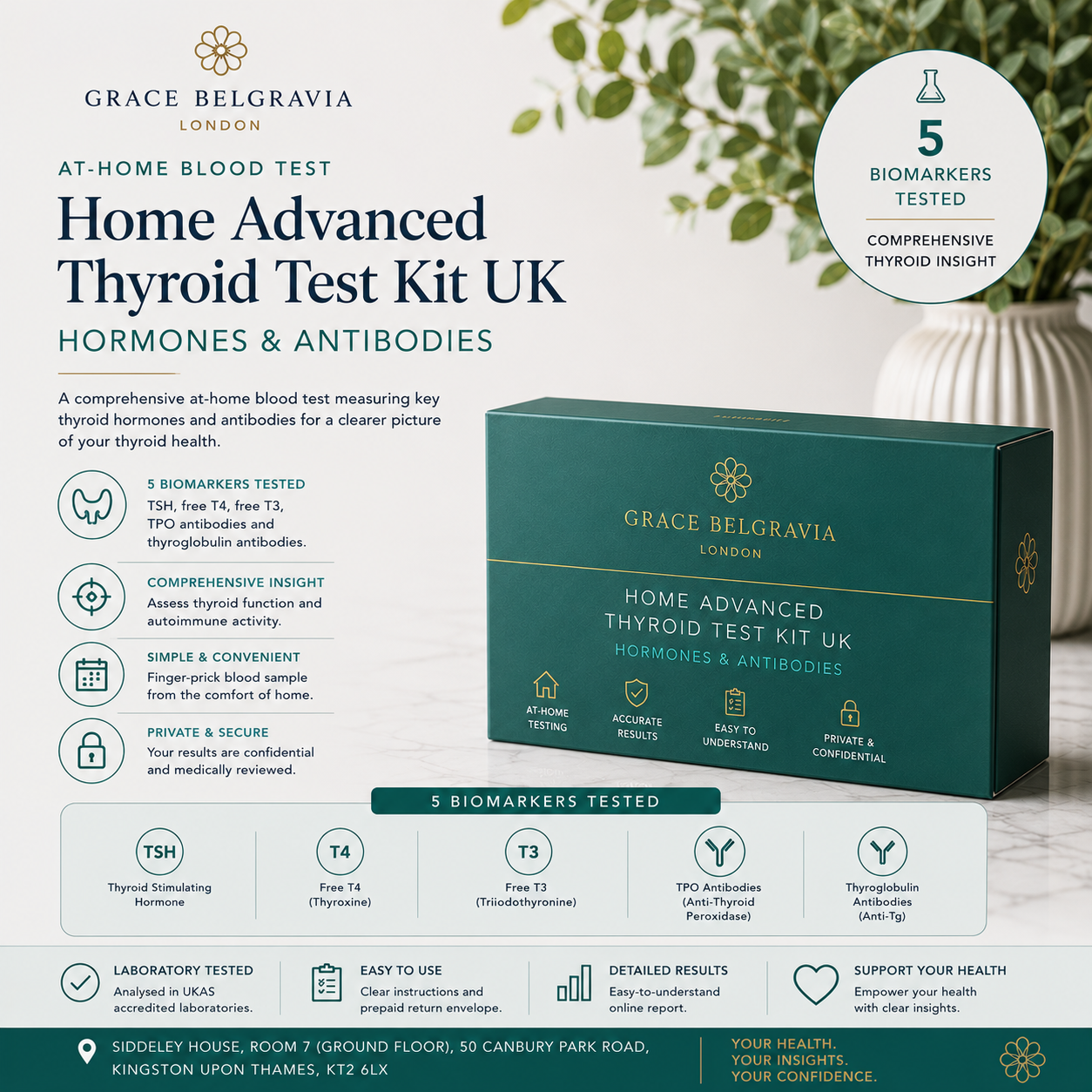
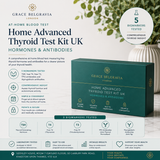
Home Advanced Thyroid Test Kit UK | Hormones & Antibodies
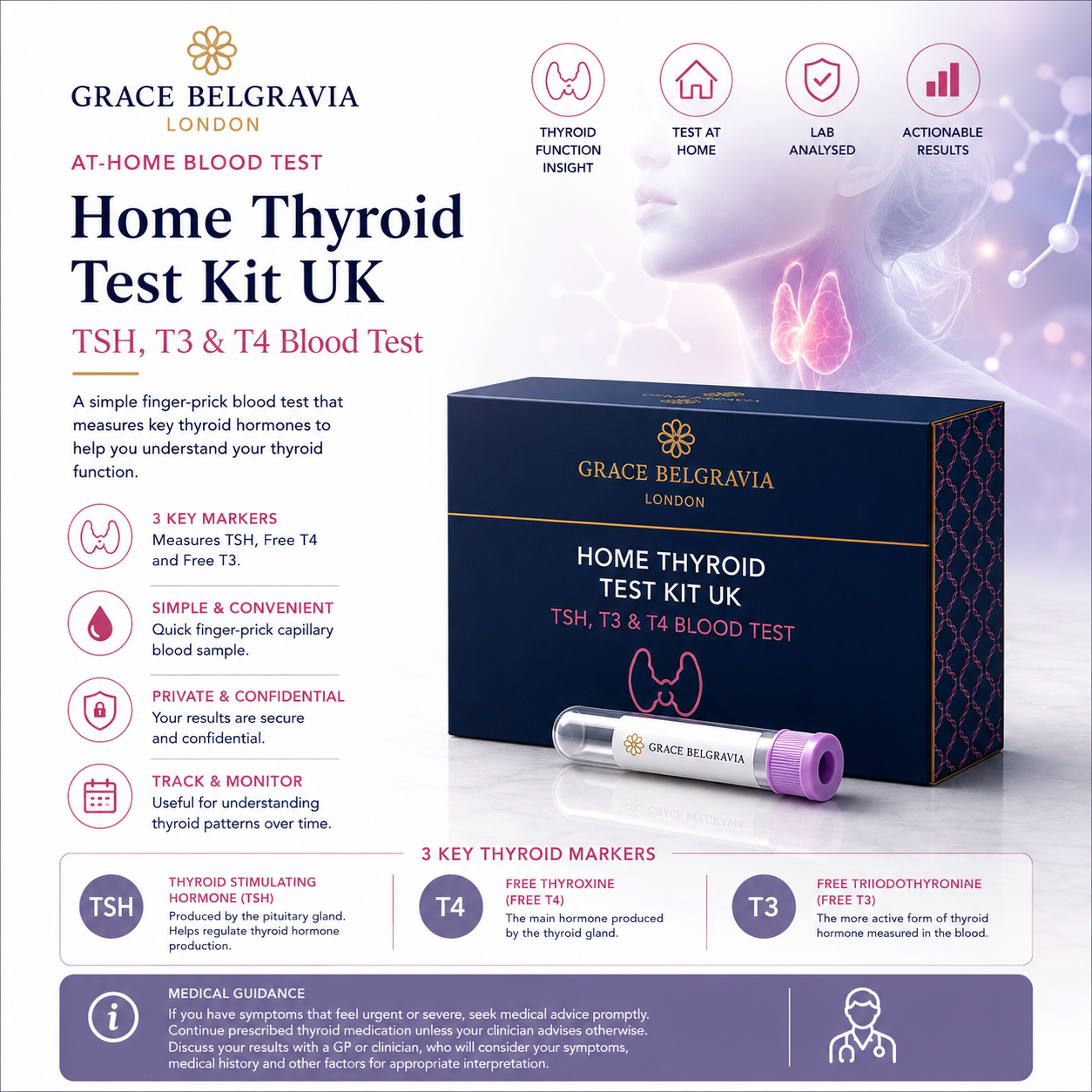
A 5 biomarker home thyroid test measuring TSH, free T4, free T3, TPO antibodies and thyroglobulin antibodies.
The panel combines thyroid hormone measurements with selected autoimmune thyroid markers. It can provide information about underactive or overactive thyroid patterns and whether thyroid autoimmunity may be contributing.
This test may identify a thyroid hormone pattern or thyroid antibodies, but it does not replace a clinical diagnosis. It does not include TSH receptor antibodies, ultrasound imaging, examination of a thyroid lump or testing for thyroid cancer.
Continue prescribed thyroid treatment unless the clinician responsible for your care advises otherwise. Tell the testing service exactly what you take and when the last dose was taken.
Quality and compliance
Home testing supported by UK clinical standards
What this advanced thyroid test measures
| Health area | Biomarkers | What they may help show |
|---|---|---|
| Pituitary thyroid signal | TSH | The signal from the pituitary gland that regulates thyroid hormone production. |
| Circulating thyroid hormones | Free T4 and free T3 | The unbound thyroid hormones available to tissues. |
| Autoimmune thyroid context | TPO antibodies and thyroglobulin antibodies | Evidence that the immune system is producing antibodies associated with autoimmune thyroid disease. |
Who may consider this test?
This panel may be considered by adults who want to review selected thyroid markers in the context of:
- Persistent tiredness or feeling unusually cold
- Unexplained weight change
- Palpitations, tremor, sweating or heat intolerance
- Dry skin, hair changes or constipation
- Irregular or heavy periods
- A personal or family history of thyroid or autoimmune disease
- An earlier abnormal TSH, free T4 or free T3 result
- Thyroid treatment monitoring requested by a clinician
- Clarifying whether an abnormal thyroid pattern may have an autoimmune cause
These symptoms are not specific to thyroid disease. A normal panel does not exclude other medical causes.
How thyroid result patterns are considered
The individual reference intervals on the laboratory report take priority. The examples below are simplified patterns and not diagnoses.
| Common pattern | Possible context | Important qualification |
|---|---|---|
| High TSH with low FT4 | A pattern commonly seen with primary hypothyroidism. | Medicines, recent illness and clinical history still matter. |
| High TSH with normal FT4 | May be described as subclinical hypothyroidism when persistent. | A repeat test and TPO antibodies may help guide assessment. |
| Low TSH with high FT4 or FT3 | A pattern commonly seen with hyperthyroidism or excess thyroid hormone replacement. | Further tests may include TSH receptor antibodies or imaging. |
| Low or normal TSH with low FT4 | Can occur with severe illness, medicines or less commonly pituitary or hypothalamic disease. | This discordant pattern needs clinician review and should not be interpreted as normal. |
| Positive antibodies with normal hormones | May indicate thyroid autoimmunity without current hormone dysfunction. | Antibody positivity alone does not mean medicine is required. |
How the home thyroid test kit works
Prepare for collection
Review medicine, supplement, biotin and recent illness guidance before collecting the sample.
Collect and return
Collect capillary blood into the microtainer and return it using the supplied packaging.
Review the complete pattern
Consider all five markers together and seek medical advice for abnormal, critical or discordant results.
Preparing for your thyroid blood test
| Preparation | What to do |
|---|---|
| Thyroid medicine | Do not stop levothyroxine, liothyronine or antithyroid medicine unless the prescribing clinician advises you to do so. |
| Dose timing | Follow the kit or clinician instructions about when to collect relative to the latest thyroid medicine dose. |
| Biotin | Biotin is vitamin B7. High intake can interfere with some thyroid assays. Ask whether and for how long it should be paused. |
| Other medicines | Record amiodarone, lithium, steroids, anticonvulsants, iodine products and any hormone treatment. |
| Recent illness | Acute illness and recovery can alter thyroid results. Follow the recommendation to delay non urgent testing after a recent infection where applicable. |
| Fasting | Fasting is not normally required for this panel. Follow the specific kit instructions. |
| Pregnancy | Pregnancy requires different interpretation and closer medical oversight. Tell your GP promptly if you are pregnant or planning pregnancy. |
Biomarkers and result interpretation
Select each marker to read what it measures, preparation guidance and how low, normal, high, positive or negative results may be considered.
Thyroid stimulating hormone
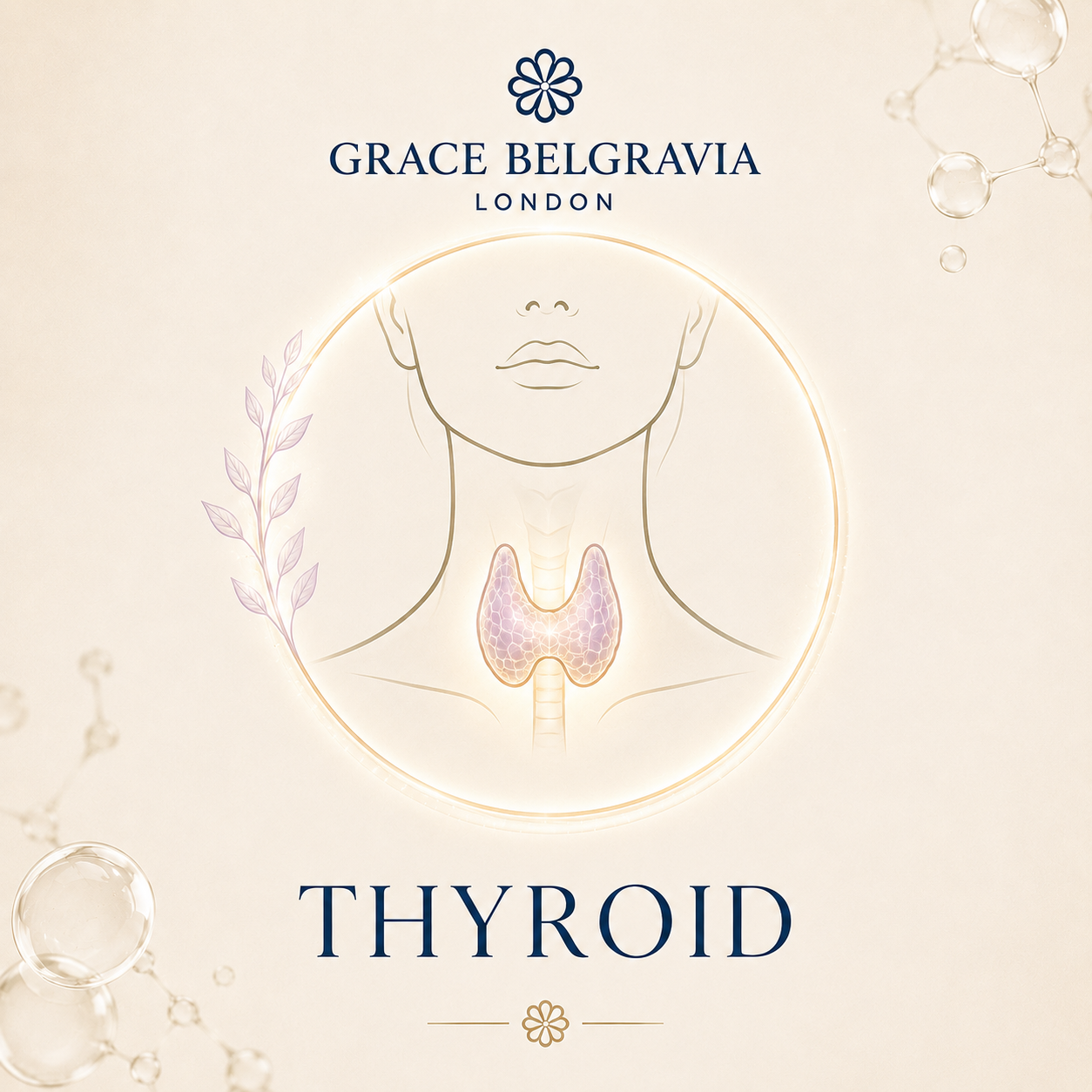
Thyroid stimulating hormone, known as TSH, is produced by the pituitary gland. It signals the thyroid to produce thyroid hormones.
In primary thyroid disease, a high TSH commonly accompanies an underactive thyroid, while a low TSH commonly accompanies an overactive thyroid. TSH must be interpreted with free T4, free T3, medicines and symptoms.
Do not stop prescribed thyroid medicine. Tell the provider about levothyroxine, liothyronine, carbimazole, propylthiouracil, amiodarone, lithium, steroids, anticonvulsants, iodine and supplements. Biotin is vitamin B7 and can interfere with some thyroid assays. Follow clinical or laboratory advice about whether it should be paused.
How to understand this result
| Result | What it may mean | What to do |
|---|---|---|
| Critical low | A profoundly suppressed result may occur with significant thyroid overactivity, excessive thyroid hormone replacement, recent treatment or less common pituitary or medical factors. | Arrange prompt medical review and follow any urgent laboratory instruction. |
| Low | A low result may occur with an overactive thyroid, thyroid hormone medicine, pregnancy, recent illness or some medicines. | Discuss it with a GP, particularly when free T4 or free T3 is raised. |
| Normal | The result falls within the laboratory reference interval. | Interpret it with free T4 and free T3. Seek medical advice if symptoms persist. |
| High | A high result may occur when the thyroid is underactive or the replacement dose is insufficient. Recovery from illness and some medicines can also affect TSH. | Discuss the result with your GP. |
| Critical high | A very high result may indicate marked thyroid underactivity, although pituitary causes are much less common than primary thyroid disease. | Arrange prompt medical assessment. |
Free thyroxine
Free thyroxine, known as free T4 or FT4, measures the unbound portion of thyroxine available to tissues. Thyroxine is the principal hormone released by the thyroid.
FT4 is interpreted with TSH. A low FT4 with high TSH commonly supports primary hypothyroidism, while a high FT4 with low TSH commonly supports hyperthyroidism or excess replacement.
Do not stop prescribed thyroid medicine. Tell the provider about levothyroxine, liothyronine, carbimazole, propylthiouracil, amiodarone, lithium, steroids, anticonvulsants, iodine and supplements. Biotin is vitamin B7 and can interfere with some thyroid assays. Follow clinical or laboratory advice about whether it should be paused.
How to understand this result
| Result | What it may mean | What to do |
|---|---|---|
| Critical low | A critically low result may occur with severe thyroid hormone deficiency, treatment effects or less common pituitary disease. | Seek urgent medical review, especially with extreme drowsiness, confusion, low temperature or severe weakness. |
| Low | A low result may occur with an underactive thyroid, insufficient replacement, pituitary disease, severe illness or some medicines. | Discuss the result with your GP. |
| Normal | The result falls within the laboratory reference interval. | Interpret it with TSH and symptoms. |
| High | A high result may occur with an overactive thyroid, excessive replacement, thyroiditis, pregnancy related changes or assay interference. | Discuss the result with your GP promptly. |
| Critical high | A critically high result may accompany severe thyrotoxicosis. | Seek urgent medical review, particularly with rapid heartbeat, fever, agitation, vomiting or confusion. |
Free triiodothyronine
Free triiodothyronine, known as free T3 or FT3, measures the unbound portion of triiodothyronine available to tissues. T3 is the more biologically active thyroid hormone.
FT3 is especially useful when TSH is low and an overactive thyroid is suspected. A low FT3 can occur during significant non thyroid illness and does not by itself diagnose hypothyroidism.
Do not stop prescribed thyroid medicine. Tell the provider about levothyroxine, liothyronine, carbimazole, propylthiouracil, amiodarone, lithium, steroids, anticonvulsants, iodine and supplements. Biotin is vitamin B7 and can interfere with some thyroid assays. Follow clinical or laboratory advice about whether it should be paused.
How to understand this result
| Result | What it may mean | What to do |
|---|---|---|
| Critical low | A very low result can occur with severe illness, reduced thyroid hormone production, medicine effects or under replacement. | Discuss urgently with a clinician when the result is critical or severe symptoms are present. |
| Low | A low result may occur with an underactive thyroid, severe illness, calorie restriction or medicine effects. | Interpret with TSH and FT4 rather than in isolation. |
| Normal | The result falls within the laboratory reference interval. | Consider it with TSH, FT4 and symptoms. |
| High | A high result may occur with an overactive thyroid, excessive liothyronine or thyroid hormone replacement, thyroiditis or assay interference. | Discuss the result promptly with your GP. |
| Critical high | A critically high result may accompany severe thyrotoxicosis. | Seek urgent medical review if accompanied by rapid heartbeat, fever, agitation, breathlessness, vomiting or confusion. |
Thyroid peroxidase antibodies
Thyroid peroxidase antibodies, known as TPO antibodies or TPOAb, target an enzyme involved in thyroid hormone production.
Raised TPO antibodies support an autoimmune cause when thyroid function is abnormal, particularly Hashimoto's thyroiditis. They can also be present in some people with normal thyroid hormone results and do not by themselves show current thyroid function.
Do not stop prescribed thyroid medicine. Tell the provider about levothyroxine, liothyronine, carbimazole, propylthiouracil, amiodarone, lithium, steroids, anticonvulsants, iodine and supplements. Biotin is vitamin B7 and can interfere with some thyroid assays. Follow clinical or laboratory advice about whether it should be paused.
How to understand this result
| Result | What it may mean | What to do |
|---|---|---|
| Negative | No raised TPO antibody level was detected using the laboratory cut off. | This reduces but does not eliminate the possibility of autoimmune thyroid disease. |
| Normal | The result is within the laboratory reference interval. | Interpret it with TSH, free T4, free T3 and symptoms. |
| Positive | A positive result supports thyroid autoimmunity and is commonly found in Hashimoto's thyroiditis. It can sometimes occur with Graves' disease or in people whose thyroid function remains normal. | Discuss the complete thyroid profile with your GP. |
| High | A raised result indicates thyroid autoantibodies but the number does not directly measure symptom severity or the degree of thyroid underactivity. | A medical review is appropriate, but a raised antibody result alone is not normally an emergency. |
Thyroglobulin antibodies
Thyroglobulin antibodies, known as TgAb, target thyroglobulin, a protein produced within the thyroid and used in thyroid hormone production.
Raised TgAb can occur in autoimmune thyroid disease, particularly Hashimoto's thyroiditis. The result is less specific than a complete clinical assessment and does not show whether thyroid hormone production is currently normal, low or high.
Do not stop prescribed thyroid medicine. Tell the provider about levothyroxine, liothyronine, carbimazole, propylthiouracil, amiodarone, lithium, steroids, anticonvulsants, iodine and supplements. Biotin is vitamin B7 and can interfere with some thyroid assays. Follow clinical or laboratory advice about whether it should be paused.
How to understand this result
| Result | What it may mean | What to do |
|---|---|---|
| Negative | No raised thyroglobulin antibody level was detected using the laboratory cut off. | This does not exclude every autoimmune or non autoimmune thyroid condition. |
| Normal | The result is within the laboratory reference interval. | Interpret it with TPO antibodies and the thyroid hormone profile. |
| Positive | A positive result may support autoimmune thyroid activity, particularly when other thyroid tests or symptoms are abnormal. | Discuss the result with your GP. |
| High | A raised result indicates measurable thyroglobulin antibodies. The concentration does not by itself establish the severity of thyroid disease. | Review the full pattern with a clinician rather than treating the antibody result alone. |
Content standards
How this product information was prepared
This page was prepared from the supplied five marker thyroid product specification and expanded using current UK thyroid, laboratory and medicine safety guidance.
Expert review
Medical and editorial review
This product information has been reviewed for general medical accuracy, thyroid hormone context, antibody limitations, medicine safety and appropriate escalation of abnormal results.
The review applies to general product information. It is not personal medical advice and does not replace assessment by a GP or endocrinologist.
Dr Snieguole Geige
Dentist, Medical Doctor and Senior Adviser
Reviewed the general thyroid health boundaries, autoimmune context, patient communication and guidance on when direct medical assessment is required.
View professional profileDr Rimas Geiga
Medical Doctor, Nutritional Sciences Adviser and Healthy Ageing Expert
Reviewed the metabolism, energy, supplement and medicine context, including responsible discussion of biotin and iodine products.
View professional profileVeronika Matutyte
Medical Doctor and Healthcare Management Expert
Reviewed critical result guidance, medicine cautions, urgent symptoms, clinical limitations and the safety of the home testing pathway.
View professional profileFurther reading
Authoritative UK thyroid and laboratory information
These resources provide additional context. They do not replace the instructions, reference intervals or comments supplied with your individual laboratory report.
View NICE, NHS, MHRA and thyroid references
- NICE thyroid disease assessment and management
- NHS information about underactive thyroid
- NHS information about overactive thyroid
- British Thyroid Foundation thyroid function testing
- British Thyroid Foundation thyroid antibodies information
- MHRA information about biotin interference
- UKAS medical laboratory accreditation
- CQC diagnostic and screening services guidance
Search led questions
Home thyroid test kit FAQs
Can I test my thyroid at home?
Yes. This kit uses a capillary blood sample collected at home and returned for laboratory analysis. It measures thyroid hormones and two thyroid antibody markers.
What does an advanced thyroid blood test check?
This panel checks TSH, free T4, free T3, thyroid peroxidase antibodies and thyroglobulin antibodies. It combines thyroid function markers with selected autoimmune thyroid markers.
What is the difference between a basic and advanced thyroid test?
A basic thyroid panel commonly measures TSH and free T4, sometimes with free T3. This advanced panel also measures TPO antibodies and thyroglobulin antibodies.
Do I need to fast for a thyroid blood test?
Fasting is not usually required for these five markers. Follow the kit instructions and tell the provider about prescribed medicines, vitamins and supplements.
Should I take levothyroxine before a thyroid blood test?
Do not stop prescribed thyroid medicine. The timing of a dose can affect free hormone results, so follow the collection instructions or advice from the clinician monitoring your treatment.
Can biotin affect thyroid blood test results?
Yes. High biotin intake can cause falsely high or low thyroid results in some laboratory methods. Biotin is vitamin B7, not vitamin B9. Ask a clinician or the testing service whether and for how long it should be paused.
What do positive TPO antibodies mean?
Raised TPO antibodies can support an autoimmune cause of thyroid dysfunction, particularly Hashimoto's thyroiditis. They can also occur in some people whose TSH and free T4 remain within range.
What do thyroglobulin antibodies mean?
Thyroglobulin antibodies may occur in autoimmune thyroid disease, including Hashimoto's thyroiditis. They need to be considered with TPO antibodies, TSH, free T4, free T3 and symptoms.
Can thyroid antibodies diagnose Hashimoto's disease?
Positive antibodies can support an autoimmune explanation, but diagnosis depends on the full thyroid pattern and clinical context. Antibodies alone do not show whether the thyroid is currently underactive.
Does this test check for Graves' disease?
The panel can identify hormone patterns consistent with an overactive thyroid, and TPO or thyroglobulin antibodies may sometimes be raised. It does not include TSH receptor antibodies, the antibody test more specifically used when Graves' disease is suspected.
Can I have thyroid symptoms with a normal TSH?
Yes. Symptoms such as tiredness, weight change and hair changes are not specific to thyroid disease. A normal result does not exclude every medical cause, and unusual free hormone patterns may still require clinical review.
Can illness affect thyroid blood tests?
Yes. Acute illness and recovery can temporarily alter thyroid hormone patterns. Follow the kit advice about delaying non urgent testing after a recent infection or illness.
What thyroid result patterns may need medical review?
High TSH with low free T4 may suggest an underactive thyroid, while low TSH with high free T4 or free T3 may suggest an overactive thyroid. Discordant or critical results require professional interpretation.
When are thyroid symptoms urgent?
Seek urgent help for severe breathlessness, chest pain, collapse, marked confusion, very rapid or irregular heartbeat, extreme drowsiness, high fever with agitation or other severe symptoms.
Are the laboratories UKAS accredited and CQC registered?
Samples are processed through UKAS accredited laboratories within a CQC registered diagnostic pathway. Collection equipment is UKCA and CE marked and supported by an ISO 13485 quality management framework.