
















Private at-home men’s health testing
Men’s Health & Home Testosterone Test Kits UK
Compare focused testosterone tests, advanced male hormone panels, reproductive-hormone testing and a home PSA blood test in one considered collection.
Use the guide below to identify the test that most closely matches your question. A result can provide useful laboratory information, but it cannot diagnose testosterone deficiency, infertility or prostate cancer by itself.

Seek urgent medical care for sudden severe testicular pain, inability to pass urine, blood in the urine with clots, severe weakness or collapse, chest pain, new neurological symptoms or thoughts of self-harm.
Interactive test finder
What would you like to understand?
Choose the closest goal. This tool provides product navigation, not a diagnosis or a recommendation that testing is medically necessary.
Start with the question, not the largest panel
A focused test may be enough for a specific baseline. A broader panel can add regulatory or reproductive context when that is the question you are trying to answer.
Compare the collectionA considered home-testing experience
Choose with context, not assumptions
A home blood test may help you establish a baseline, investigate a question with a healthcare professional or monitor a marker when appropriate. The value lies in choosing the right scope and understanding what the result can and cannot tell you.

A single-marker test may suit someone seeking a straightforward baseline without paying for unrelated measurements.

Wider hormone panels may provide context about binding proteins, pituitary signalling or reproductive hormones.
Symptoms and health questions
Why men consider hormone or prostate testing
Symptoms associated with low testosterone, fertility concerns and prostate conditions are often non-specific. Fatigue, mood change or sexual symptoms can also relate to sleep, medicines, stress, mental health, thyroid disease, metabolic health, cardiovascular disease or other causes.
UK and international endocrine guidance emphasises the combination of relevant symptoms with appropriately timed, consistently low testosterone measurements rather than relying on one isolated result.
Browse the collection
Men’s health and testosterone home blood tests
Each option below answers a different type of question. Review the individual product page before ordering because the product specification is the definitive source for biomarkers, collection instructions and suitability.

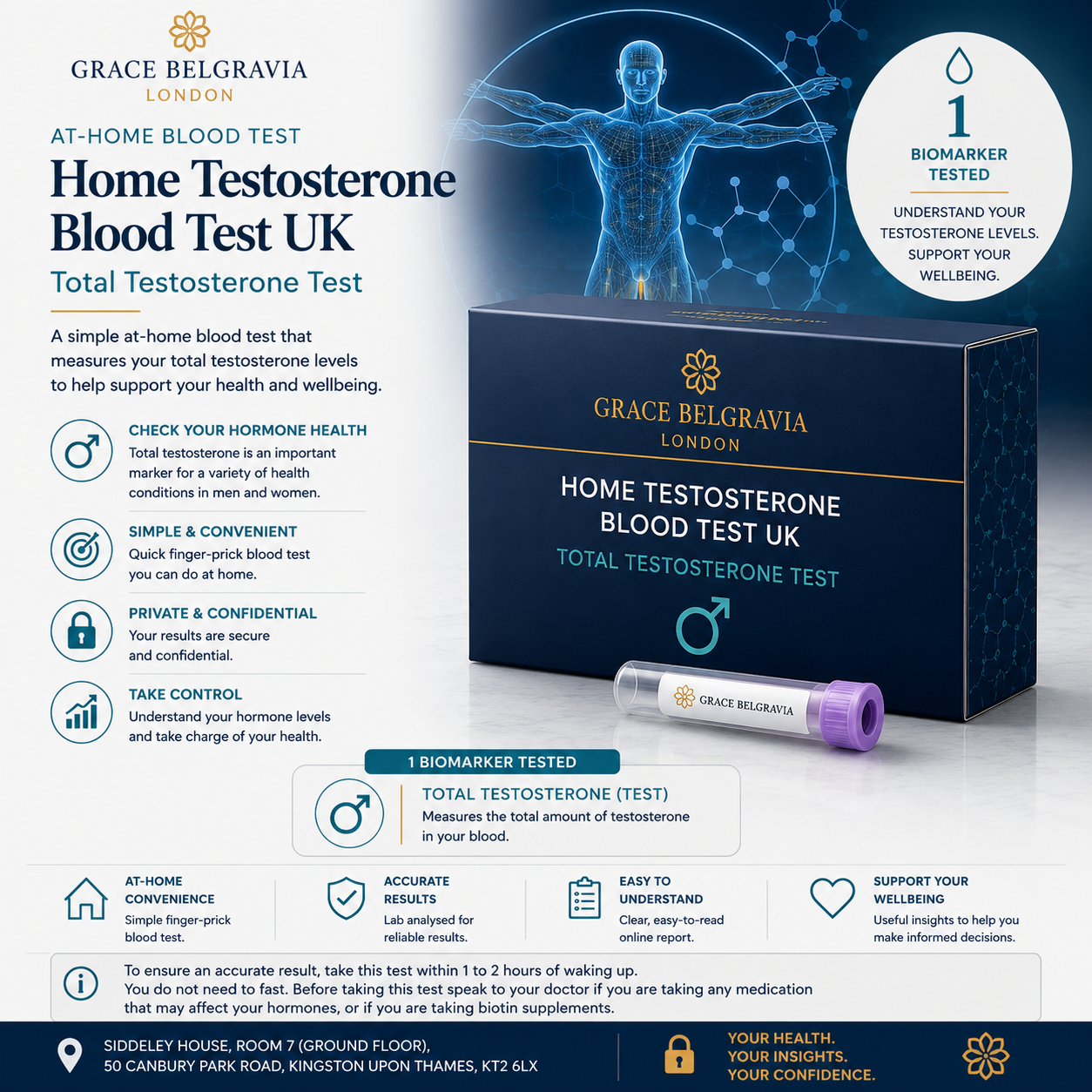
Home Testosterone Blood Test UK – Total Testosterone Test
A focused option for measuring total testosterone. It may suit someone who wants an initial baseline or a specific repeat measurement without selecting a wider hormone panel.

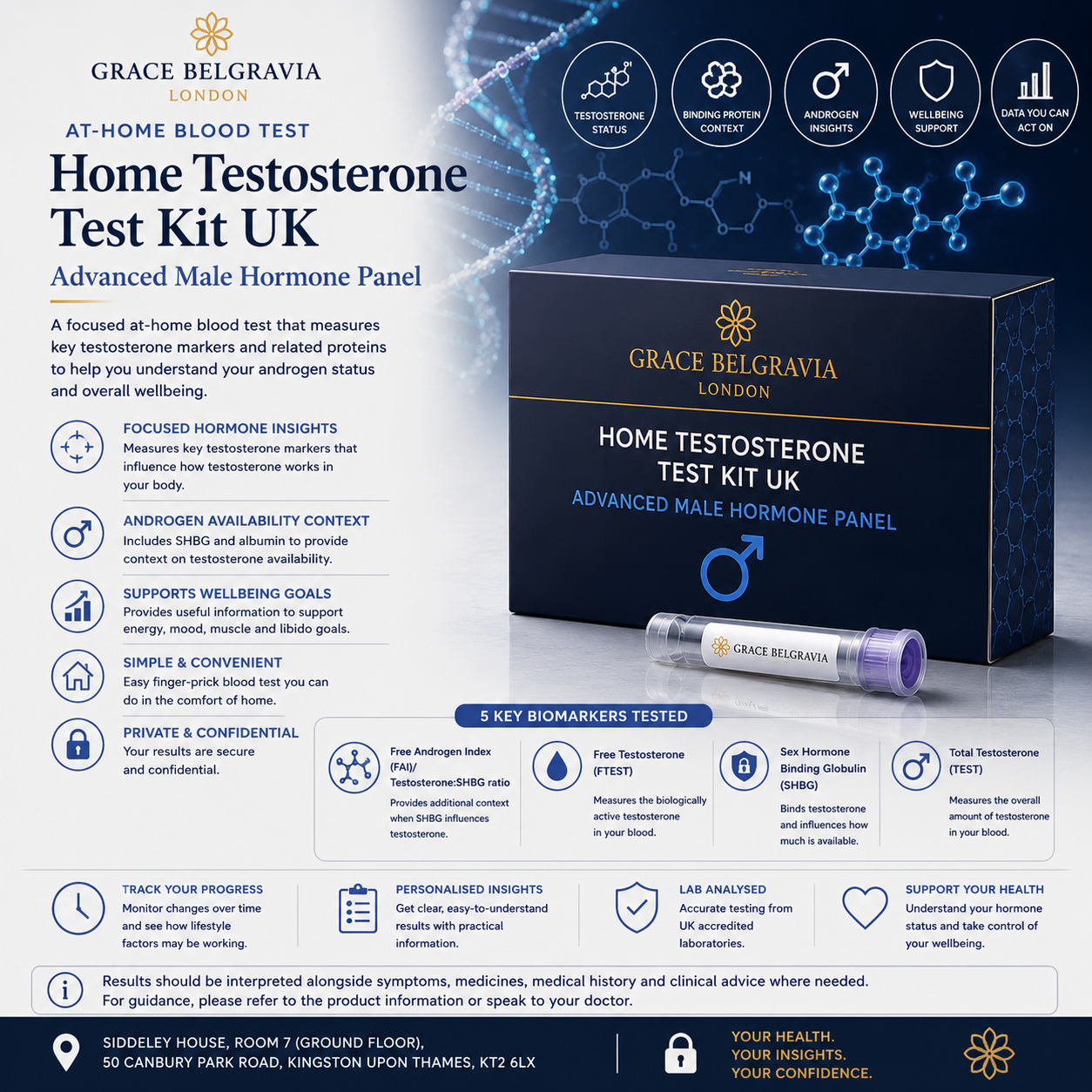
Home Testosterone Test Kit UK – Advanced Male Hormone Panel
Designed for people who want more context than a single total testosterone result. The panel focuses on testosterone status and related markers or calculations shown on the individual product page.

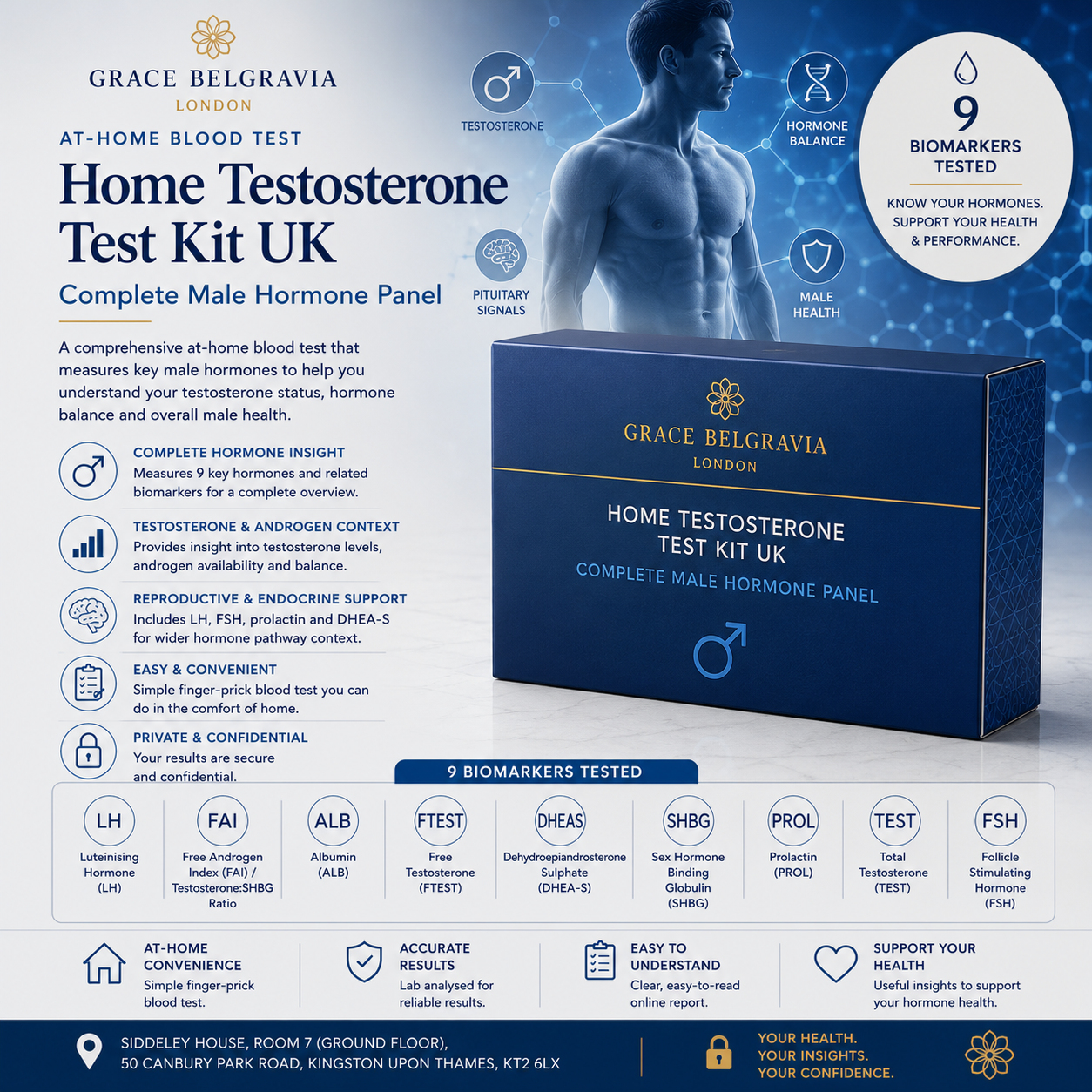
Home Testosterone Test Kit UK – Complete Male Hormone Panel
A broader choice for people seeking a more complete view of male hormone regulation. It is intended for questions that extend beyond a single testosterone measurement.

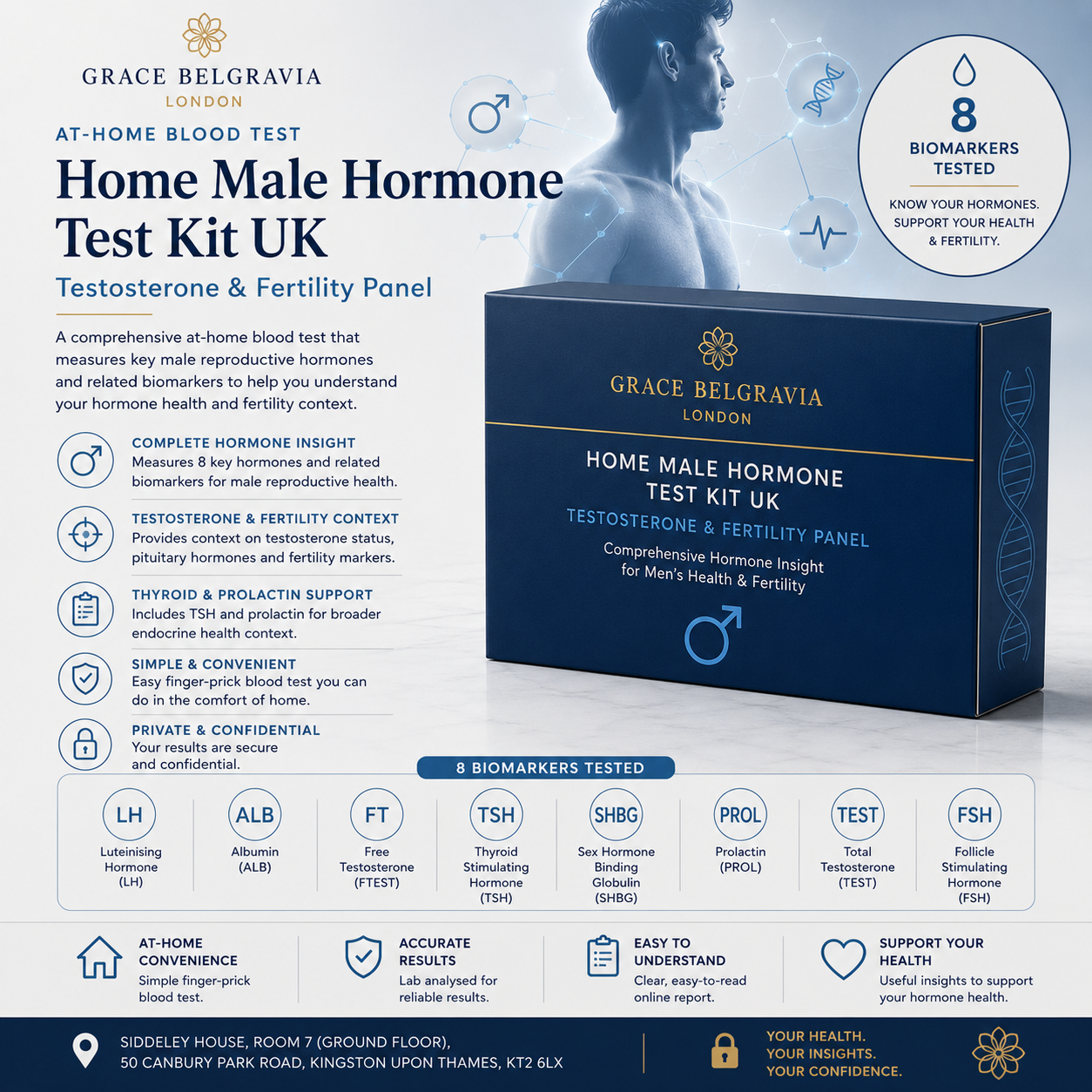
Home Male Hormone Test Kit UK – Testosterone & Fertility Panel
A hormone panel for people seeking selected reproductive and testicular-function context. Hormone testing cannot measure sperm count, motility, morphology or DNA quality.

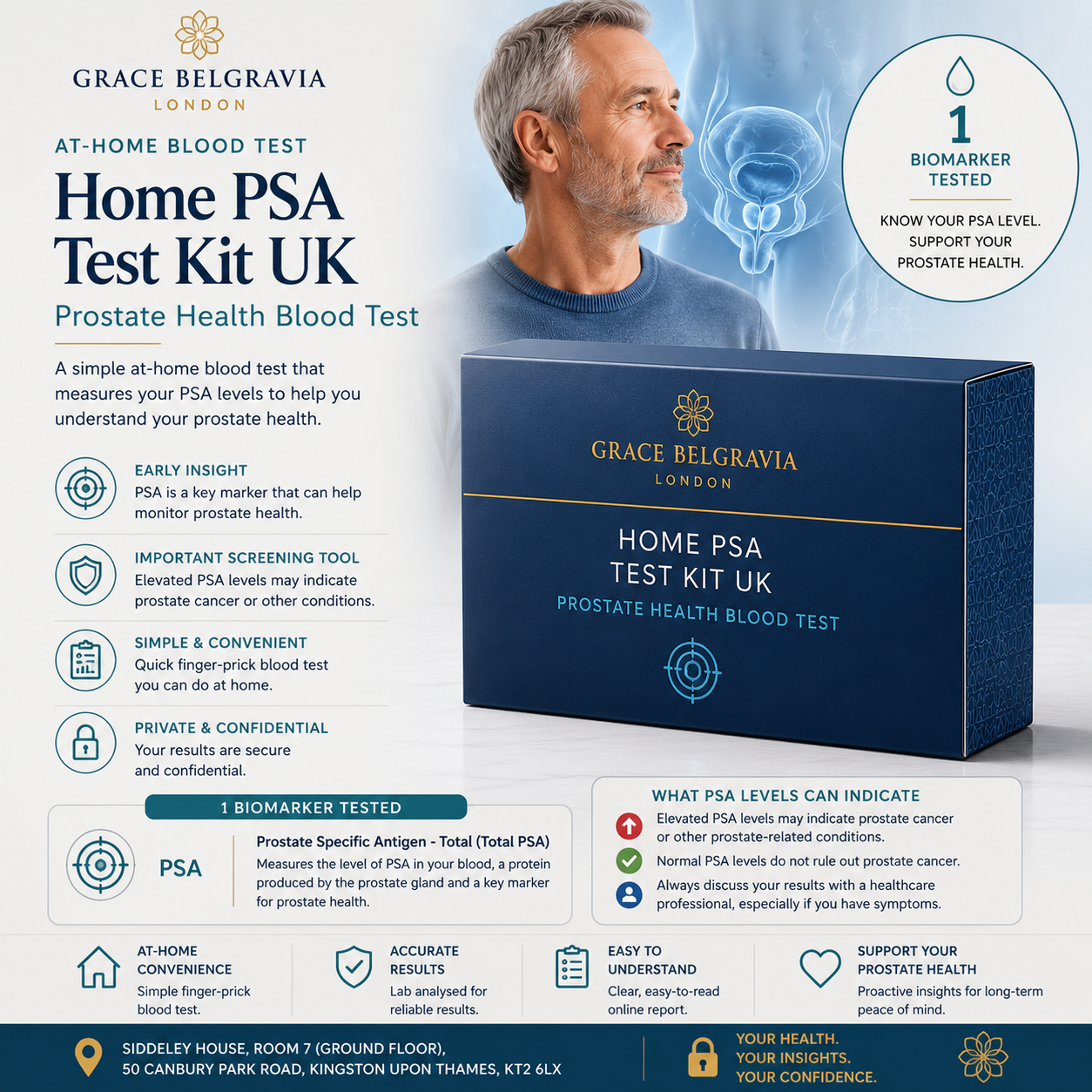
Home PSA Test Kit UK – Prostate Health Blood Test
Measures prostate-specific antigen as a prostate-health marker. An elevated result can have several causes, while a result within range does not rule out prostate cancer.
Side-by-side comparison
Compare men’s health blood tests
Use this table to compare the purpose of each test. The exact product specification, biomarker list and collection instructions on the individual product page take precedence.
| Test | Primary question | Panel depth | Key limitation | View |
|---|---|---|---|---|
| Total Testosterone Test | What is my total testosterone level? | Focused single-marker baseline | Does not explain binding, pituitary signalling or fertility by itself | Test details |
| Advanced Male Hormone Panel | Can I add binding-related context to testosterone? | Focused multi-marker hormone panel | Still requires symptoms, timing and clinical interpretation | Test details |
| Complete Male Hormone Panel | How do several male hormone signals relate? | Broader endocrine overview | A larger panel does not diagnose the cause of an abnormal result | Test details |
| Testosterone & Fertility Panel | Could reproductive hormones add context to fertility questions? | Selected reproductive-hormone panel | Does not replace semen analysis or a fertility assessment | Test details |
| PSA Prostate Health Test | What is my PSA level? | Focused prostate marker | Cannot diagnose or exclude prostate cancer alone | Test details |
Biomarker guide
Understanding male hormone and prostate markers
The markers below are commonly used in male hormone or prostate assessment. They are not necessarily included in every test in this collection. Check the individual product page for the definitive list.
Total testosterone
Measures testosterone circulating in the blood in both protein-bound and unbound forms. A single measurement should not be used alone to diagnose testosterone deficiency.
Free testosterone
Represents the unbound fraction available to tissues. It may be measured or calculated using total testosterone and binding proteins, depending on the laboratory method.
Sex hormone-binding globulin (SHBG)
A protein that binds testosterone and oestradiol. Changes in SHBG can affect the relationship between total and available testosterone.
Albumin
A blood protein that binds testosterone more weakly than SHBG and may be used in some calculated free-testosterone approaches.
Luteinising hormone (LH)
A pituitary hormone that stimulates testosterone production in the testes. Its relationship with testosterone may help clinicians investigate where hormone disruption may be occurring.
Follicle-stimulating hormone (FSH)
A pituitary hormone involved in sperm production and testicular function. It provides context but cannot measure semen quality.
Prolactin
A pituitary hormone that may be considered when sexual symptoms, fertility concerns or altered gonadal signalling are being investigated.
Oestradiol
An oestrogen present in men as well as women. It interacts with bone, reproductive and metabolic physiology and should be interpreted in context.
Prostate-specific antigen (PSA)
A protein produced by prostate tissue. PSA can rise for reasons other than cancer, and some prostate cancers do not produce a clearly elevated result.
Timing and preparation
How to prepare for a useful result
Read the product instructions
Confirm sample type, timing, fasting requirements, return method and any medicine-related guidance.
Collect testosterone tests in the advised window
Morning sampling is commonly recommended because testosterone follows a daily rhythm.
Record relevant treatment
Note testosterone therapy, anabolic steroids, fertility treatment, supplements and other medicines.
Avoid known PSA disruptors
Follow the kit instructions concerning infection, ejaculation, vigorous exercise and recent prostate procedures.
Collect carefully
Use the supplied equipment, fill the sample as instructed and label or activate the kit correctly.
Plan follow-up
Unexpected results may require repeat testing, venous sampling or a wider clinical assessment.
Ask the prescribing clinician or follow the treatment-monitoring plan. Timing relative to gels, injections or other formulations can materially affect interpretation.
What results mean
What home testing can and cannot answer
A result may help you
- Establish a laboratory baseline.
- Compare a repeat result when timing and method are appropriate.
- Prepare for a more informed discussion with a healthcare professional.
- Identify a result that may warrant clinical follow-up.
- Track a marker within an established monitoring plan.
A result cannot by itself
- Diagnose testosterone deficiency or explain its cause.
- Confirm or rule out infertility.
- Measure sperm count, movement or morphology.
- Diagnose or exclude prostate cancer.
- Determine whether testosterone treatment is appropriate.
Male reproductive health
Hormone testing is only one part of fertility assessment
LH, FSH, testosterone and prolactin may provide information about pituitary and testicular signalling when they are included in a reproductive panel. However, many men with fertility difficulties have hormone results that are not clearly abnormal.
Semen analysis remains central to assessing sperm concentration, motility and morphology. Depending on the circumstances, a fertility assessment may also consider medical history, examination, medicines, anabolic-steroid exposure, infection, genetics and partner factors.
External testosterone and anabolic-androgenic steroids can suppress LH and FSH and may reduce sperm production. Do not change treatment without speaking to an appropriately qualified clinician.
PSA and prostate health
Use a PSA result with informed follow-up
PSA is produced by prostate tissue. A raised level may occur with benign prostate enlargement, inflammation, infection, recent ejaculation, vigorous cycling or other prostate stimulation as well as prostate cancer. A lower result does not completely exclude cancer.
The UK National Screening Committee does not recommend population-wide PSA screening. It recommends a targeted programme for men aged 45 to 61 with a pathogenic BRCA2 variant and a relevant family history. People outside that group may still discuss individual PSA testing with a clinician.
Laboratory and testing standards
Home collection supported by a quality-controlled laboratory pathway
Grace Belgravia home tests combine private sample collection with laboratory analysis. The individual product specification is the definitive source for the laboratory, assay, accreditation, regulatory pathway and reporting arrangements applicable to that test.
- Clear sample-collection and return instructions
- Laboratory analysis through the pathway specified for the selected test
- Quality and regulatory claims stated at product level
- Secure reporting and appropriate result commentary where included
- Transparent limitations and clinical follow-up guidance

Medical and editorial review
Medically checked men’s health guidance
The collection has been structured to separate general education, test selection, diagnostic limitations and urgent-care boundaries. Product-level specifications remain the definitive source for what each kit measures.

Dr Laura Geige
Medical Director, Senior Practitioner and Skin Expert
Reviewed the clinical boundaries, escalation wording, responsible test-selection language and the distinction between information and diagnosis.
View professional profileDr Rimas Geiga
Medical Doctor, Nutritional Sciences Adviser and Healthy Ageing Expert
Reviewed the presentation of fatigue, body-composition and metabolic context, including the limits of attributing non-specific symptoms to testosterone alone.
View professional profileVeronika Matutyte
Medical Doctor and Healthcare Management Expert
Reviewed the quality-governance wording, product-level accreditation caveat, PSA safeguards, result privacy and follow-up boundaries.
View professional profileResearch and clinical context
Evidence behind responsible men’s health testing

Endocrine guidance recommends confirming possible testosterone deficiency with appropriate repeat morning measurements rather than treating one isolated number as a diagnosis.

Research and UK screening guidance recognise potential benefits alongside false positives, overdiagnosis and the limitations of PSA alone.
Authoritative references
UK guidance, universities and peer-reviewed research
External references open in a new tab and use nofollow links. They are provided for education and do not imply endorsement of any commercial test.
UK clinical and public-health guidance
Peer-reviewed endocrine and fertility publications
- Society for Endocrinology guidelines for testosterone replacement therapy in male hypogonadism
- Endocrine Society clinical practice guideline: testosterone therapy in men with hypogonadism
- European Academy of Andrology guideline on functional hypogonadism
- Peer-reviewed review: approach to the infertile man
- Peer-reviewed review: anabolic-androgenic steroids and male fertility
UK and overseas university research
- University of Manchester: research on symptoms associated with late-onset hypogonadism
- University of Manchester research: harmonised testosterone reference ranges
- Imperial College London: reproductive endocrinology research
- University of Edinburgh: hormone signalling in the testis
- University of Oxford: testosterone replacement therapy in older men
- Harvard Medical School: research on testosterone and oestradiol in men
- University of Cambridge: PSA limitations and prostate-cancer detection
Frequently asked questions
Men’s health and testosterone test FAQs
Which testosterone blood test should I choose?
Choose according to the question. A total testosterone test provides a focused baseline, an advanced panel may add binding-related context, and a complete panel is designed for a wider hormone overview. Review the definitive biomarker list on each product page before ordering.
Can I take a testosterone blood test at home?
Yes. The tests in this collection use home sample collection followed by the laboratory pathway specified for the product. Follow the supplied instructions carefully.
What time should I take a home testosterone test?
Morning collection is commonly recommended because testosterone varies through the day. Follow the exact time and fasting instructions supplied with the selected kit.
Can one blood test diagnose low testosterone?
No. Diagnosis generally requires relevant symptoms together with appropriately timed and consistently low testosterone measurements, plus assessment of possible causes.
What is the difference between total and free testosterone?
Total testosterone includes protein-bound and unbound testosterone. Free testosterone refers to the unbound fraction. SHBG and albumin can influence the relationship between the two.
Can a male hormone panel explain fatigue?
It may provide selected hormone information, but fatigue has many possible causes. Sleep problems, stress, medicines, anaemia, thyroid disease, infection and metabolic or mental-health factors may also need consideration.
Can a male fertility hormone test tell me whether I am fertile?
No. Hormone tests cannot measure sperm concentration, motility or morphology. A semen analysis and broader fertility assessment may be needed.
Can I test while using testosterone replacement therapy?
Testing may form part of monitoring, but timing depends on the formulation and clinical plan. Follow the prescribing clinician’s instructions and do not alter treatment solely for a home test.
Can anabolic steroids affect the results?
Yes. Anabolic-androgenic steroids can suppress LH and FSH, alter testosterone measurements and reduce sperm production. Record all current and recent use and seek clinical advice.
Does a raised PSA mean prostate cancer?
No. PSA may rise because of benign enlargement, inflammation, infection, ejaculation, exercise or recent prostate procedures as well as cancer. A raised result requires appropriate follow-up.
Does a normal PSA rule out prostate cancer?
No. Some prostate cancers occur without a clearly raised PSA. Persistent symptoms or concerns still require medical assessment.
Should I avoid cycling or sex before a PSA test?
These activities can temporarily affect PSA. Follow the kit instructions, which may advise avoiding ejaculation and vigorous exercise for a defined period before collection.
Are these tests a substitute for seeing a GP?
No. They provide laboratory information. Persistent symptoms, abnormal results, fertility difficulties or prostate concerns should be discussed with an appropriate healthcare professional.
What happens if a result is outside the reference range?
Read the laboratory commentary and arrange suitable follow-up. Depending on the marker, repeat morning testing, venous sampling, examination, imaging or specialist referral may be appropriate.